Department of Physical Therapy, University of Arkansas for Medical Sciences, Fayetteville, AR, United States.
Department of Physical Therapy, Augusta University, Augusta, GA, United States.
Front Public Health. 2021 Jun 25;9:672366. doi: 10.3389/fpubh.2021.672366. eCollection 2021.
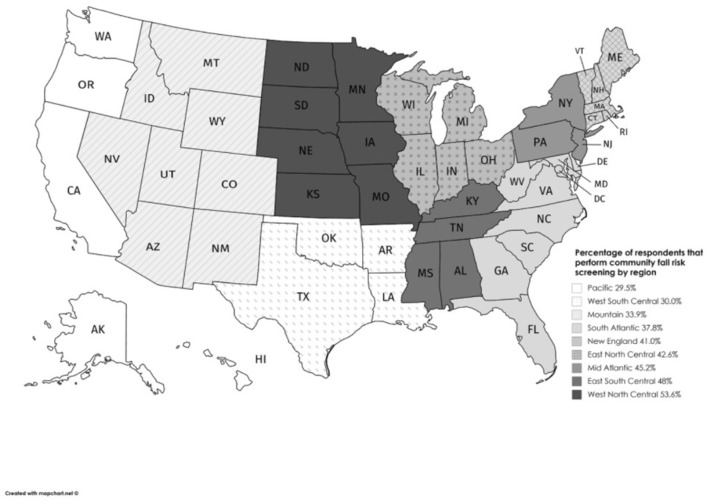
Physical therapists (PTs) are integral team members in fall prevention in clinical settings; however, few studies have investigated PTs' engagement in pro-bono community-based falls prevention. Therefore, we aimed to describe the characteristics of PTs and physical therapist assistants (PTAs) in the United States who conduct community-based fall screenings, the reach of screenings, their knowledge and utilization of the Centers for Disease Control and Prevention's fall-risk screening toolkit (STEADI, Stopping Elderly Accidents, Deaths, and Injuries), and therapists' knowledge and referrals to evidence-based programs (EBPs) and community resources. A cross-sectional survey distributed to a convenience sample of PTs/PTAs in the United States through news-blasts, and social media. Four hundred and forty-four therapists who worked with older adults completed the survey. Approximately 40% of the respondents ( = 180) conduct screenings, most frequently annually. People who screen tend to be PTs with >20 years of experience, work in outpatient/wellness or academia, and be involved in the least amount of direct patient care. The majority ( = 344, 77.5%) of survey respondents were somewhat to very familiar with the STEADI, and ~84% ( = 114) of respondents who were very familiar with the STEADI ( = 136) use the toolkit to conduct community-based, pro-bono fall risk screenings. Twenty-six percent ( = 14) out of the 53 PTAs who responded to the survey conduct falls screenings in the community. Of the PTs/PTAs who conduct community-based fall screenings ( = 180), ~ 75% ( = 136) are aware of and refer older adults to EBPs. Over half also refer to Silver Sneakers and/or senior centers. PTs and PTAs are key partners in evidence-based multifactorial fall prevention in the community. Data helps inform community organizations that most PTs who engage in community-based fall risk screening utilize the STEADI toolkit and refer to community-based programs. Community organizations seeking PT partners to engage in fall risk screenings and promote referrals to local resources or EBPs will likely have the most success collaborating with local physical therapy education programs or physical therapy clinic managers.
物理治疗师(PTs)是临床环境中预防跌倒的不可或缺的团队成员;然而,很少有研究调查过 PTs 参与社区为基础的预防跌倒的志愿活动。因此,我们旨在描述在美国进行社区跌倒筛查的 PTs 和物理治疗助理(PTAs)的特征、筛查的范围、他们对疾病控制与预防中心跌倒风险筛查工具包(STEADI,停止老年人意外、死亡和伤害)的了解和利用,以及治疗师对循证方案(EBPs)和社区资源的了解和转介。一项横断面调查通过新闻推送和社交媒体分发给美国的便利样本中的 PTs/PTAs。444 名与老年人合作的治疗师完成了这项调查。大约 40%的受访者(=180)进行筛查,最常见的是每年一次。进行筛查的人往往是有 20 年以上经验的 PTs,工作在门诊/健康或学术界,并参与最少的直接患者护理。大多数(=344,77.5%)的调查受访者对 STEADI 有一定程度的熟悉,约 84%(=114)非常熟悉 STEADI(=136)的受访者使用该工具包进行社区为基础的、志愿的跌倒风险筛查。在回答调查的 53 名 PTA 中,有 26%(=14)在社区进行跌倒筛查。在进行社区为基础的跌倒筛查的 PTs/PTAs 中(=180),约 75%(=136)了解并将老年人转介给 EBPs。超过一半的人还转介给 Silver Sneakers 和/或老年人中心。PTs 和 PTAs 是社区中基于证据的多因素跌倒预防的关键合作伙伴。数据有助于告知社区组织,大多数参与社区跌倒风险筛查的 PTs 使用 STEADI 工具包,并转介给社区为基础的方案。希望与当地物理治疗教育项目或物理治疗诊所管理人员合作,寻找 PT 合作伙伴参与跌倒风险筛查并促进转介给当地资源或 EBPs 的社区组织,将最有可能成功。