Health Promotion Research Center, Department of Health Systems and Population Health, School of Public Health, University of Washington, Seattle, WA, United States.
US Department of Veterans Affairs Health Services Research & Development, Washington, DC, United States.
Front Public Health. 2022 May 20;10:797468. doi: 10.3389/fpubh.2022.797468. eCollection 2022.
Clinical-community linkages (CCLs) can improve health, but few instruments exist to evaluate these partnerships. To address this gap, we develop and test the Clinical-Community Linkage Self-Assessment Survey (CCL Self-Assessment).
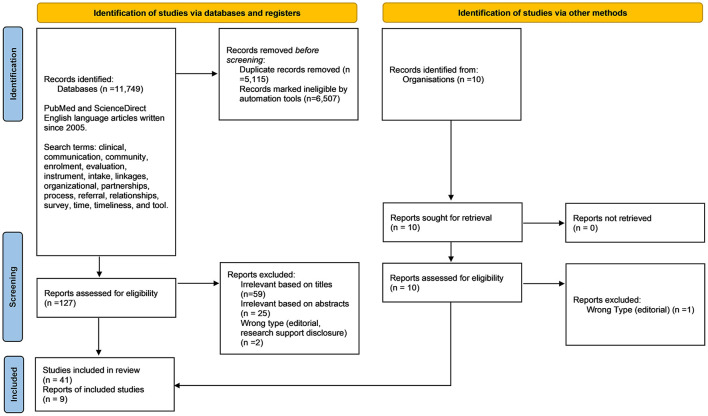
We built on an existing framework and conducted a literature review to guide the design of our survey, and obtained feedback from academic, clinical, and community-based experts. To pretest the instrument, we conducted 10 think-aloud interviews with community-based health-promotion organizations. We performed feasibility testing with 38 staff from 20 community organizations, followed by criterion-validity testing.
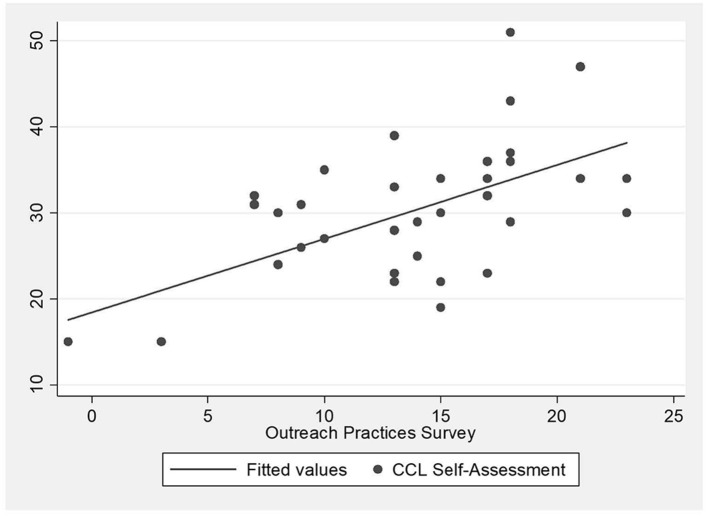
The 15-item final instrument includes five domains: Nature of the Relationship, Communication, Referral Process, Feedback Loop, and Timeliness. Expert feedback included keeping the CCL Self-Assessment brief and actionable. Think-aloud interviews produced a range of revisions related to item wording, instructions, brevity, and formatting. Feasibility testing showed high response rate and ease of administration. Sites scoring high on the CCL Self-Assessment also scored high on the criterion measure.
We demonstrate feasibility, as well as face, content, construct, and criterion validity. Initial results suggest the CCL Self-Assessment survey may be used by community organizations to identify strengths and weaknesses of their linkages. Next steps include additional statistical validation and testing to determine how the CCL Self-Assessment survey works in the field as well as providing specific tools to improve linkages.
临床-社区联系(CCLs)可以改善健康状况,但很少有工具可以评估这些合作关系。为了弥补这一空白,我们开发并测试了临床-社区联系自我评估调查(CCL 自我评估)。
我们在现有框架的基础上进行了文献回顾,以指导我们的调查设计,并从学术、临床和社区为基础的专家那里获得了反馈。为了对该工具进行预测试,我们对 10 个社区健康促进组织进行了 10 次思维大声化访谈。我们对 20 个社区组织的 38 名工作人员进行了可行性测试,然后进行了标准有效性测试。
最终的 15 项工具包括五个领域:关系的性质、沟通、转诊流程、反馈循环和及时性。专家反馈包括保持 CCL 自我评估简洁和可操作性。思维大声化访谈产生了一系列与项目措辞、说明、简洁性和格式相关的修订。可行性测试显示,回应率高,易于管理。在 CCL 自我评估中得分高的地点在标准衡量中也得分高。
我们证明了可行性,以及表面、内容、结构和标准的有效性。初步结果表明,CCL 自我评估调查可以被社区组织用来确定其联系的优势和劣势。下一步包括进一步的统计验证和测试,以确定 CCL 自我评估调查在现场的工作方式,以及提供具体的工具来改善联系。