Lu Di, Xu Yan, Liu Qiuli, Zhang Qi
The Biotherapy Center, The Third Affiliated Hospital of Sun Yat-sen University, Guangzhou, China.
Front Cell Dev Biol. 2021 Jun 25;9:681171. doi: 10.3389/fcell.2021.681171. eCollection 2021.
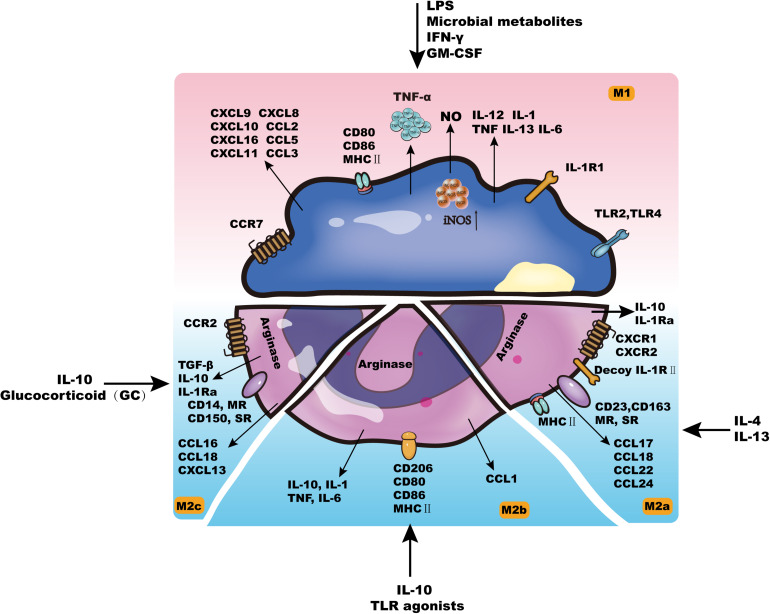
Macrophages are involved in almost every aspect of biological systems and include development, homeostasis and repair. Mesenchymal stem cells (MSCs) have good clinical application prospects due to their ability to regulate adaptive and innate immune cells, particularly macrophages, and they have been used successfully for many immune disorders, including inflammatory bowel disease (IBD), acute lung injury, and wound healing, which have been reported as macrophage-mediated disorders. In the present review, we focus on the interaction between MSCs and macrophages and summarize their methods of interaction and communication, such as cell-to-cell contact, soluble factor secretion, and organelle transfer. In addition, we discuss the roles of MSC-macrophage crosstalk in the development of disease and maintenance of homeostasis of inflammatory microenvironments. Finally, we provide optimal strategies for applications in immune-related disease treatments.
巨噬细胞几乎参与生物系统的各个方面,包括发育、稳态和修复。间充质干细胞(MSC)因其调节适应性免疫细胞和固有免疫细胞(尤其是巨噬细胞)的能力而具有良好的临床应用前景,并且已成功用于多种免疫紊乱疾病,包括炎症性肠病(IBD)、急性肺损伤和伤口愈合,这些疾病已被报道为巨噬细胞介导的疾病。在本综述中,我们聚焦于MSC与巨噬细胞之间的相互作用,并总结它们的相互作用和通讯方式,如细胞间接触、可溶性因子分泌和细胞器转移。此外,我们讨论了MSC-巨噬细胞相互作用在疾病发展和炎症微环境稳态维持中的作用。最后,我们提供了在免疫相关疾病治疗中的最佳应用策略。