INRAE, Université de Tours, UMR 1282 Infectiologie et Santé Publique, 37380, Nouzilly, France.
INRAE, Université de Toulouse, ENVT, INP-Purpan, UPS, UMR 1331 Toxalim, 31027, Toulouse, France.
Sci Rep. 2021 Jul 12;11(1):14278. doi: 10.1038/s41598-021-93468-2.
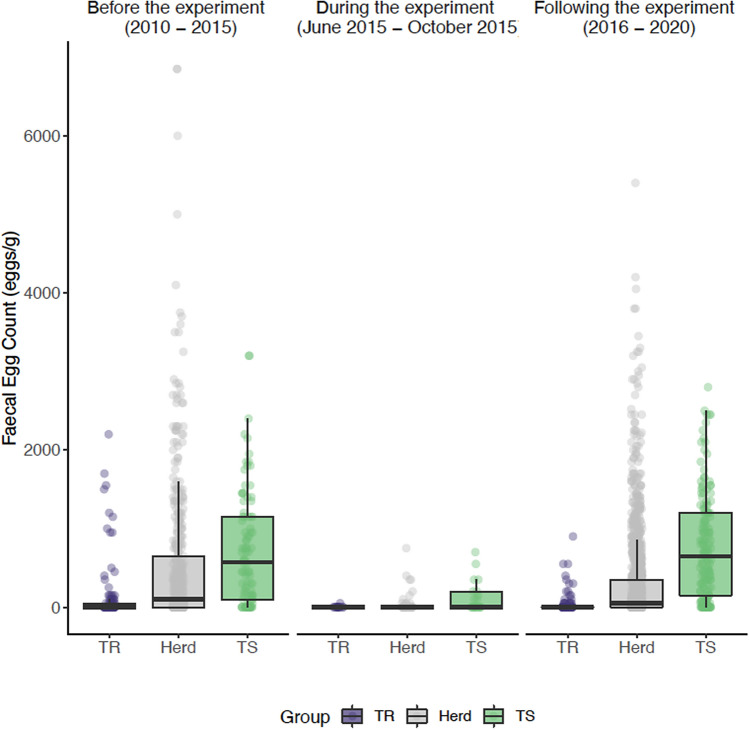
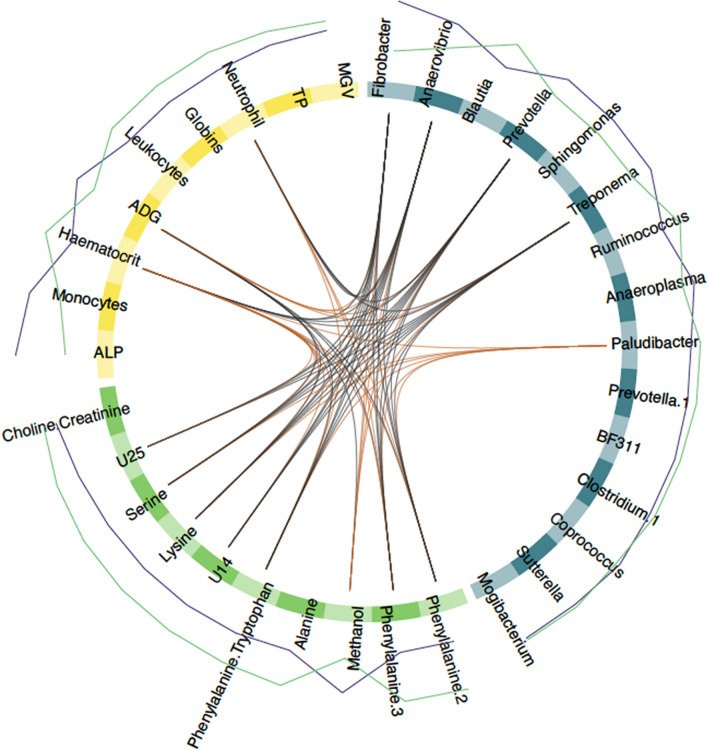
The widespread failure of anthelmintic drugs against nematodes of veterinary interest requires novel control strategies. Selective treatment of the most susceptible individuals could reduce drug selection pressure but requires appropriate biomarkers of the intrinsic susceptibility potential. To date, this has been missing in livestock species. Here, we selected Welsh ponies with divergent intrinsic susceptibility (measured by their egg excretion levels) to cyathostomin infection and found that their divergence was sustained across a 10-year time window. Using this unique set of individuals, we monitored variations in their blood cell populations, plasma metabolites and faecal microbiota over a grazing season to isolate core differences between their respective responses under worm-free or natural infection conditions. Our analyses identified the concomitant rise in plasma phenylalanine level and faecal Prevotella abundance and the reduction in circulating monocyte counts as biomarkers of the need for drug treatment (egg excretion above 200 eggs/g). This biological signal was replicated in other independent populations. We also unravelled an immunometabolic network encompassing plasma beta-hydroxybutyrate level, short-chain fatty acid producing bacteria and circulating neutrophils that forms the discriminant baseline between susceptible and resistant individuals. Altogether our observations open new perspectives on the susceptibility of equids to strongylid infection and leave scope for both new biomarkers of infection and nutritional intervention.
抗蠕虫药物对兽医关注的线虫普遍失效,需要新的控制策略。选择性治疗最易感的个体可以降低药物选择压力,但需要有合适的内在易感性潜在标志物。迄今为止,家畜物种还缺乏这种标志物。在这里,我们选择了内在易感性(通过其卵排出水平衡量)不同的威尔士小马进行旋毛虫感染,发现它们的差异在 10 年的时间窗口内得以维持。利用这组独特的个体,我们监测了它们的血细胞群、血浆代谢物和粪便微生物群在放牧季节的变化,以分离它们在无蠕虫或自然感染条件下各自反应的核心差异。我们的分析确定了血浆苯丙氨酸水平和粪便普雷沃氏菌丰度的同时升高以及循环单核细胞计数的降低是需要药物治疗的标志物(卵排出量超过 200 个/克)。该生物信号在其他独立群体中得到了复制。我们还揭示了一个包含血浆β-羟丁酸水平、产生短链脂肪酸的细菌和循环中性粒细胞的免疫代谢网络,它构成了易感个体和抗性个体之间的判别基线。总之,我们的观察结果为马属动物对 Strongylid 感染的易感性开辟了新的视角,并为感染和营养干预的新标志物留下了空间。