Rudolf Schönheimer Institute of Biochemistry, Faculty of Medicine, Leipzig University, Leipzig, Germany.
Department of Internal Medicine, Division of Rheumatology, Leipzig University, Leipzig, Germany.
PLoS Genet. 2019 May 23;15(5):e1008145. doi: 10.1371/journal.pgen.1008145. eCollection 2019 May.
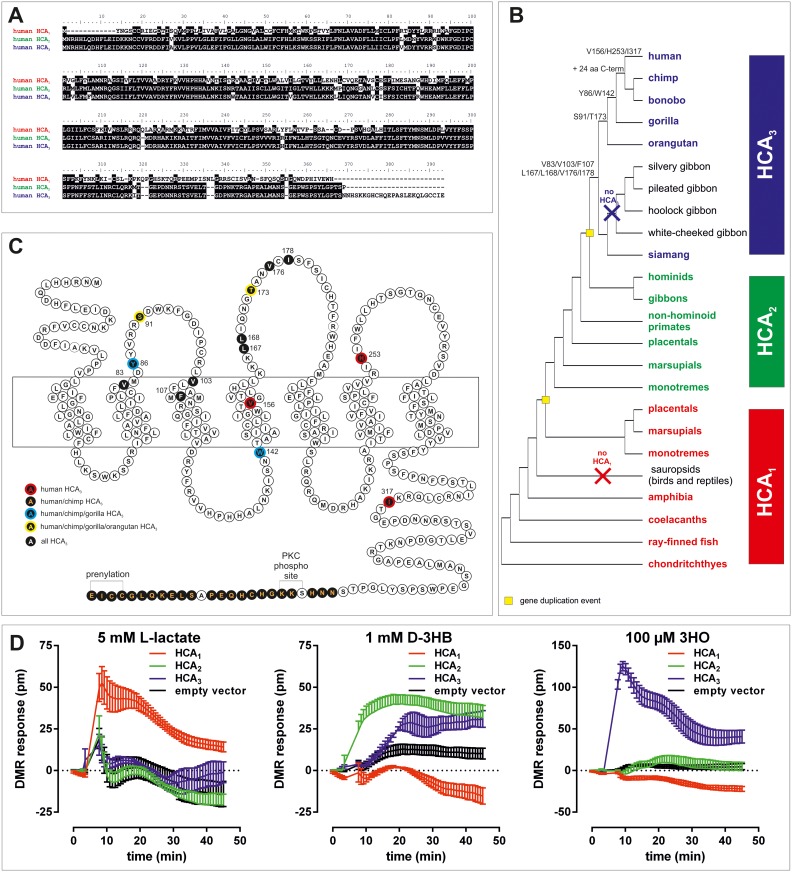
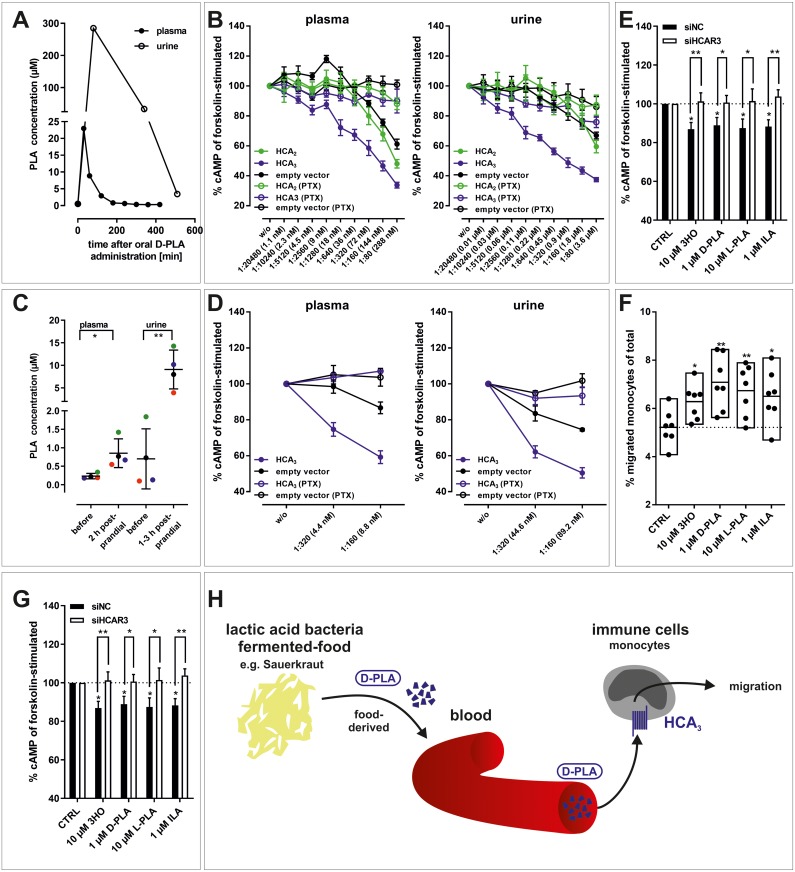
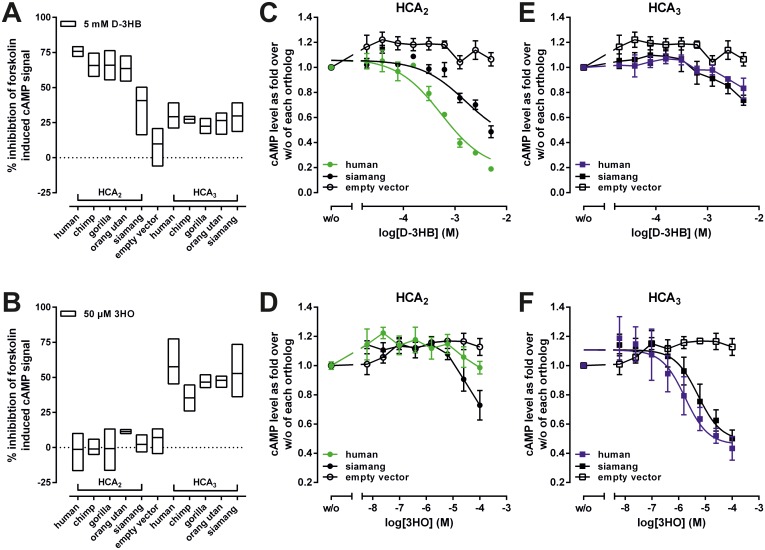
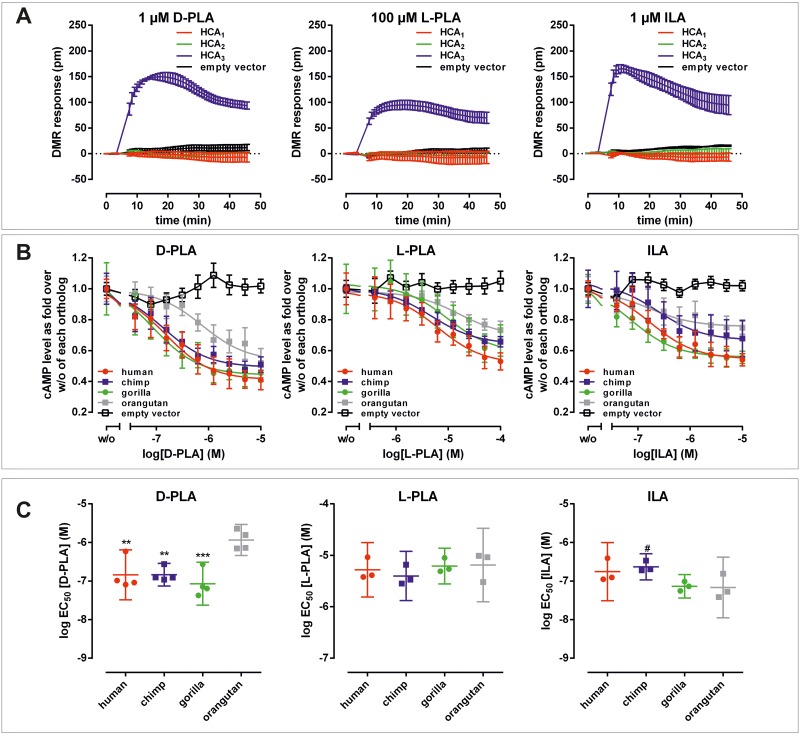
The interplay of microbiota and the human host is physiologically crucial in health and diseases. The beneficial effects of lactic acid bacteria (LAB), permanently colonizing the human intestine or transiently obtained from food, have been extensively reported. However, the molecular understanding of how LAB modulate human physiology is still limited. G protein-coupled receptors for hydroxycarboxylic acids (HCAR) are regulators of immune functions and energy homeostasis under changing metabolic and dietary conditions. Most mammals have two HCAR (HCA1, HCA2) but humans and other hominids contain a third member (HCA3) in their genomes. A plausible hypothesis why HCA3 function was advantageous in hominid evolution was lacking. Here, we used a combination of evolutionary, analytical and functional methods to unravel the role of HCA3 in vitro and in vivo. The functional studies included different pharmacological assays, analyses of human monocytes and pharmacokinetic measurements in human. We report the discovery of the interaction of D-phenyllactic acid (D-PLA) and the human host through highly potent activation of HCA3. D-PLA is an anti-bacterial metabolite found in high concentrations in LAB-fermented food such as Sauerkraut. We demonstrate that D-PLA from such alimentary sources is well absorbed from the human gut leading to high plasma and urine levels and triggers pertussis toxin-sensitive migration of primary human monocytes in an HCA3-dependent manner. We provide evolutionary, analytical and functional evidence supporting the hypothesis that HCA3 was consolidated in hominids as a new signaling system for LAB-derived metabolites.
微生物群和人类宿主的相互作用在健康和疾病中具有生理重要性。永久性定植于人类肠道或从食物中短暂获得的乳酸菌 (LAB) 的有益作用已被广泛报道。然而,关于 LAB 如何调节人体生理学的分子理解仍然有限。羟基羧酸 (HCAR) 的 G 蛋白偶联受体是在代谢和饮食条件发生变化时调节免疫功能和能量平衡的调节剂。大多数哺乳动物有两种 HCAR(HCA1、HCA2),但人类和其他灵长类动物的基因组中含有第三种成员 (HCA3)。缺乏关于 HCA3 在人类进化中具有优势的合理假设。在这里,我们使用进化、分析和功能方法的组合来揭示 HCA3 在体外和体内的作用。功能研究包括不同的药理学测定、人单核细胞分析和人体药代动力学测量。我们报告了通过高度有效地激活 HCA3 发现 D-苯乳酸 (D-PLA) 与人类宿主的相互作用。D-PLA 是一种在 LAB 发酵食品(如酸菜)中发现的高浓度的抗细菌代谢物。我们证明,来自这些饮食来源的 D-PLA 可被人体肠道很好地吸收,导致高血浆和尿液水平,并以 HCA3 依赖性方式触发百日咳毒素敏感的原代人单核细胞迁移。我们提供了进化、分析和功能证据,支持 HCA3 作为 LAB 衍生代谢物的新信号系统在人类中得到巩固的假设。