Daniels S P, Leng J, Swann J R, Proudman C J
School of Equine Management and Science, Royal Agricultural University, Cirencester, Gloucestershire, GL9 6JS, UK.
School of Veterinary Medicine, University of Surrey, Guildford, Surrey, GU2 7TE, UK.
Anim Microbiome. 2020 Oct 14;2(1):38. doi: 10.1186/s42523-020-00056-2.
Anthelmintic treatment is a risk factor for intestinal disease in the horse, known as colic. However the mechanisms involved in the onset of disease post anthelmintic treatment are unknown. The interaction between anthelmintic drugs and the gut microbiota may be associated with this observed increase in risk of colic. Little is known about the interaction between gut microbiota and anthelmintics and how treatment may alter microbiome function. The objectives of this study were: To characterise (1) faecal microbiota, (2) feed fermentation kinetics in vitro and (3) metabolic profiles following moxidectin administration to horses with very low (0 epg) adult strongyle burdens.
Moxidectin will not alter (1) faecal microbiota, (2) feed fermentation in vitro, or, (3) host metabolome.
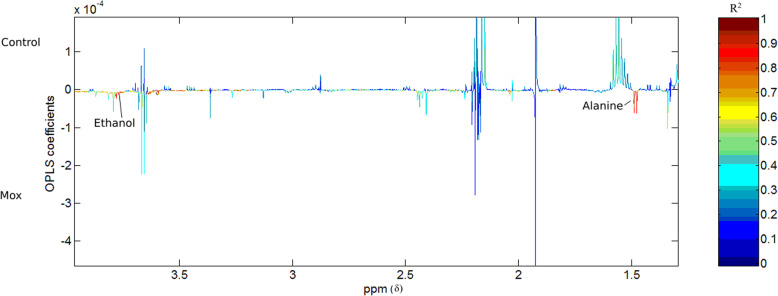
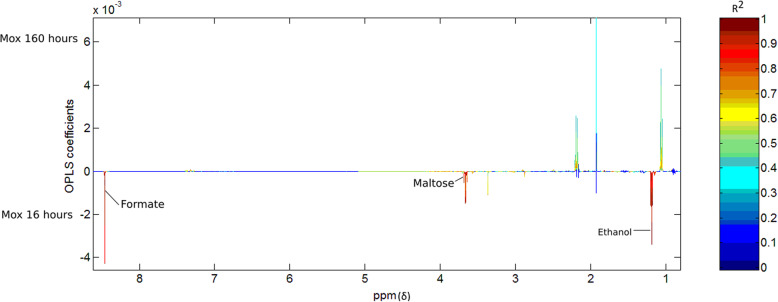
Moxidectin increased the relative abundance of Deferribacter spp. and Spirochaetes spp. observed after 160 h in moxidectin treated horses. Reduced in vitro fibre fermentation was observed 16 h following moxidectin administration in vivo (P = 0.001), along with lower pH in the in vitro fermentations from the moxidectin treated group. Metabolic profiles from urine samples did not differ between the treatment groups. However metabolic profiles from in vitro fermentations differed between moxidectin and control groups 16 h after treatment (R = 0.69, QY = 0.48), and within the moxidectin group between 16 h and 160 h post moxidectin treatment (R = 0.79, QY = 0.77). Metabolic profiles from in vitro fermentations and fermentation kinetics both indicated altered carbohydrate metabolism following in vivo treatment with moxidectin.
These data suggest that in horses with low parasite burdens moxidectin had a small but measurable effect on both the community structure and the function of the gut microbiome.
驱虫治疗是马匹肠道疾病(即绞痛)的一个风险因素。然而,驱虫治疗后疾病发作所涉及的机制尚不清楚。驱虫药物与肠道微生物群之间的相互作用可能与观察到的绞痛风险增加有关。关于肠道微生物群与驱虫药之间的相互作用以及治疗如何改变微生物组功能,人们了解甚少。本研究的目的是:表征(1)粪便微生物群,(2)体外饲料发酵动力学,以及(3)给成虫圆线虫负荷极低(0个虫卵/克)的马匹施用莫西菌素后的代谢谱。
莫西菌素不会改变(1)粪便微生物群,(2)体外饲料发酵,或(3)宿主代谢组。
在莫西菌素治疗的马匹中,160小时后观察到莫西菌素增加了脱硫杆菌属和螺旋体属的相对丰度。在体内施用莫西菌素16小时后,观察到体外纤维发酵减少(P = 0.001),同时莫西菌素治疗组的体外发酵pH值较低。治疗组之间尿液样本的代谢谱没有差异。然而,治疗16小时后,莫西菌素组和对照组体外发酵的代谢谱不同(R = 0.69,QY = 0.48),并且在莫西菌素组中,莫西菌素治疗后16小时至160小时之间也不同(R = 0.79,QY = 0.77)。体外发酵的代谢谱和发酵动力学均表明,体内用莫西菌素治疗后碳水化合物代谢发生了改变。
这些数据表明,对于寄生虫负荷低的马匹,莫西菌素对肠道微生物组的群落结构和功能有微小但可测量的影响。