Department of Urology, West China Hospital, Sichuan University, Chengdu, China.
Andrology Laboratory, West China Hospital, Sichuan University, Chengdu, China.
J Med Internet Res. 2021 Jul 6;23(7):e27029. doi: 10.2196/27029.
Lower urinary tract symptoms (LUTS) are one of the most commonly described urination disorders worldwide. Previous investigations have focused predominantly on the prospective identification of cases that meet the researchers' criteria; thus, the genuine demands regarding LUTS from patients and related issues may be neglected.
We aimed to examine web-based search trends and behaviors related to LUTS on a national and regional scale by using the dominant, major search engine in mainland China.
Baidu Index was queried by using LUTS-related terms for the period of January 2011 to September 2020. The search volume for each term was recorded to analyze search trends and demographic distributions. For user interest, user demand graph data and trend data were collected and analyzed.
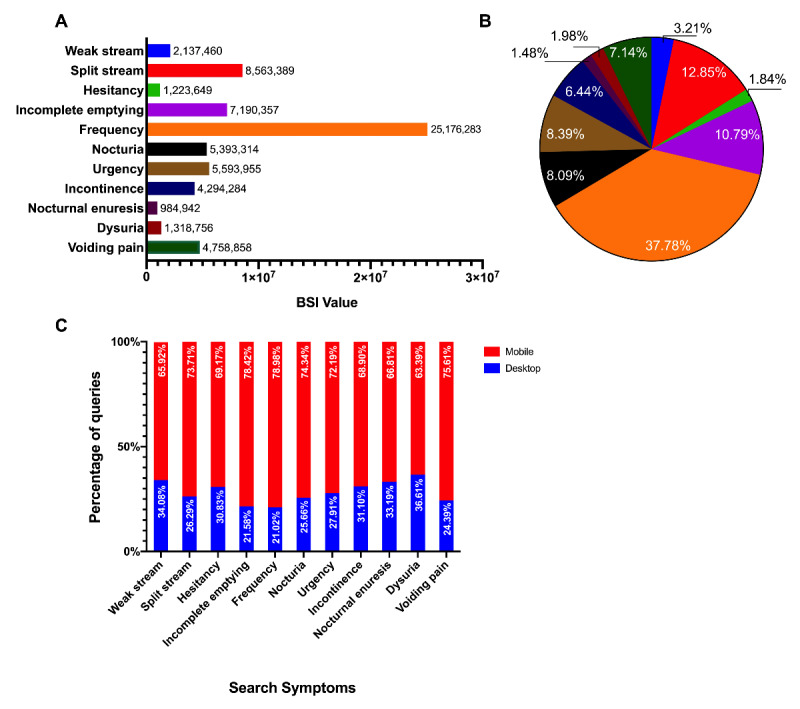
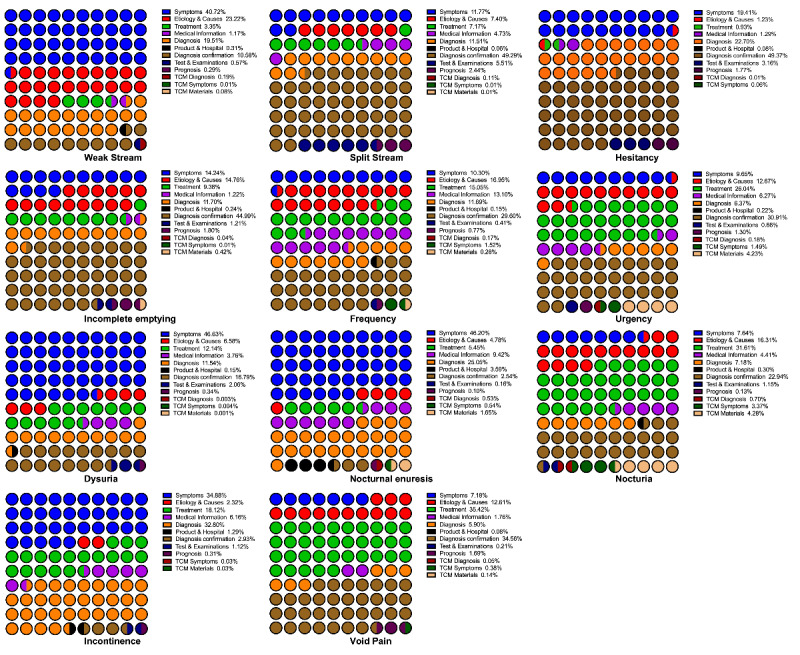
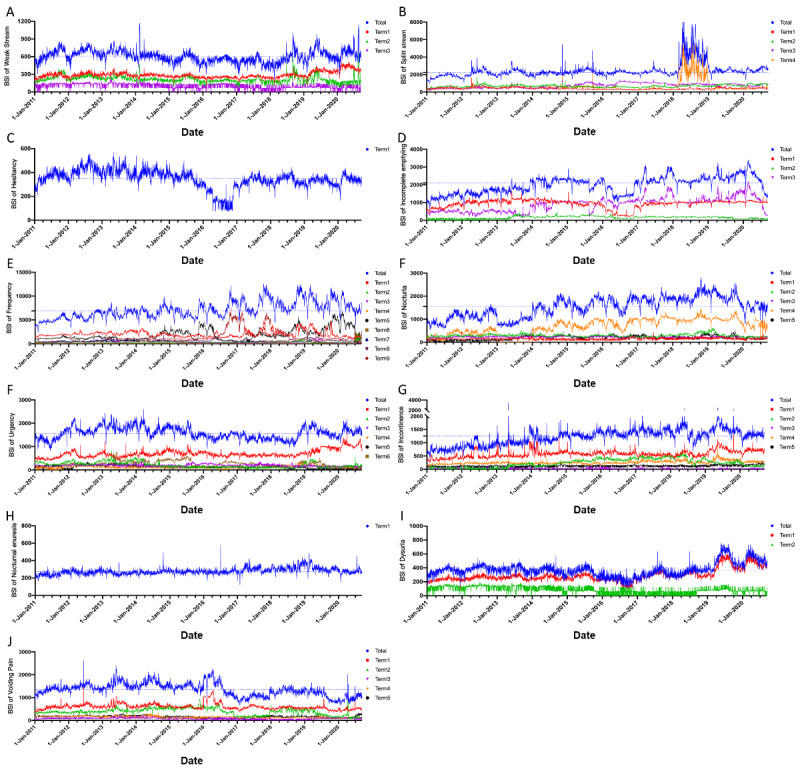
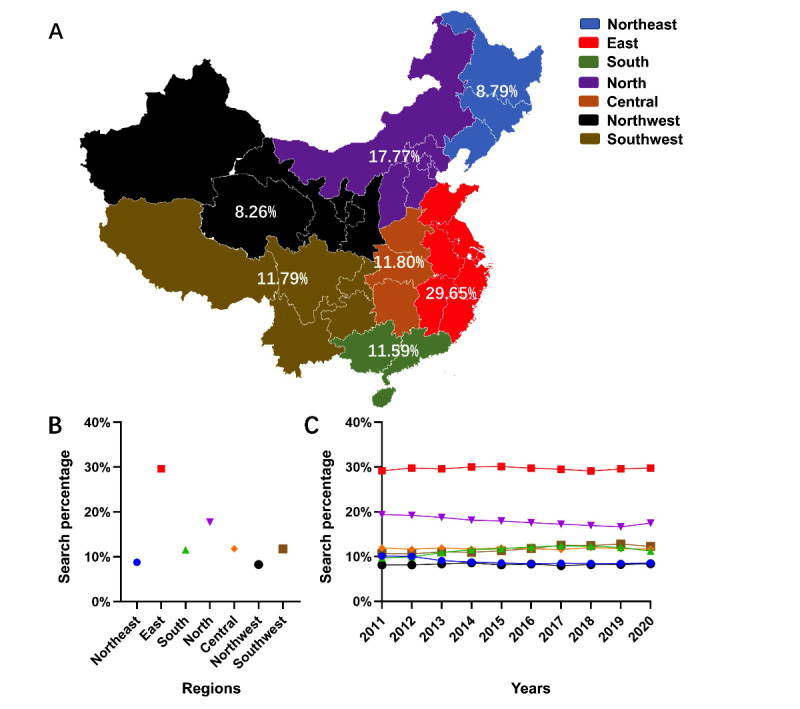
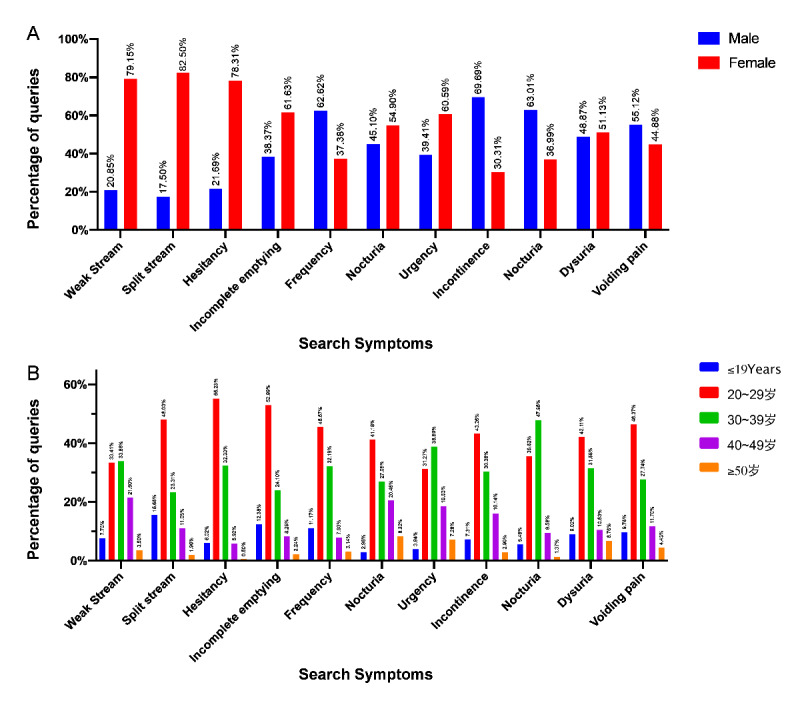
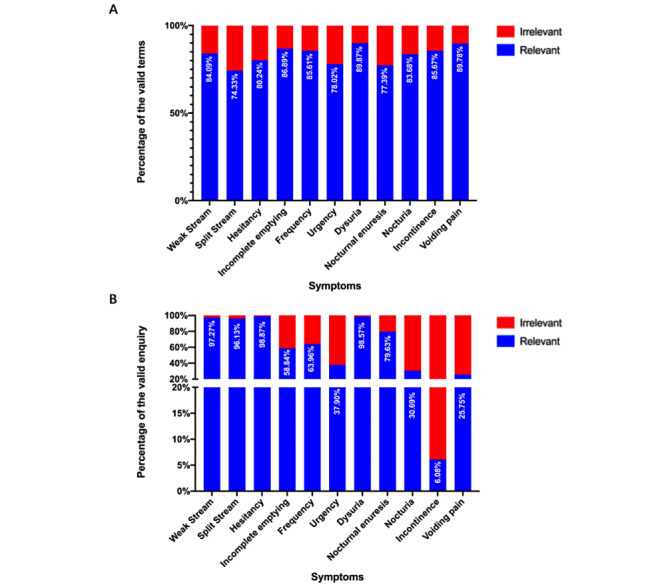
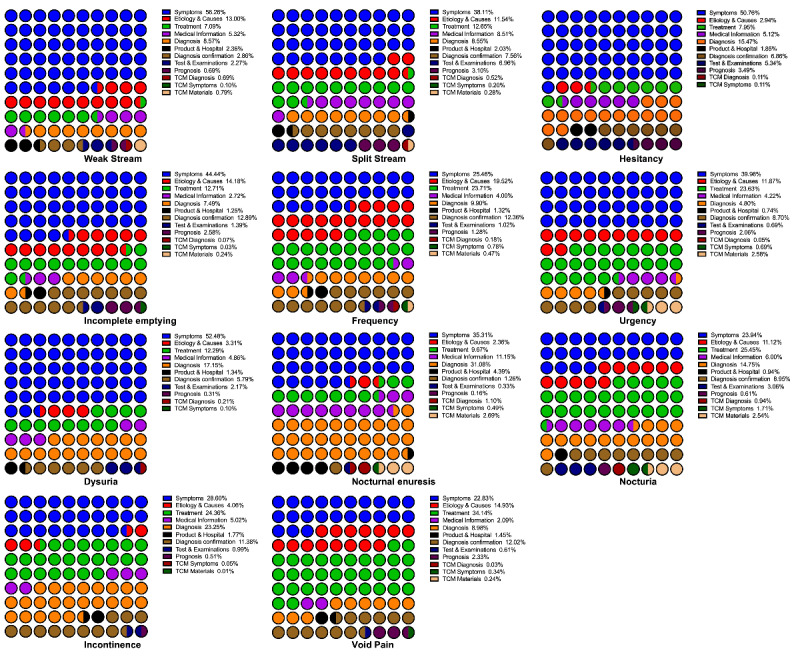
Of the 13 LUTS domains, 11 domains are available in the Baidu Index database. The Baidu search index for each LUTS domain varied from 37.78% to 1.47%. The search trends for urinary frequency (2011-2018: annual percent change APC=7.82%; P<.001), incomplete emptying (2011-2014: APC=17.74%; P<.001), nocturia (2011-2018: APC=11.54%; P<.001), dysuria (2017-2020: APC=20.77%; P<.001), and incontinence (2011-2016: APC=13.39%; P<.001) exhibited fluctuations over time. The search index trends for weak stream (2011-2017: APC=-4.68%; P<.001; 2017-2020: APC=9.32%; P=.23), split stream (2011-2013: APC=9.50%; P=.44; 2013-2020: APC=2.05%; P=.71), urgency (2011-2018: APC=-2.63%; P=.03; 2018-2020: APC=8.58%; P=.19), and nocturnal enuresis (2011-2018: APC=-3.20%; P=.001; 2018-2020: APC=-4.21%; P=.04) remained relatively stable and consistent. The age distribution of the population for all LUTS-related inquiries showed that individuals aged 20 to 40 years made 73.86% (49,218,123/66,635,247) of the total search inquiries. Further, individuals aged 40 to 49 years made 12.29% (8,193,922/66,635,247) of the total search inquiries for all LUTS-related terms. People from the east part of China made 67.79% (45,172,031/66,635,247) of the total search queries. Additionally, most of the searches for LUTS-related terms were related to those for urinary diseases to varying degrees.
Web-based interest in LUTS-related terms fluctuated wildly and was reflected timely by Baidu Index in mainland China. The web-based search popularity of each LUTS-related term varied significantly and differed based on personal interests, the population's concerns, regional variations, and gender. These data can be used by care providers to track the prevalence of LUTS and the population's interests, guide the establishment of disease-specific health care policies, and optimize physician-patient health care sessions.
下尿路症状(LUTS)是全球最常见的排尿障碍之一。既往研究主要集中在前瞻性识别符合研究人员标准的病例上,因此可能忽略了患者对 LUTS 的真实需求及相关问题。
我们旨在利用中国内地主流、大型搜索引擎,从全国和地区层面研究与 LUTS 相关的网络搜索趋势和行为。
2011 年 1 月至 2020 年 9 月,我们使用 LUTS 相关术语在百度指数中进行查询。记录每个术语的搜索量,以分析搜索趋势和人口统计学分布。为了了解用户兴趣,我们收集并分析了用户需求图数据和趋势数据。
在 13 个 LUTS 领域中,11 个领域可在百度指数数据库中获得。每个 LUTS 领域的百度搜索指数在 37.78%至 1.47%之间变化。尿频数(2011-2018 年:年变化百分比 APC=7.82%;P<.001)、不完全排空(2011-2014 年:APC=17.74%;P<.001)、夜尿症(2011-2018 年:APC=11.54%;P<.001)、排尿困难(2017-2020 年:APC=20.77%;P<.001)和失禁(2011-2016 年:APC=13.39%;P<.001)的搜索趋势随时间波动。尿流弱(2011-2017 年:APC=-4.68%;P<.001;2017-2020 年:APC=9.32%;P=.23)、尿流分叉(2011-2013 年:APC=9.50%;P=.44;2013-2020 年:APC=2.05%;P=.71)、急迫性尿失禁(2011-2018 年:APC=-2.63%;P=.03;2018-2020 年:APC=8.58%;P=.19)和夜遗尿(2011-2018 年:APC=-3.20%;P=.001;2018-2020 年:APC=-4.21%;P=.04)的搜索指数趋势相对稳定。所有 LUTS 相关查询的人群年龄分布显示,20 至 40 岁的人群占总搜索查询的 73.86%(49,218,123/66,635,247)。进一步分析显示,40 至 49 岁的人群占所有 LUTS 相关术语总搜索查询的 12.29%(8,193,922/66,635,247)。来自中国东部地区的人群占总搜索查询的 67.79%(45,172,031/66,635,247)。此外,LUTS 相关术语的大部分搜索与尿路疾病相关,程度不同。
中国内地的 LUTS 相关术语的网络兴趣波动剧烈,百度指数能及时反映这一情况。每个 LUTS 相关术语的网络搜索热度差异显著,与个人兴趣、人群关注、地域差异和性别有关。这些数据可被医疗保健提供者用于追踪 LUTS 的流行情况和人群的兴趣,指导制定特定疾病的保健政策,并优化医患保健会议。