Chang Xingyu, Ma Zhanjun, Zhu Guomao, Lu Yubao, Yang Jingjing
The First Clinical Medical College, Lanzhou University, Lanzhou, Gansu 730000, China.
The Second Clinical Medical College, Lanzhou University, Lanzhou, Gansu 730000, China.
J Bone Oncol. 2021 Jun 23;29:100372. doi: 10.1016/j.jbo.2021.100372. eCollection 2021 Aug.
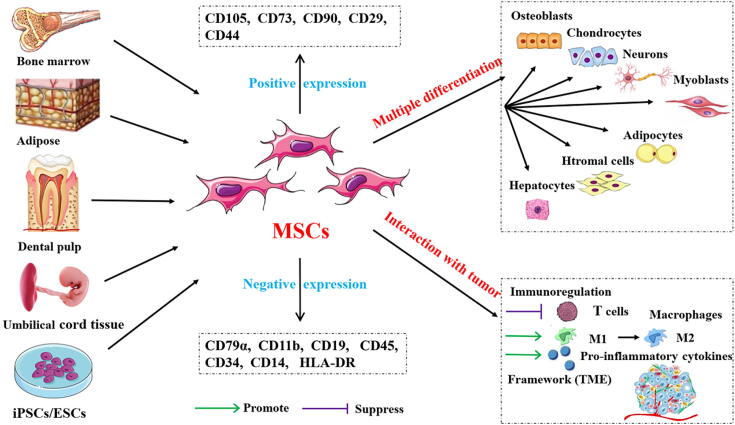
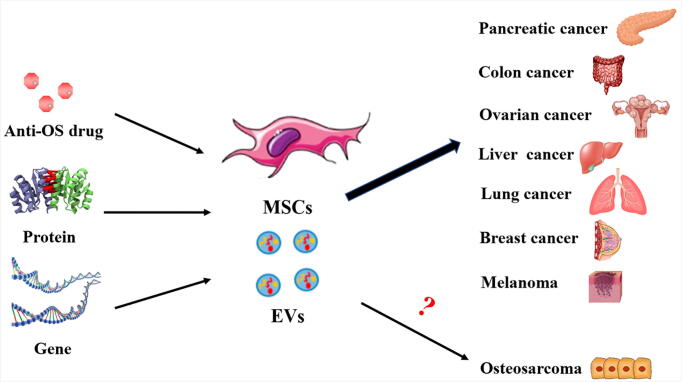
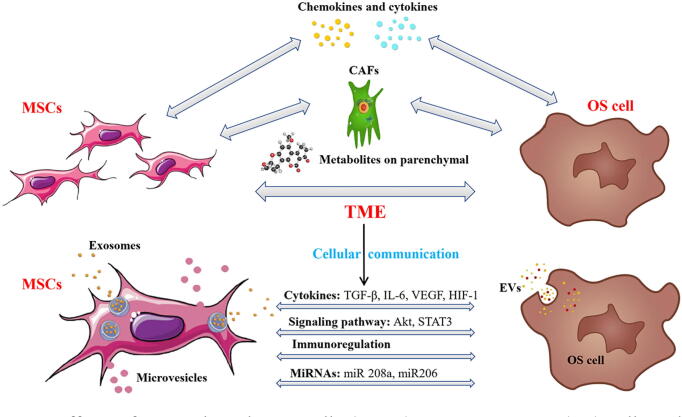
Mesenchymal stem cells (MSCs) are multipotent stem cells with significant potential for regenerative medicine. The tumorigenesis of osteosarcoma is an intricate system and MSCs act as an indispensable part of this, interacting with the tumor microenvironment (TME) during the process. MSCs link to cells by acting on each component in the TME via autocrine or paracrine extracellular vesicles for cellular communication. Because of their unique characteristics, MSCs can be modified and processed into good biological carriers, loaded with drugs, and transfected with anticancer genes for the targeted treatment of osteosarcoma. Previous high-quality reviews have described the biological characteristics of MSCs; this review will discuss the effects of MSCs on the components of the TME and cellular communication and the prospects for clinical applications of MSCs.
间充质干细胞(MSCs)是具有巨大再生医学潜力的多能干细胞。骨肉瘤的肿瘤发生是一个复杂的系统,MSCs是其中不可或缺的一部分,在此过程中与肿瘤微环境(TME)相互作用。MSCs通过自分泌或旁分泌细胞外囊泡作用于TME中的每个成分,从而与细胞建立联系以进行细胞间通讯。由于其独特的特性,MSCs可以被修饰并加工成良好的生物载体,负载药物,并转染抗癌基因以用于骨肉瘤的靶向治疗。以往的高质量综述已经描述了MSCs的生物学特性;本综述将讨论MSCs对TME成分和细胞通讯的影响以及MSCs的临床应用前景。