Health Lit Res Pract. 2021 Jul;5(3):e201-e207. doi: 10.3928/24748307-20210601-01. Epub 2021 Jul 15.
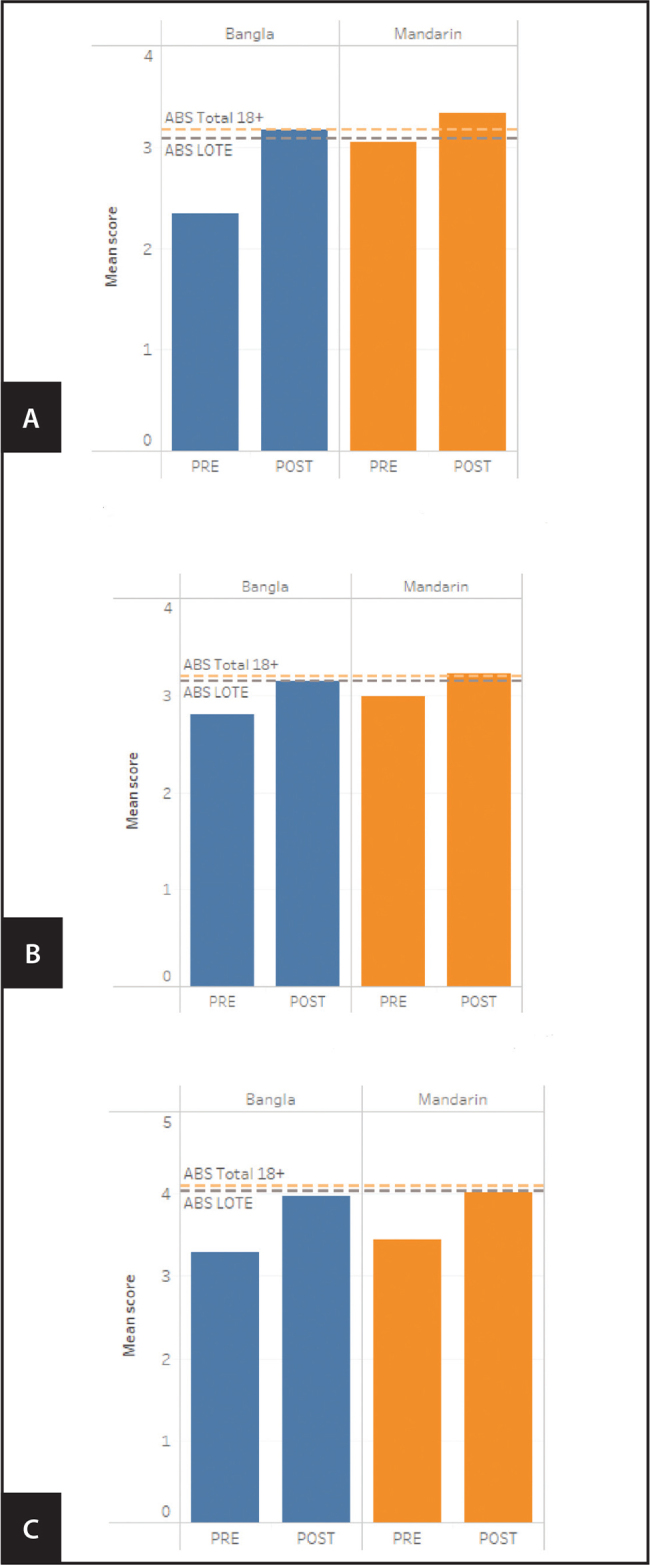
Experiencing migration can create or exacerbate vulnerability to ill health, particularly during pregnancy and new motherhood. Providing a culturally appropriate health literacy intervention to new migrant families may increase social support and the skills and confidence to access health care services and information. This study developed and piloted a health literacy intervention, in the form of culturally redesigned new parent classes, in a culturally diverse location in Australia. The intervention was delivered over a 4-week period by Child and Family Health Nurses, with the help of interpreters and Bilingual Community Researchers, to Bangladeshi and Mandarin-speaking Chinese mothers and grandmothers with a baby age 0 to 1 year. A mixed-methods evaluation was conducted to measure (1) recruitment and attendance of participants, (2) feasibility of the intervention, (3) health literacy of participants, and (4) provider understanding of barriers to health care access. Thirty participants were recruited, and 18 women attended at least three of the four group sessions. Nurses viewed the program as being within the scope of their usual role, demonstrating intervention feasibility. Health literacy scores were higher post-intervention than pre-intervention. Nurses described having increased awareness of barriers to health care access after facilitating the intervention. The program has potential to be scaled up to other areas and languages. .
移民经历可能会导致或加剧健康不良的脆弱性,尤其是在怀孕期间和新妈妈时期。为新移民家庭提供文化上适当的健康素养干预措施可能会增加社会支持以及获得医疗保健服务和信息的技能和信心。本研究在澳大利亚一个文化多元化的地区以重新设计的新父母课程的形式开发并试行健康素养干预措施。由儿童和家庭健康护士在口译员和双语社区研究人员的帮助下,在 4 周的时间内为年龄在 0 至 1 岁的孟加拉语和普通话的母亲和祖母提供服务。采用混合方法评估来衡量:(1)参与者的招募和出席情况,(2)干预措施的可行性,(3)参与者的健康素养,以及(4)提供者对获取医疗保健障碍的理解。共招募了 30 名参与者,其中有 18 名妇女至少参加了四次小组会议中的三次。护士认为该方案在其常规职责范围内,具有干预措施的可行性。干预后健康素养评分高于干预前。护士在促进干预措施后表示,他们对获得医疗保健的障碍有了更多的了解。该方案有可能在其他地区和语言中扩大规模。