Department of Cognitive and Brain Sciences, Ben-Gurion University of the Negev, Be'er Sheva, Israel.
Zlotowski Center for Neuroscience, Ben-Gurion University of the Negev, Be'er Sheva, Israel.
Sci Rep. 2021 Jul 14;11(1):14441. doi: 10.1038/s41598-021-93880-8.
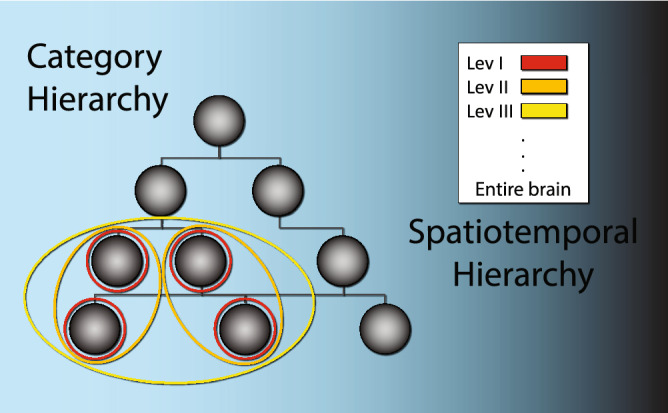
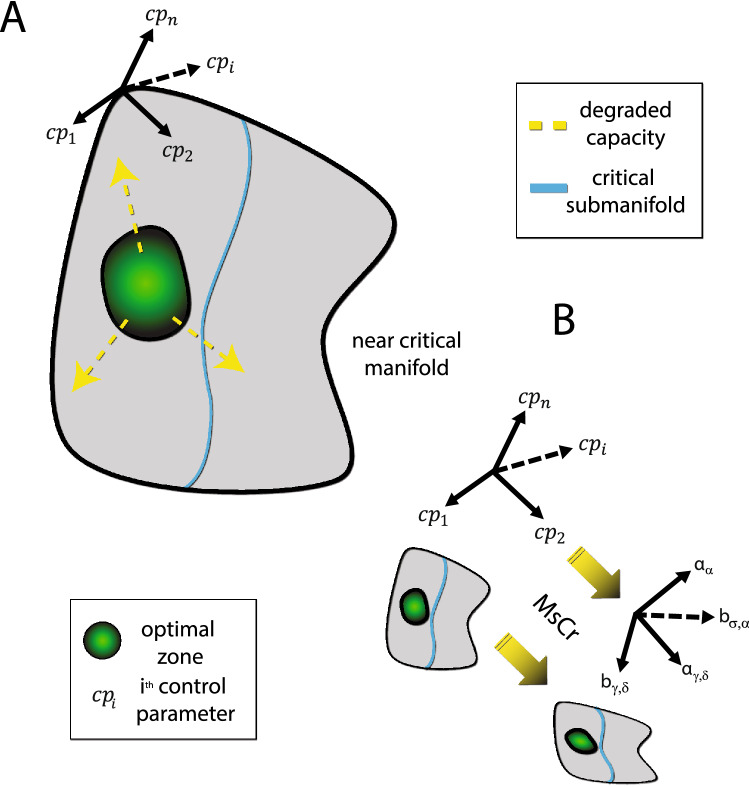
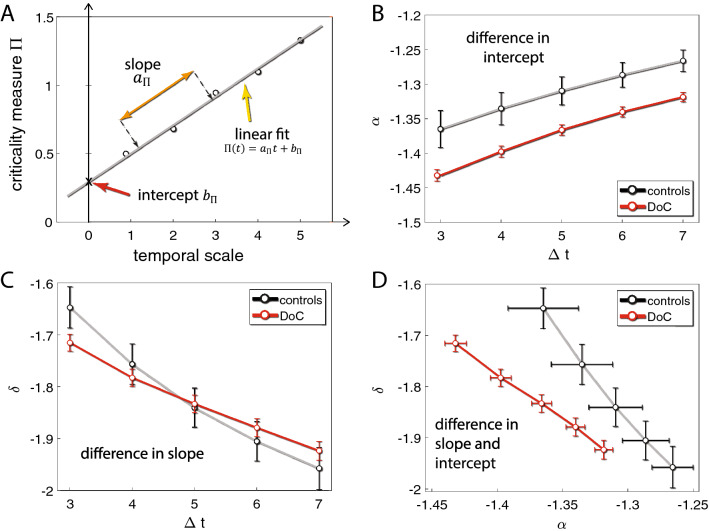
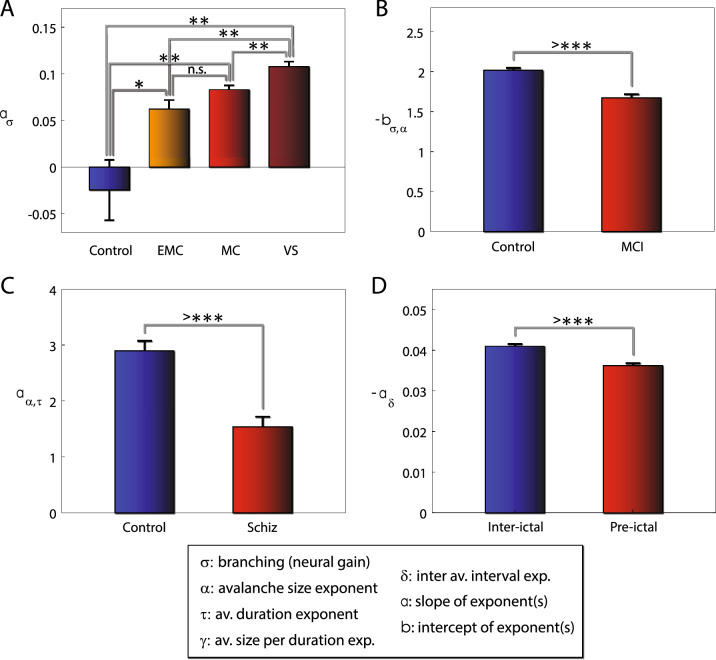
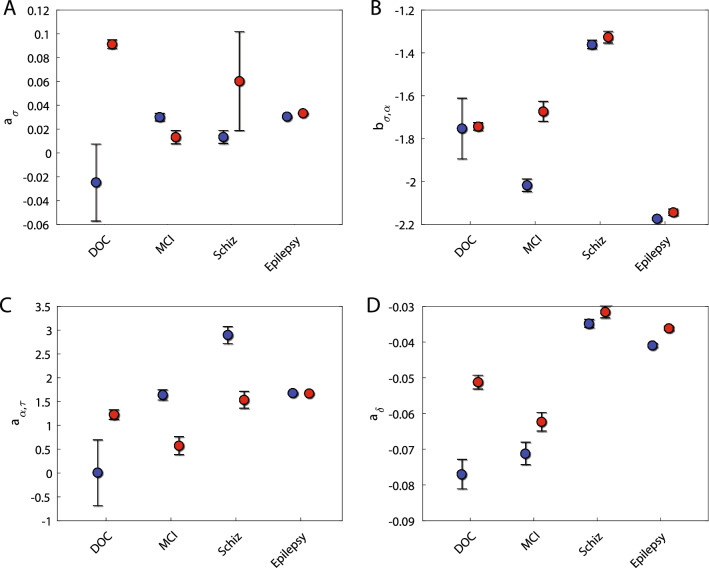
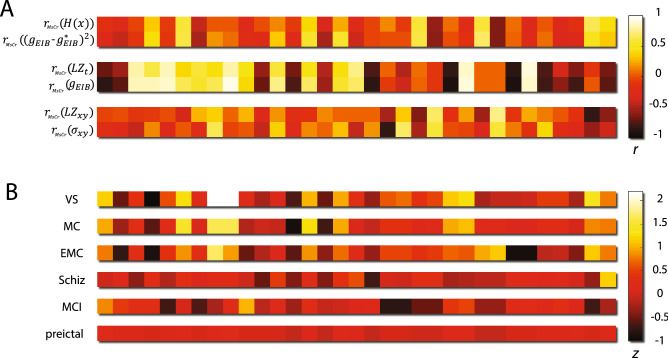
The brain is universally regarded as a system for processing information. If so, any behavioral or cognitive dysfunction should lend itself to depiction in terms of information processing deficiencies. Information is characterized by recursive, hierarchical complexity. The brain accommodates this complexity by a hierarchy of large/slow and small/fast spatiotemporal loops of activity. Thus, successful information processing hinges upon tightly regulating the spatiotemporal makeup of activity, to optimally match the underlying multiscale delay structure of such hierarchical networks. Reduced capacity for information processing will then be expressed as deviance from this requisite multiscale character of spatiotemporal activity. This deviance is captured by a general family of multiscale criticality measures (MsCr). MsCr measures reflect the behavior of conventional criticality measures (such as the branching parameter) across temporal scale. We applied MsCr to MEG and EEG data in several telling degraded information processing scenarios. Consistently with our previous modeling work, MsCr measures systematically varied with information processing capacity: MsCr fingerprints showed deviance in the four states of compromised information processing examined in this study, disorders of consciousness, mild cognitive impairment, schizophrenia and even during pre-ictal activity. MsCr measures might thus be able to serve as general gauges of information processing capacity and, therefore, as normative measures of brain health.
大脑被普遍认为是一个信息处理系统。如果是这样,任何行为或认知功能障碍都应该可以用信息处理缺陷来描述。信息的特点是递归的、层次化的复杂性。大脑通过大/慢和小/快时空活动环路的层次结构来适应这种复杂性。因此,成功的信息处理取决于紧密调节活动的时空构成,以最优地匹配这种分层网络的底层多尺度延迟结构。信息处理能力的降低将表现为偏离这种时空活动的多尺度特征。这种偏差由一类通用的多尺度临界性度量(MsCr)来捕捉。MsCr 度量反映了传统临界性度量(如分支参数)在时间尺度上的行为。我们在几个具有代表性的信息处理能力下降的情况下,将 MsCr 应用于 MEG 和 EEG 数据。与我们之前的建模工作一致,MsCr 度量随着信息处理能力的变化而系统地变化:在本研究中检查的四种信息处理受损状态(意识障碍、轻度认知障碍、精神分裂症,甚至在癫痫发作前活动期间)中,MsCr 指纹显示出偏差。因此,MsCr 度量可能能够作为信息处理能力的通用指标,并且作为大脑健康的规范指标。