CAS Key Lab for Biomedical Effects of Nanomaterials and Nanosafety, Center of Materials Science and Optoelectronics Engineering, CAS center for Excellence in Nanoscience, National Center for Nanoscience and Technology, University of Chinese Academy of Sciences, Beijing, China.
CAS Key Lab for Biomedical Effects of Nanomaterials and Nanosafety, Center of Materials Science and Optoelectronics Engineering, CAS center for Excellence in Nanoscience, National Center for Nanoscience and Technology, University of Chinese Academy of Sciences, Beijing, China; Sino-Danish College, Sino-Danish Center for Education and Research, University of Chinese Academy of Sciences, Beijing, China.
J Colloid Interface Sci. 2021 Dec 15;604:113-121. doi: 10.1016/j.jcis.2021.06.170. Epub 2021 Jul 5.
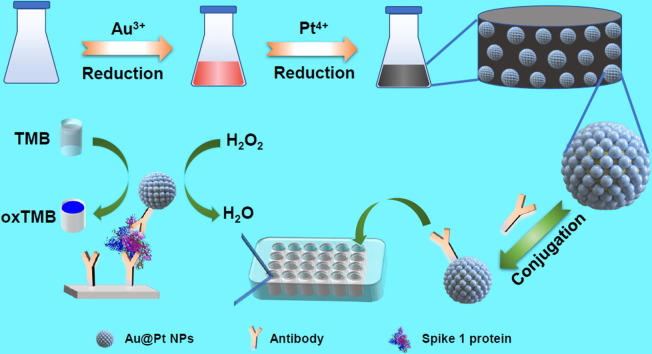
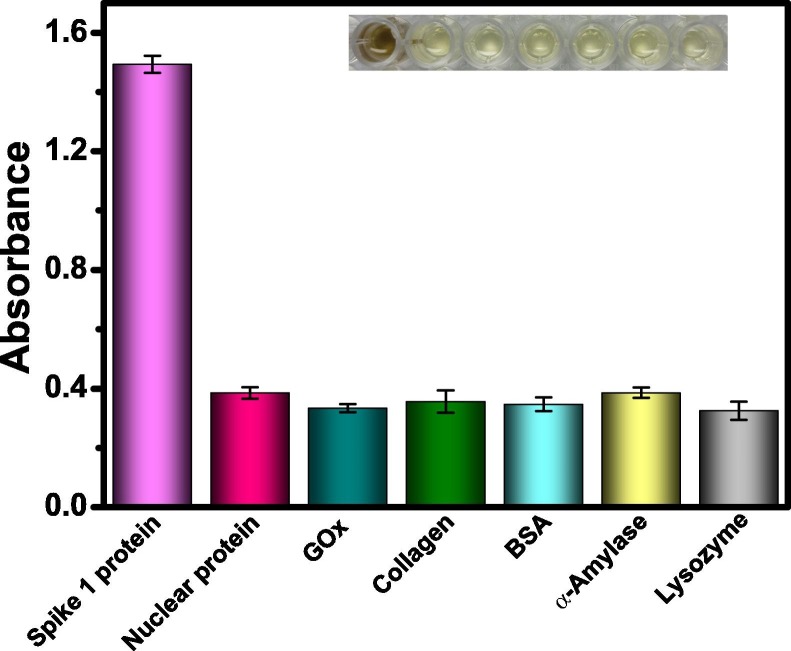
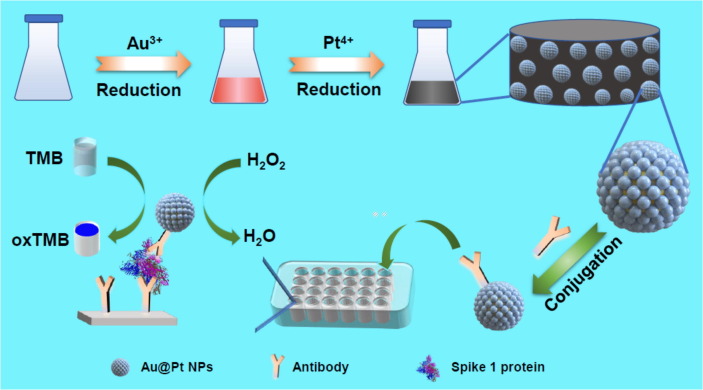
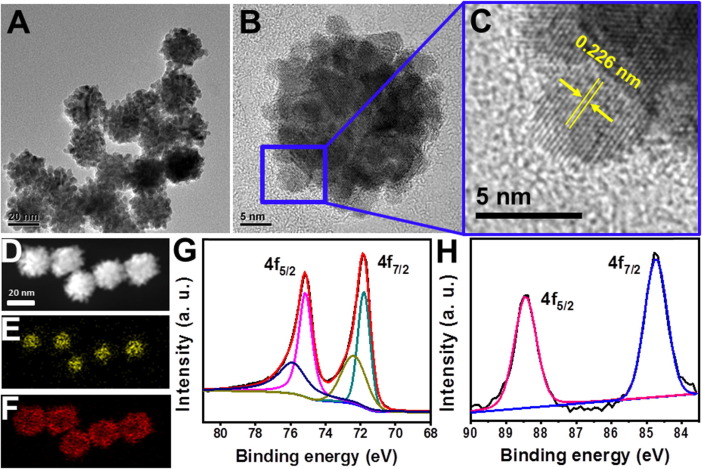
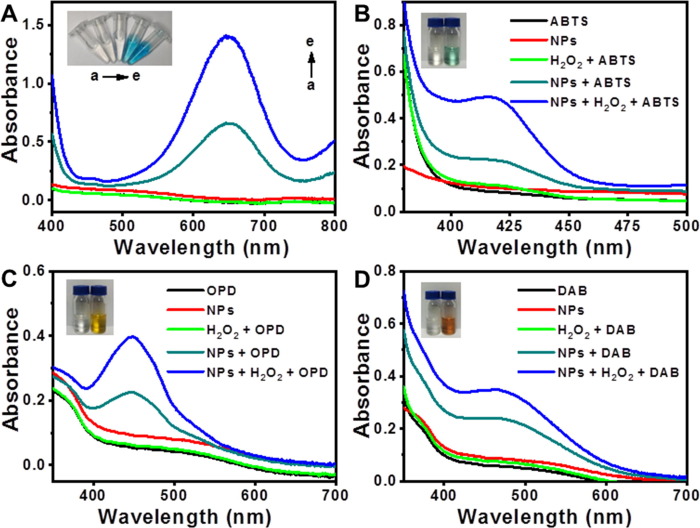
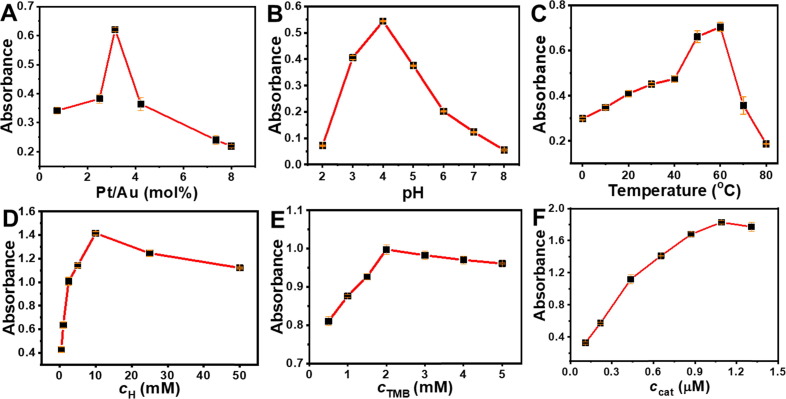
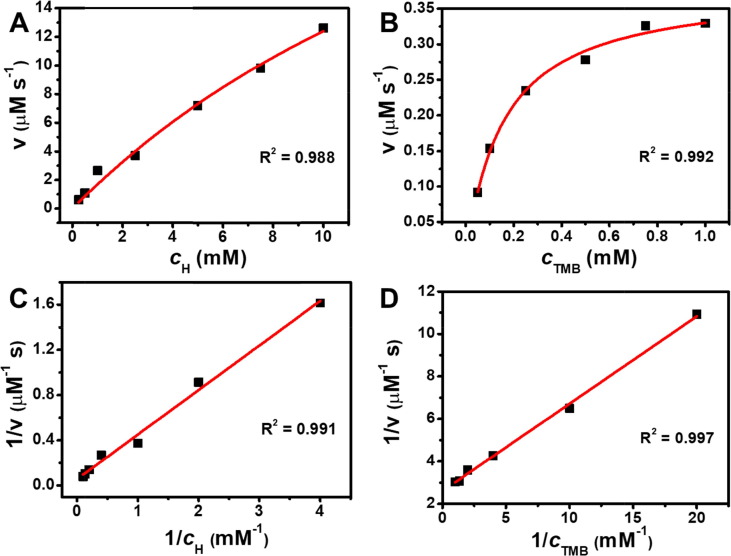
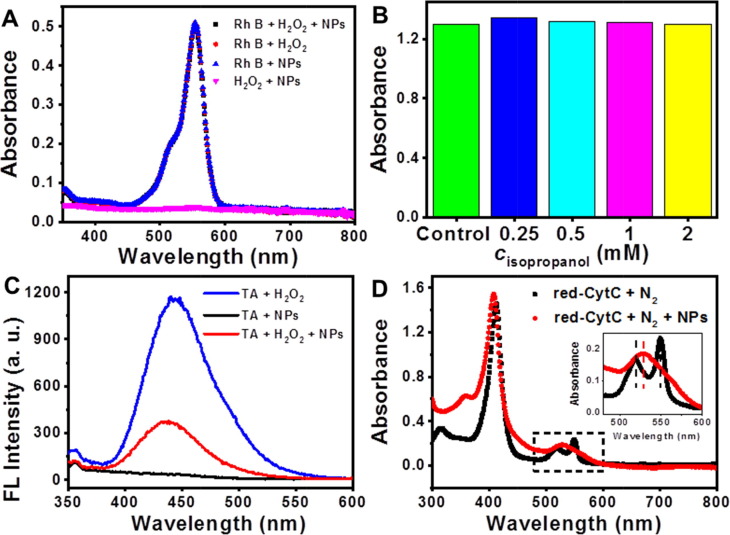
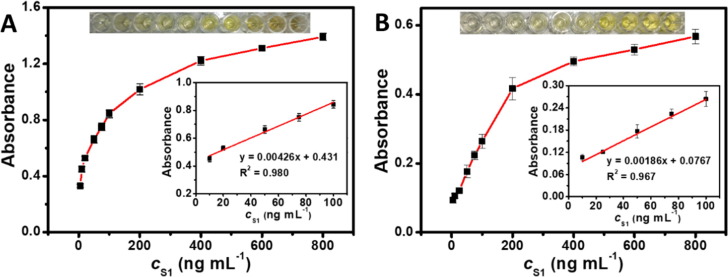
The development of colorimetric assays for rapid and accurate diagnosis of coronavirus disease 2019 (COVID-19), caused by severe acute respiratory syndrome coronavirus 2 (SARS-CoV-2), is of practical importance for point-of-care (POC) testing. Here we report the colorimetric detection of spike (S1) protein of SARS-CoV-2 based on excellent peroxidase-like activity of Au@Pt nanoparticles, with merits of rapidness, easy operation, and high sensitivity. The Au@Pt NPs were fabricated by a facile seed-mediated growth approach, in which spherical Au NPs were premade as seeds, followed by the Pt growth on Au seeds, producing uniform, monodispersed and porous Au@Pt core-shell NPs. The as-obtained Au@Pt NPs showed a remarkable enhancement in the peroxidase-mimic catalysis, which well abided by the typical Michaelis-Menten theory. The enhanced catalysis of Au@Pt NPs was ascribed to the porous nanostructure and formed electron-rich Pt shells, which enabled the catalytic pathway to switch from hydroxyl radical generation to electron transfer process. On a basis of these findings, a colorimetric assay of spike (S1) protein of SARS-CoV-2 was established, with a linear detection range of 10-100 ng mL of protein concentration and a low limit of detection (LOD) of 11 ng mL. The work presents a novel strategy for diagnosis of COVID-19 based on metallic nanozyme-catalysis.
基于金铂纳米粒子(Au@Pt NPs)优异的过氧化物酶样活性,我们开发了一种快速、准确检测新型冠状病毒(SARS-CoV-2)的比色分析法,可用于即时检测(POC)。该方法基于 SARS-CoV-2 的刺突(S1)蛋白,具有快速、操作简单和高灵敏度的优点。Au@Pt NPs 通过一种简单的种子介导生长方法制备,其中先制备出球形 Au NPs 作为种子,然后在 Au 种子上生长 Pt,生成均匀、单分散且多孔的 Au@Pt 核壳纳米粒子。所得到的 Au@Pt NPs 表现出显著增强的过氧化物酶模拟催化活性,符合典型的米氏动力学。Au@Pt NPs 的增强催化作用归因于多孔纳米结构和形成的富电子 Pt 壳,这使得催化途径从生成羟基自由基转变为电子转移过程。在此基础上,建立了一种 SARS-CoV-2 刺突(S1)蛋白的比色分析方法,其蛋白浓度的线性检测范围为 10-100ng mL,检测限(LOD)低至 11ng mL。本工作提出了一种基于金属纳米酶催化的新型冠状病毒诊断策略。