Department of Pharmacology and Personalised Medicine, School for Mental Health and Neuroscience, Faculty of Health, Medicine and Life Sciences, Maastricht University, Maastricht University, Universiteitssingel 50, 6229 ER Maastricht, The Netherlands.
H.M. Pharma Consultancy, Enenkelstrasse 28/32, A-1160, Vienna, Austria.
Cardiovasc Res. 2022 Jul 20;118(9):2085-2102. doi: 10.1093/cvr/cvab240.
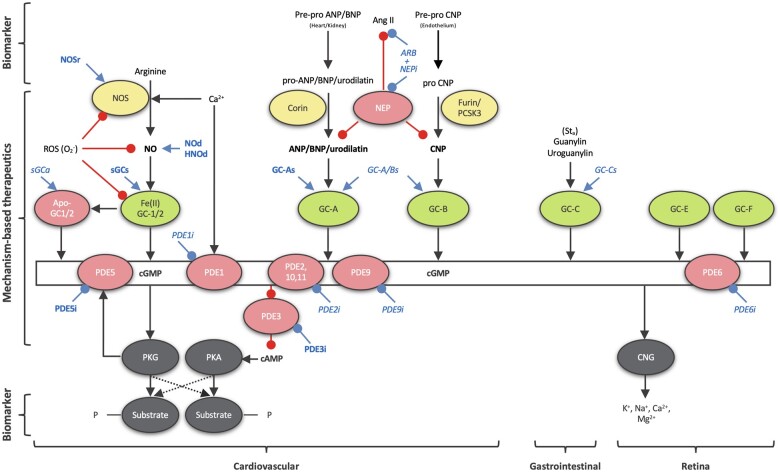
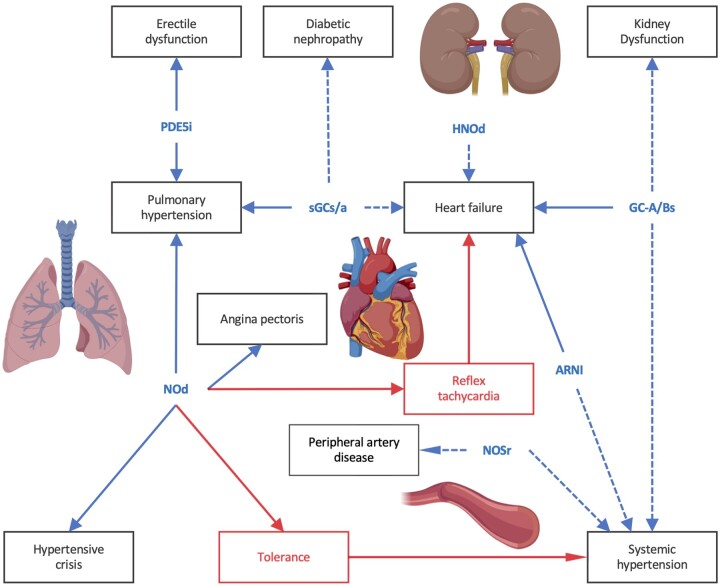
Mechanism-based therapy centred on the molecular understanding of disease-causing pathways in a given patient is still the exception rather than the rule in medicine, even in cardiology. However, recent successful drug developments centred around the second messenger cyclic guanosine-3'-5'-monophosphate (cGMP), which is regulating a number of cardiovascular disease modulating pathways, are about to provide novel targets for such a personalized cardiovascular therapy. Whether cGMP breakdown is inhibited or cGMP synthesis is stimulated via guanylyl cyclases or their upstream regulators in different cardiovascular disease phenotypes, the outcomes seem to be so far uniformly protective. Thus, a network of cGMP-modulating drugs has evolved that act in a mechanism-based, possibly causal manner in a number of cardiac conditions. What remains a challenge is the detection of cGMPopathy endotypes amongst cardiovascular disease phenotypes. Here, we review the growing clinical relevance of cGMP and provide a glimpse into the future on how drugs interfering with this pathway may change how we treat and diagnose cardiovascular diseases altogether.
以患者特定致病途径的分子理解为基础的机制治疗在医学中仍然是例外而非常规治疗,即使在心脏病学中也是如此。然而,最近围绕第二信使环鸟苷酸-3'-5'-单磷酸(cGMP)的成功药物开发即将为这种个性化心血管治疗提供新的靶点。无论通过鸟苷酸环化酶或其上游调节剂抑制 cGMP 分解还是刺激 cGMP 合成,在不同的心血管疾病表型中,结果似乎迄今为止都是一致的保护性的。因此,已经形成了一个 cGMP 调节药物网络,这些药物在多种心脏疾病中以基于机制的、可能是因果关系的方式发挥作用。仍然具有挑战性的是在心血管疾病表型中检测 cGMP 病理亚型。在这里,我们综述了 cGMP 的临床相关性不断增加,并展望了干扰该途径的药物如何彻底改变我们治疗和诊断心血管疾病的方式。