Department of Biochemistry, Institute for Myelin and Glia Exploration, Jacobs School of Medicine and Biomedical Sciences, State University of New York at Buffalo, Buffalo, NY, 14203, USA.
Department of Anatomy, Physiology, and Genetics, F. Edward Hebert School of Medicine, Uniformed Services University of the Health Sciences, Bethesda, MD, 20814, USA.
Cell Mol Life Sci. 2024 Oct 14;81(1):434. doi: 10.1007/s00018-024-05463-1.
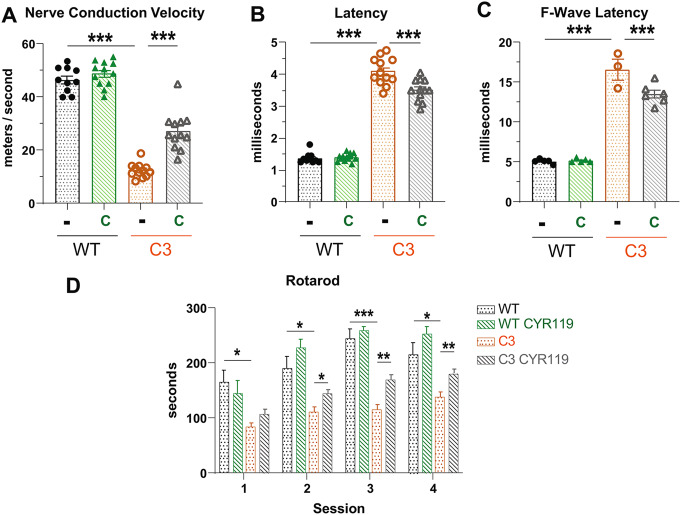
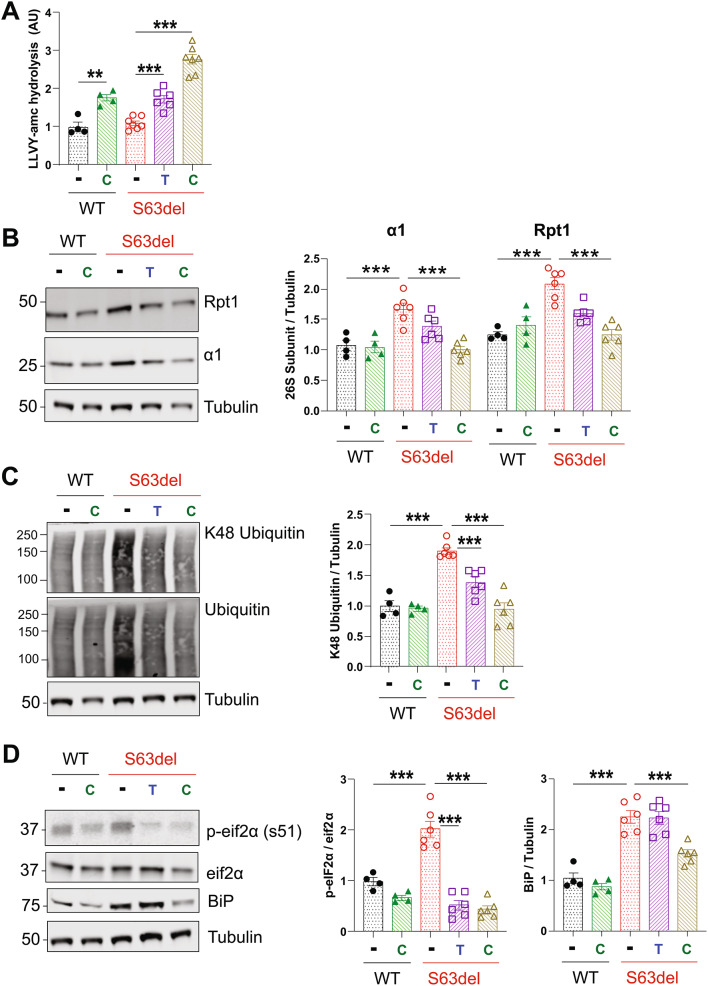
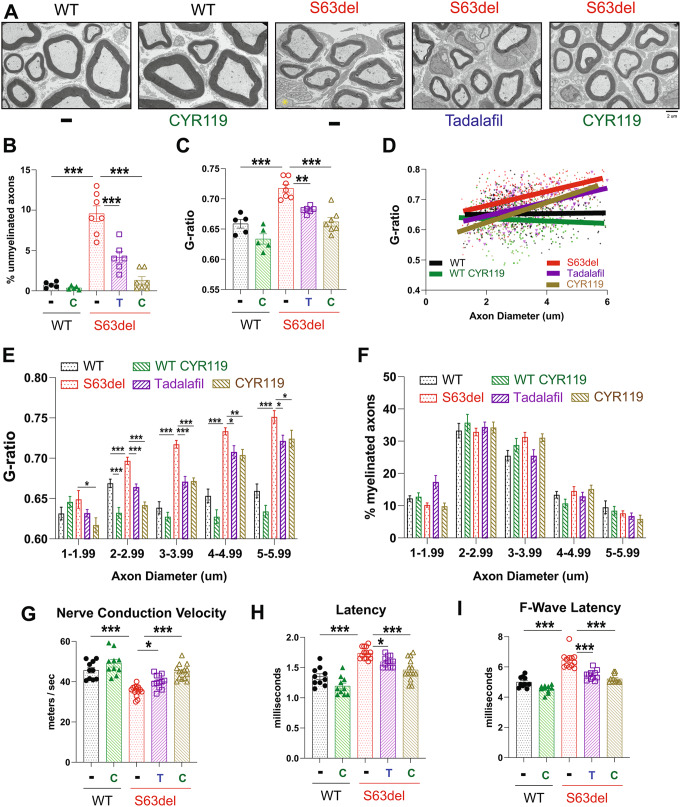
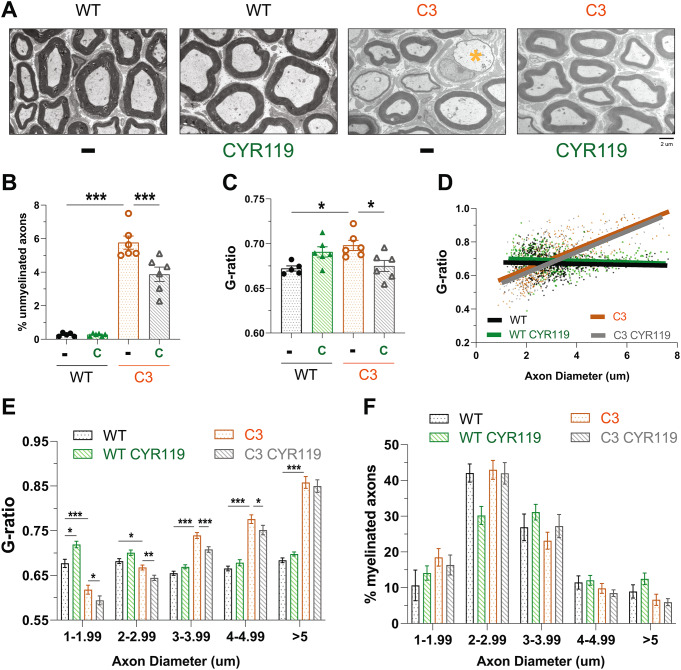
Increasing cyclic GMP activates 26S proteasomes via phosphorylation by Protein Kinase G and stimulates the intracellular degradation of misfolded proteins. Therefore, agents that raise cGMP may be useful therapeutics against neurodegenerative diseases and other diseases in which protein degradation is reduced and misfolded proteins accumulate, including Charcot Marie Tooth 1A and 1B peripheral neuropathies, for which there are no treatments. Here we increased cGMP in the S63del mouse model of CMT1B by treating for three weeks with either the phosphodiesterase 5 inhibitor tadalafil, or the brain-penetrant soluble guanylyl cyclase stimulator CYR119. Both molecules activated proteasomes in the affected peripheral nerves, reduced polyubiquitinated proteins, and improved myelin thickness and nerve conduction. CYR119 increased cGMP more than tadalafil in the peripheral nerves of S63del mice and elicited greater biochemical and functional improvements. To determine whether raising cGMP could be beneficial in other neuropathies, we first showed that polyubiquitinated proteins and the disease-causing protein accumulate in the sciatic nerves of the C3 mouse model of CMT1A. Treatment of these mice with CYR119 reduced the levels of polyubiquitinated proteins and the disease-causing protein, presumably by increasing their degradation, and improved myelination, nerve conduction, and motor coordination. Thus, pharmacological agents that increase cGMP are promising treatments for CMT1 neuropathies and may be useful against other proteotoxic and neurodegenerative diseases.
增加环鸟苷酸(cGMP)可通过蛋白激酶 G(Protein Kinase G)的磷酸化激活 26S 蛋白酶体,并刺激错误折叠蛋白的细胞内降解。因此,提高 cGMP 的药物可能对神经退行性疾病和其他蛋白质降解减少且错误折叠蛋白积累的疾病有用,包括 1A 和 1B 型腓骨肌萎缩症(Charcot-Marie Tooth,CMT),目前尚无治疗方法。在这里,我们通过用磷酸二酯酶 5 抑制剂他达拉非或穿透血脑屏障的可溶性鸟苷酸环化酶刺激剂 CYR119 治疗 S63del 型 CMT1B 小鼠模型 3 周,增加 CMT1B 型 S63del 小鼠模型中的 cGMP。这两种分子均能激活受影响的周围神经中的蛋白酶体,减少多聚泛素化蛋白,并改善髓鞘厚度和神经传导。CYR119 在 S63del 小鼠的周围神经中比他达拉非增加 cGMP 更多,并引起更大的生化和功能改善。为了确定提高 cGMP 是否对其他神经病变有益,我们首先表明多聚泛素化蛋白和致病蛋白在 CMT1A 的 C3 小鼠模型的坐骨神经中积累。用 CYR119 治疗这些小鼠可降低多聚泛素化蛋白和致病蛋白的水平,推测是通过增加它们的降解,改善髓鞘形成、神经传导和运动协调。因此,增加 cGMP 的药理学药物是治疗 CMT1 神经病变的有前途的方法,并且可能对其他蛋白毒性和神经退行性疾病有用。