Tropical Gastroenterology and Nutrition Group, University of Zambia School of Medicine, Lusaka, Zambia.
Queen Mary University of London, London, United Kingdom.
J Infect Dis. 2021 Dec 20;224(12 Suppl 2):S856-S863. doi: 10.1093/infdis/jiab372.
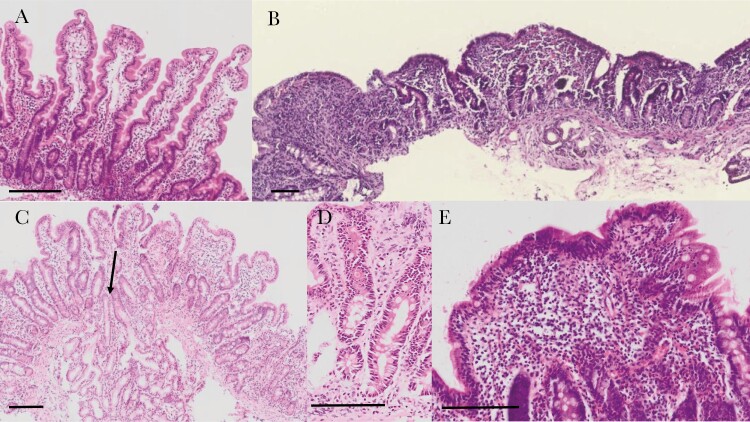
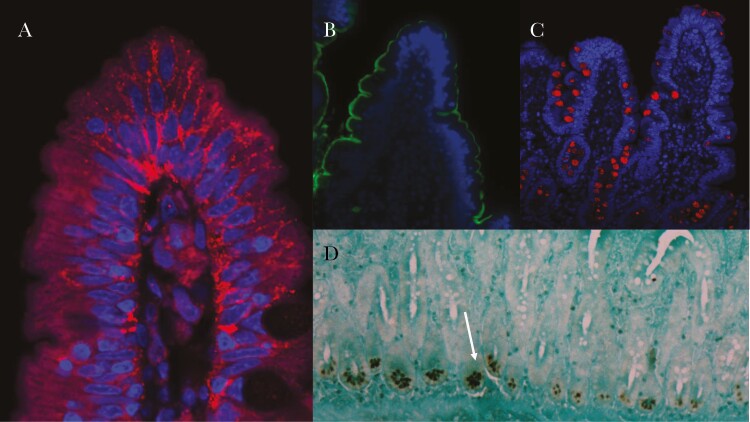
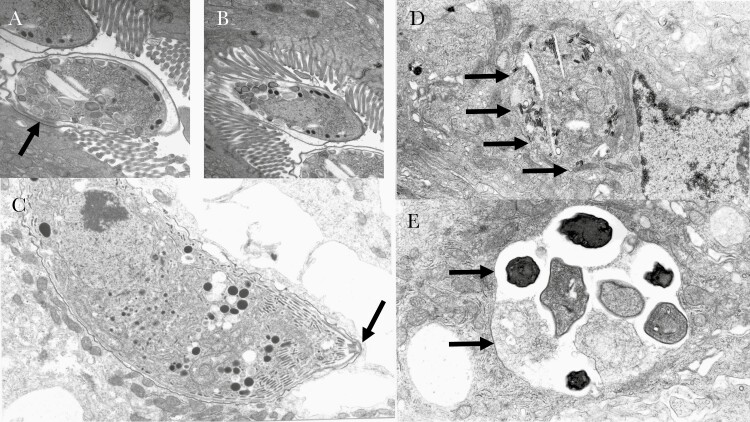
Environmental enteric dysfunction (EED) is a syndrome characterized by impairments of digestion and absorption and intestinal barrier failure in people living in insanitary or tropical environments. There is substantial evidence that it contributes to impaired linear growth of millions of children in low- and middle-income countries, to slowed neurocognitive development, and to diminished responses to oral vaccines. It represents the functional consequences of environmental enteropathy, an asymptomatic inflammatory disorder of the mucosa, and there is considerable overlap with the enteropathy observed in severe clinical malnutrition. The majority of studies of EED have employed functional tests based on lactulose permeation to define the presence of abnormal leak in the gut. However, where intestinal biopsies can safely be collected the opportunity then arises to study the underlying enteropathy in cellular and molecular detail, as well as to measure important functional elements such as enzyme expression. The purpose of this narrative review is to summarize the current understanding of environmental enteropathy obtained from small intestinal biopsies, and prospects for future work. We review histology, electron microscopy, transcription and protein expression, physiological measures, and the microbiome. We conclude that while noninvasive biomarkers of enteropathy and intestinal dysfunction permit large-scale studies of unquestionable value, intestinal biopsies are still required to investigate pathophysiology in depth.
环境肠道功能障碍(EED)是一种综合征,其特征是生活在不卫生或热带环境中的人们的消化和吸收功能受损以及肠道屏障功能衰竭。有大量证据表明,它导致了低收入和中等收入国家数百万儿童线性生长受损、神经认知发育迟缓以及口服疫苗反应减弱。它代表了环境肠病的功能后果,是一种无症状的黏膜炎症性疾病,与严重临床营养不良中观察到的肠病有很大的重叠。大多数 EED 研究都采用了基于乳果糖渗透的功能测试来定义肠道中异常渗漏的存在。然而,在可以安全采集肠道活检的情况下,就有机会从细胞和分子细节研究潜在的肠病,并测量重要的功能元素,如酶表达。本叙述性综述的目的是总结从小肠活检中获得的关于环境肠病的最新认识,并展望未来的工作。我们回顾了组织学、电子显微镜、转录和蛋白质表达、生理学测量和微生物组。我们的结论是,虽然肠病和肠道功能障碍的非侵入性生物标志物允许进行具有重要价值的大规模研究,但仍需要肠道活检来深入研究病理生理学。