NORMENT Centre, Institute of Clinical Medicine, University of Oslo and Division of Mental Health and Addiction, Oslo University Hospital, 0407 Oslo, Norway.
Institute of Psychiatry, Psychology and Neuroscience, King's College London, 16 De Crespigny Park, London SE5 8AB, UK.
Brain. 2022 Mar 29;145(1):142-153. doi: 10.1093/brain/awab267.
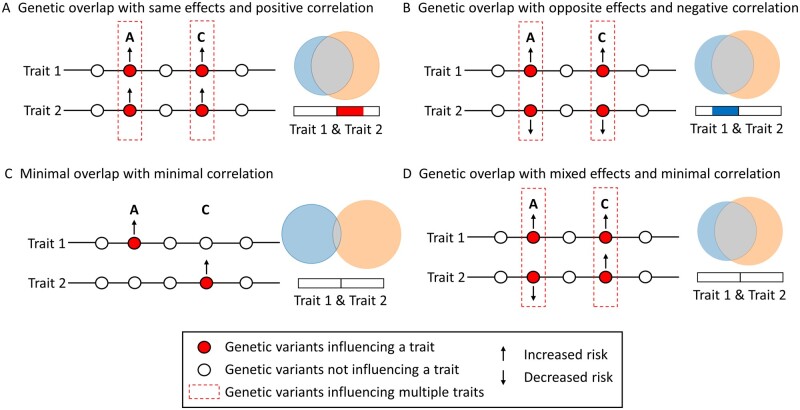
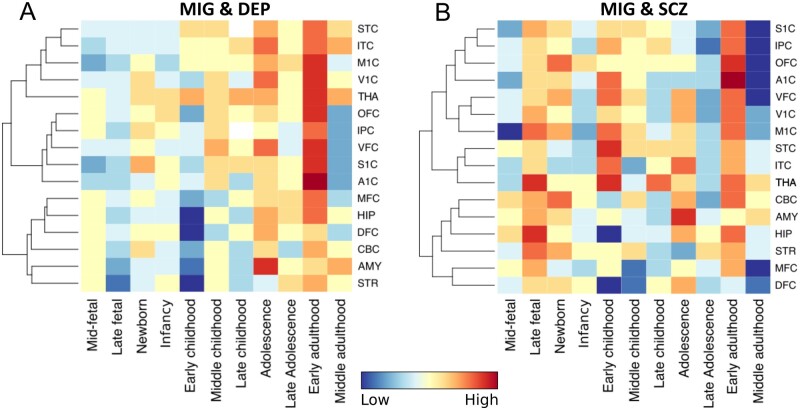
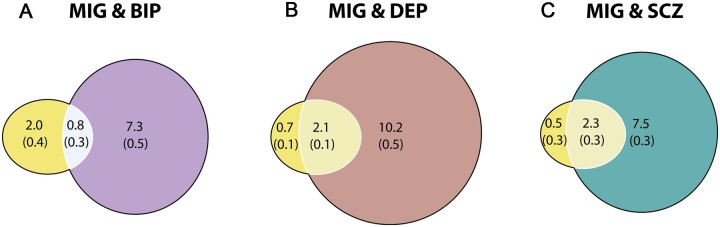
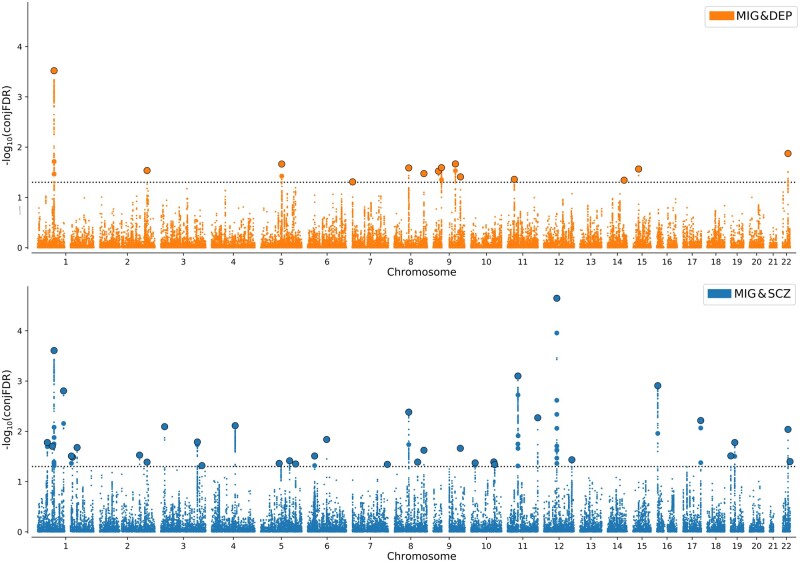
Migraine is three times more prevalent in people with bipolar disorder or depression. The relationship between schizophrenia and migraine is less certain although glutamatergic and serotonergic neurotransmission are implicated in both. A shared genetic basis to migraine and mental disorders has been suggested but previous studies have reported weak or non-significant genetic correlations and five shared risk loci. Using the largest samples to date and novel statistical tools, we aimed to determine the extent to which migraine's polygenic architecture overlaps with bipolar disorder, depression and schizophrenia beyond genetic correlation, and to identify shared genetic loci. Summary statistics from genome-wide association studies were acquired from large-scale consortia for migraine (n cases = 59 674; n controls = 316 078), bipolar disorder (n cases = 20 352; n controls = 31 358), depression (n cases = 170 756; n controls = 328 443) and schizophrenia (n cases = 40 675, n controls = 64 643). We applied the bivariate causal mixture model to estimate the number of disorder-influencing variants shared between migraine and each mental disorder, and the conditional/conjunctional false discovery rate method to identify shared loci. Loci were functionally characterized to provide biological insights. Univariate MiXeR analysis revealed that migraine was substantially less polygenic (2.8 K disorder-influencing variants) compared to mental disorders (8100-12 300 disorder-influencing variants). Bivariate analysis estimated that 800 (SD = 300), 2100 (SD = 100) and 2300 (SD = 300) variants were shared between bipolar disorder, depression and schizophrenia, respectively. There was also extensive overlap with intelligence (1800, SD = 300) and educational attainment (2100, SD = 300) but not height (1000, SD = 100). We next identified 14 loci jointly associated with migraine and depression and 36 loci jointly associated with migraine and schizophrenia, with evidence of consistent genetic effects in independent samples. No loci were associated with migraine and bipolar disorder. Functional annotation mapped 37 and 298 genes to migraine and each of depression and schizophrenia, respectively, including several novel putative migraine genes such as L3MBTL2, CACNB2 and SLC9B1. Gene-set analysis identified several putative gene sets enriched with mapped genes including transmembrane transport in migraine and schizophrenia. Most migraine-influencing variants were predicted to influence depression and schizophrenia, although a minority of mental disorder-influencing variants were shared with migraine due to the difference in polygenicity. Similar overlap with other brain-related phenotypes suggests this represents a pool of 'pleiotropic' variants that influence vulnerability to diverse brain-related disorders and traits. We also identified specific loci shared between migraine and each of depression and schizophrenia, implicating shared molecular mechanisms and highlighting candidate migraine genes for experimental validation.
偏头痛在双相情感障碍或抑郁症患者中的发病率是普通人群的 3 倍。精神分裂症与偏头痛之间的关系不太确定,尽管谷氨酸能和 5-羟色胺能神经传递都与两者有关。有人提出偏头痛和精神障碍之间存在共同的遗传基础,但以前的研究报告遗传相关性较弱或没有统计学意义,并且只发现了 5 个共同的风险位点。使用迄今为止最大的样本和新的统计工具,我们旨在确定偏头痛的多基因结构在遗传相关性之外与双相情感障碍、抑郁症和精神分裂症重叠的程度,并确定共同的遗传位点。我们从偏头痛的大型联盟(病例=59674;对照=316078)、双相情感障碍(病例=20352;对照=31358)、抑郁症(病例=170756;对照=328443)和精神分裂症(病例=40675,对照=64643)获得了全基因组关联研究的汇总统计数据。我们应用双变量因果混合模型来估计偏头痛与每种精神障碍之间受疾病影响的变异数量,并应用条件/联合假发现率方法来识别共同的位点。对这些位点进行了功能特征分析,以提供生物学见解。单变量 MiXeR 分析表明,偏头痛的遗传多态性(2.8K 个受疾病影响的变异)明显低于精神障碍(8100-12300 个受疾病影响的变异)。双变量分析估计,双相情感障碍、抑郁症和精神分裂症之间分别有 800(SD=300)、2100(SD=100)和 2300(SD=300)个变异受影响。与智力(1800,SD=300)和教育程度(2100,SD=300)也有广泛的重叠,但与身高(1000,SD=100)没有重叠。我们接下来确定了 14 个与偏头痛和抑郁症共同相关的位点,以及 36 个与偏头痛和精神分裂症共同相关的位点,在独立样本中都有一致的遗传效应证据。没有位点与双相情感障碍相关。功能注释将 37 个和 298 个基因映射到偏头痛和抑郁症以及精神分裂症,分别包括几个新的潜在偏头痛基因,如 L3MBTL2、CACNB2 和 SLC9B1。基因集分析确定了几个潜在的基因集,包括偏头痛和精神分裂症中的跨膜转运。大多数偏头痛相关的变异都被预测会影响抑郁症和精神分裂症,尽管由于遗传多态性的差异,只有少数精神障碍相关的变异与偏头痛有关。与其他与大脑相关的表型的相似重叠表明,这代表了一个影响多种与大脑相关的疾病和特征易感性的“多效性”变异池。我们还确定了偏头痛与抑郁症和精神分裂症之间共同的特定位点,这暗示了共同的分子机制,并突出了候选的偏头痛基因进行实验验证。