Environmental Working Group, 1250 I Street NW, Suite 1000, Washington, DC, 20005, USA.
Environ Health. 2021 Jul 17;20(1):84. doi: 10.1186/s12940-021-00768-1.
Epidemiological studies and research on laboratory animals link radiofrequency radiation (RFR) with impacts on the heart, brain, and other organs. Data from the large-scale animal studies conducted by the U.S. National Toxicology Program (NTP) and the Ramazzini Institute support the need for updated health-based guidelines for general population RFR exposure.
The development of RFR exposure limits expressed in whole-body Specific Absorption Rate (SAR), a metric of RFR energy absorbed by biological tissues.
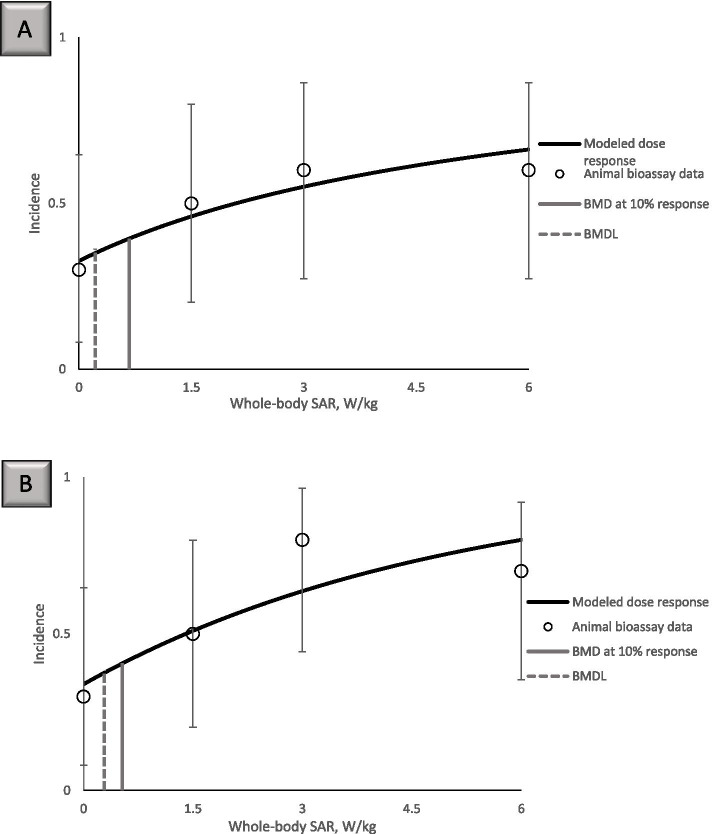
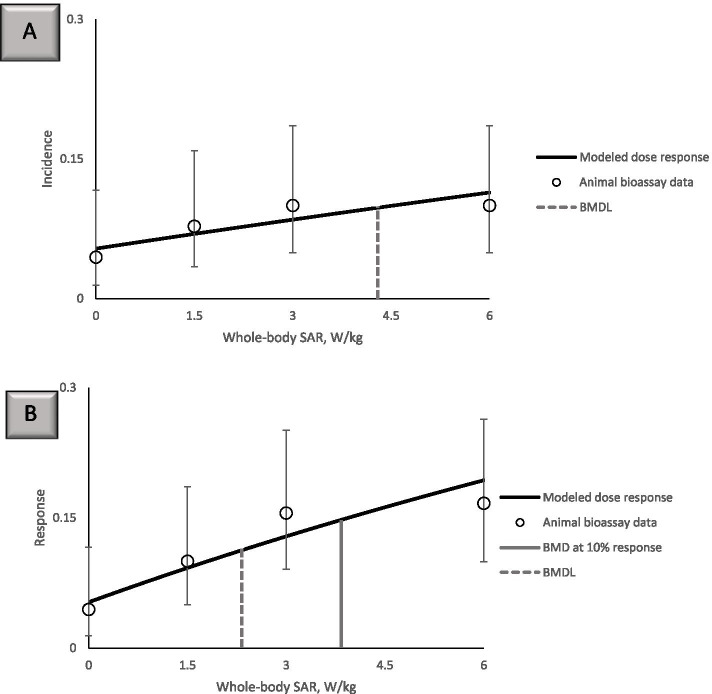
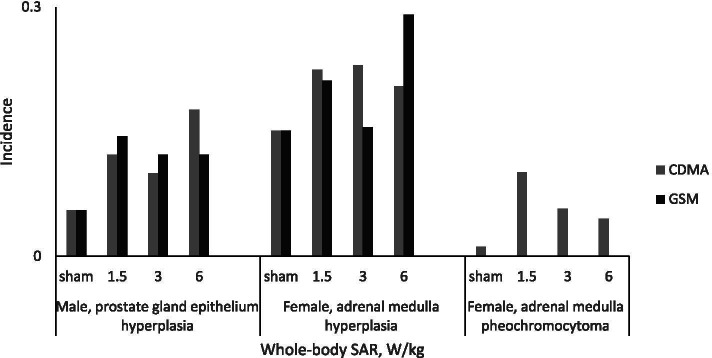
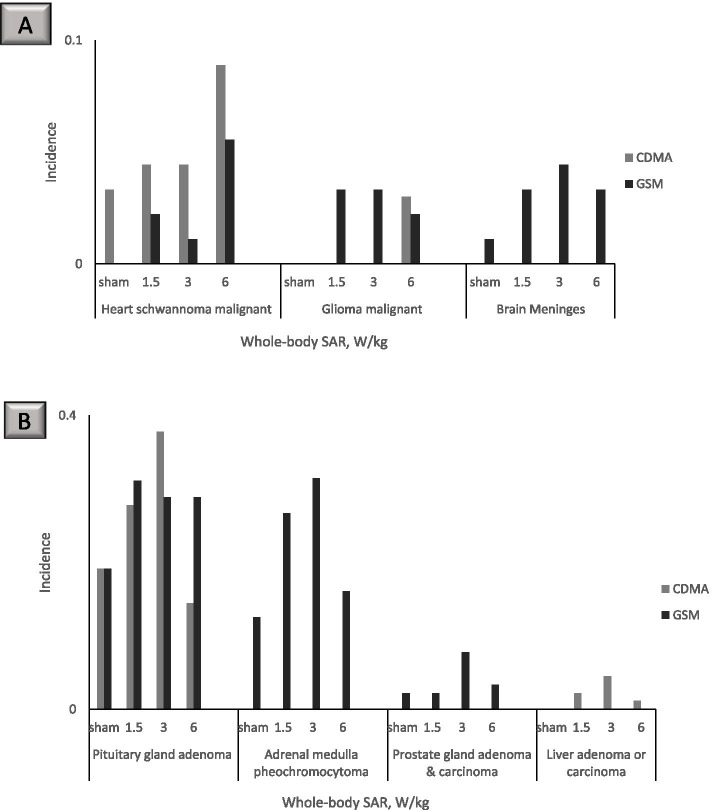
Using frequentist and Bayesian averaging modeling of non-neoplastic lesion incidence data from the NTP study, we calculated the benchmark doses (BMD) that elicited a 10% response above background (BMD) and the lower confidence limits on the BMD at 10% extra risk (BMDL). Incidence data for individual neoplasms and combined tumor incidence were modeled for 5% and 10% response above background.
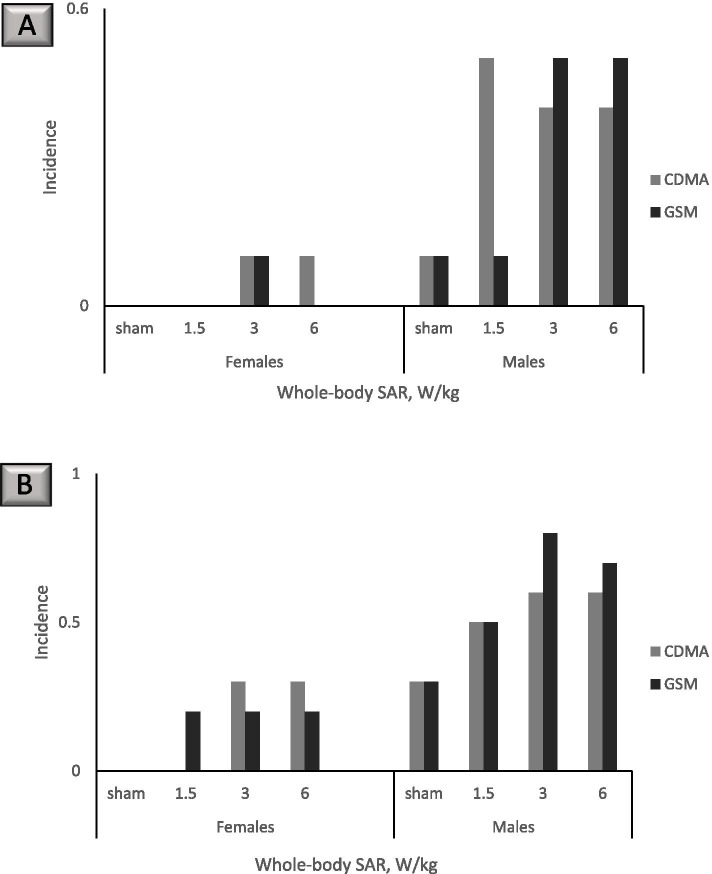
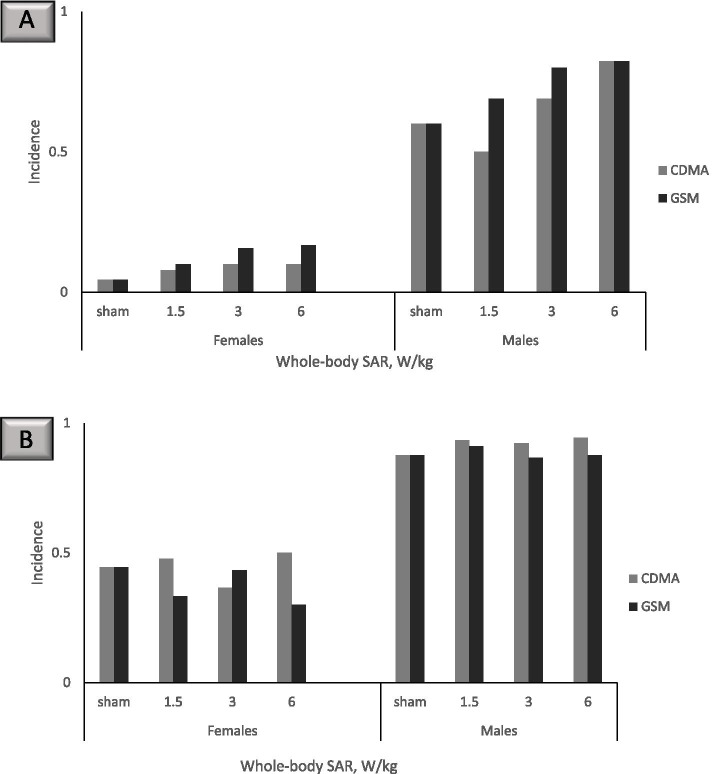
Cardiomyopathy and increased risk of neoplasms in male rats were the most sensitive health outcomes following RFR exposures at 900 MHz frequency with Code Division Multiple Access (CDMA) and Global System for Mobile Communications (GSM) modulations. BMDL for all sites cardiomyopathy in male rats following 19 weeks of exposure, calculated with Bayesian model averaging, corresponded to 0.27-0.42 W/kg whole-body SAR for CDMA and 0.20-0.29 W/kg for GSM modulation. BMDL for right ventricle cardiomyopathy in female rats following 2 years of exposure corresponded to 2.7-5.16 W/kg whole-body SAR for CDMA and 1.91-2.18 W/kg for GSM modulation. For multi-site tumor modeling using the multistage cancer model with a 5% extra risk, BMDL in male rats corresponded to 0.31 W/kg for CDMA and 0.21 W/kg for GSM modulation.
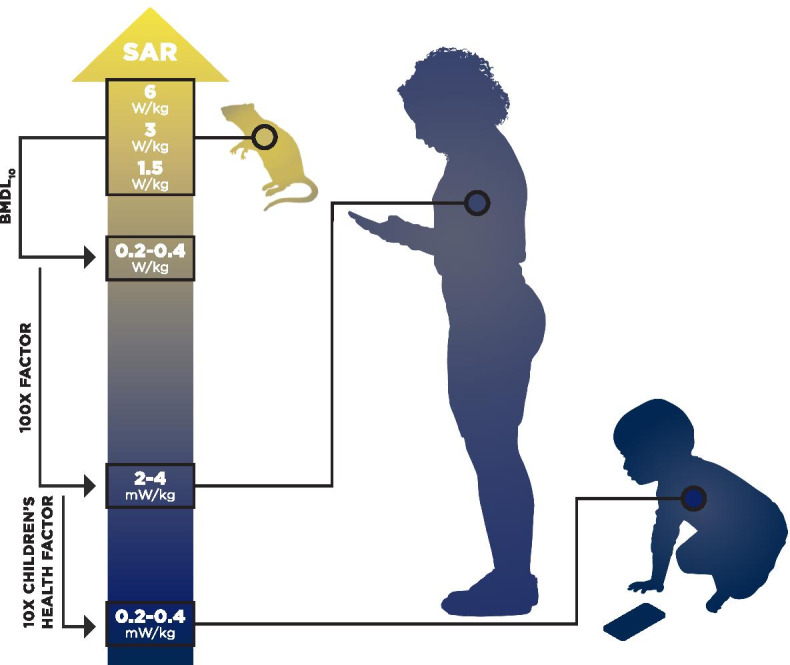
BMDL range of 0.2-0.4 W/kg for all sites cardiomyopathy in male rats was selected as a point of departure. Applying two ten-fold safety factors for interspecies and intraspecies variability, we derived a whole-body SAR limit of 2 to 4 mW/kg, an exposure level that is 20-40-fold lower than the legally permissible level of 0.08 W/kg for whole-body SAR under the current U.S. regulations. Use of an additional ten-fold children's health safety factor points to a whole-body SAR limit of 0.2-0.4 mW/kg for young children.
流行病学研究和实验室动物研究将射频辐射(RFR)与对心脏、大脑和其他器官的影响联系起来。美国国家毒理学计划(NTP)和拉马齐尼研究所进行的大规模动物研究的数据支持更新针对一般人群 RFR 暴露的基于健康的指导方针。
制定 RFR 暴露限值,以全身比吸收率(SAR)表示,这是生物组织吸收的 RFR 能量的度量。
使用 NTP 研究中非肿瘤病变发生率数据的频率论和贝叶斯平均建模,我们计算了诱发背景以上 10%反应的基准剂量(BMD)和 10%额外风险的 BMD 下限(BMDL)。对个体肿瘤和联合肿瘤发生率的数据进行了 5%和 10%背景以上反应的建模。
雄性大鼠的心肌病和肿瘤风险增加是在 900 MHz 频率下使用码分多址(CDMA)和全球移动通信系统(GSM)调制进行 RFR 暴露后最敏感的健康结果。使用贝叶斯模型平均计算,雄性大鼠在 19 周暴露后所有部位心肌病的 BMDL 对应于 0.27-0.42 W/kg 全身 SAR 用于 CDMA 和 0.20-0.29 W/kg 用于 GSM 调制。雌性大鼠在 2 年暴露后右心室心肌病的 BMDL 对应于 0.27-0.42 W/kg 用于 CDMA 和 0.20-0.29 W/kg 用于 GSM 调制。对于使用 5%额外风险的多阶段癌症模型进行多部位肿瘤建模,雄性大鼠的 BMDL 对应于 0.31 W/kg 用于 CDMA 和 0.21 W/kg 用于 GSM 调制。
选择雄性大鼠所有部位心肌病的 0.2-0.4 W/kg BMDL 范围作为起点。应用种间和种内变异性的两个十倍安全系数,我们得出了全身 SAR 限值为 2 至 4 mW/kg,这一暴露水平比美国现行法规下全身 SAR 允许值 0.08 W/kg 低 20-40 倍。使用儿童健康安全系数的另一个十倍表明,幼儿的全身 SAR 限值为 0.2-0.4 mW/kg。