Fernandes-Silva Hugo, Alves Marco G, Araújo-Silva Henrique, Silva Ana M, Correia-Pinto Jorge, Oliveira Pedro F, Moura Rute S
Life and Health Sciences Research Institute (ICVS), School of Medicine, University of Minho, 4710-057, Braga, Portugal.
ICVS/3B's - PT Government Associate Laboratory, 4710-057, Braga/Guimarães, Portugal.
Cell Biosci. 2021 Jul 17;11(1):134. doi: 10.1186/s13578-021-00654-w.
Lung branching morphogenesis is characterized by epithelial-mesenchymal interactions that ultimately define the airway conducting system. Throughout this process, energy and structural macromolecules are necessary to sustain the high proliferative rates. The extensive knowledge of the molecular mechanisms underlying pulmonary development contrasts with the lack of data regarding the embryonic lung metabolic requirements. Here, we studied the metabolic profile associated with the early stages of chicken pulmonary branching.
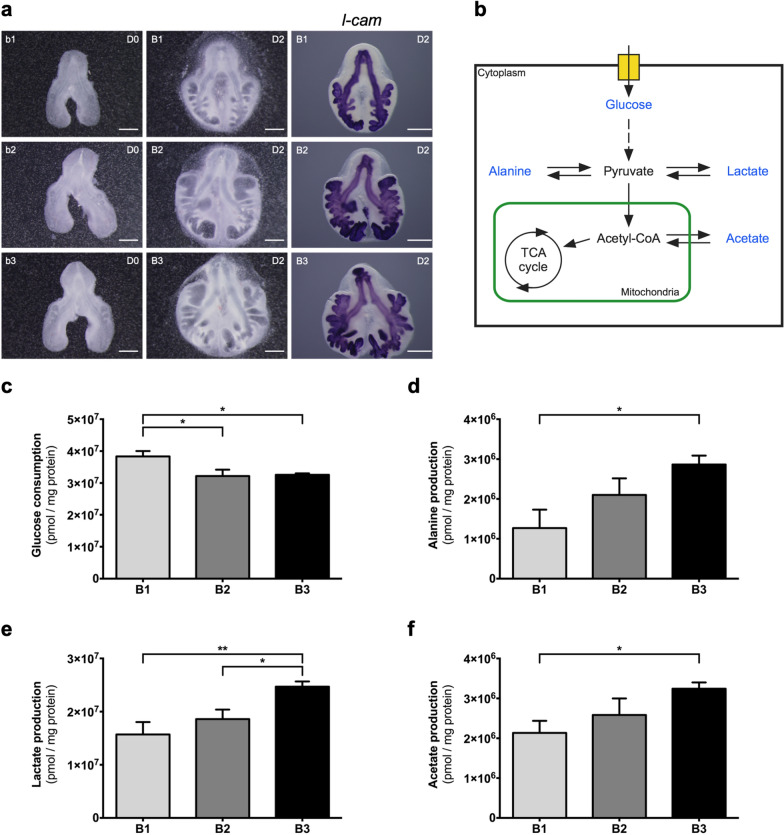
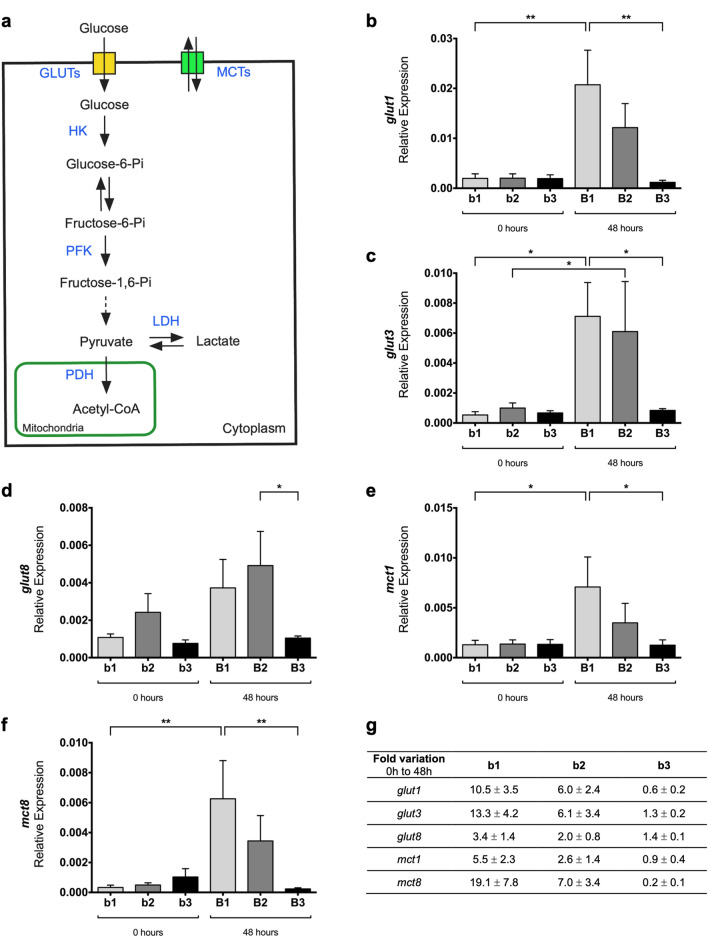
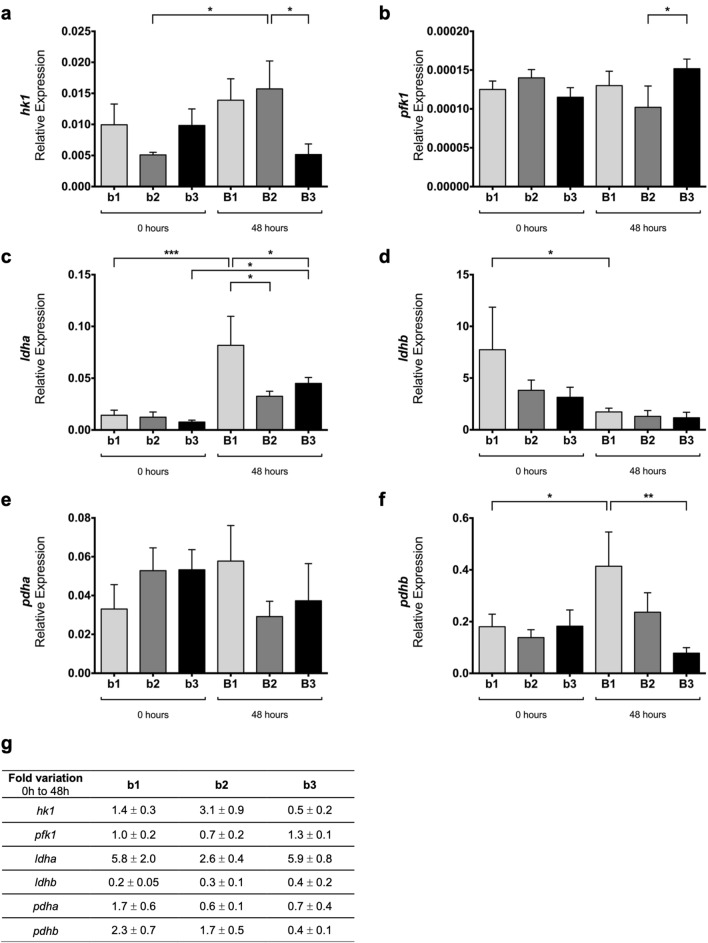
In this study, we used an ex vivo lung explant culture system and analyzed the consumption/production of extracellular metabolic intermediates associated with glucose catabolism (alanine, lactate, and acetate) by H-NMR spectroscopy in the culture medium. Then, we characterized the transcript levels of metabolite membrane transporters (glut1, glut3, glut8, mct1, mct3, mct4, and mct8) and glycolytic enzymes (hk1, hk2, pfk1, ldha, ldhb, pdha, and pdhb) by qPCR. ldha and ldhb mRNA spatial localization was determined by in situ hybridization. Proliferation was analyzed by directly assessing DNA synthesis using an EdU-based assay. Additionally, we performed western blot to analyze LDHA and LDHT protein levels. Finally, we used a Clark-Type Electrode to assess the lung explant's respiratory capacity.
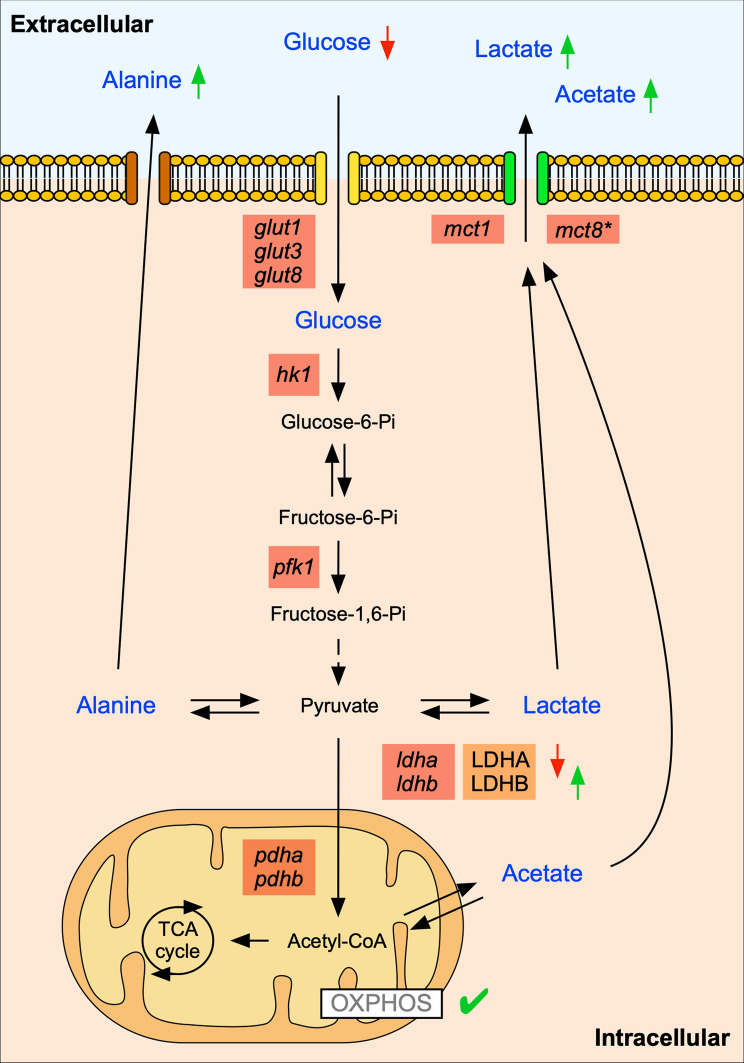
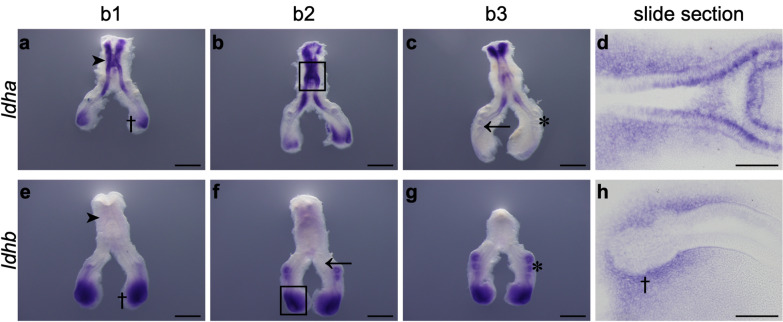
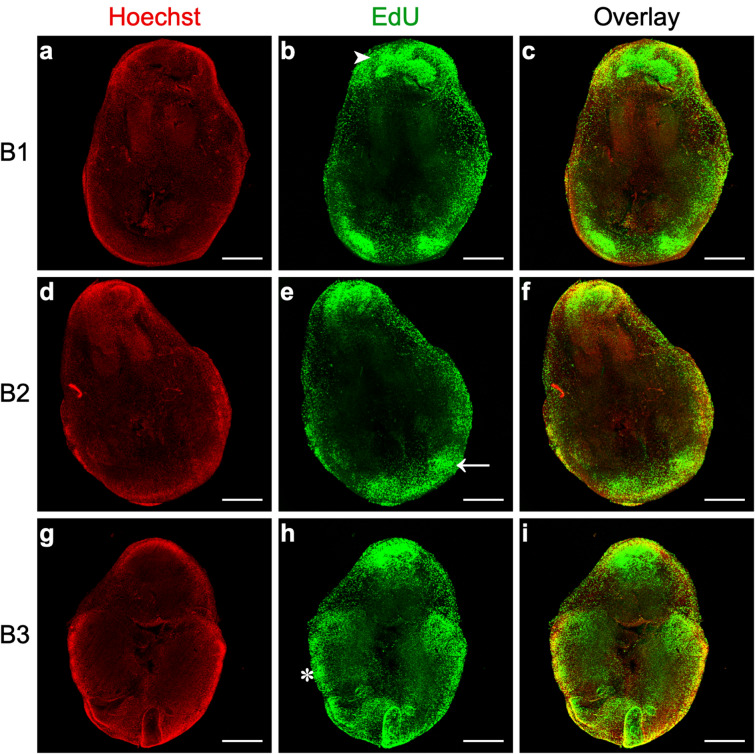
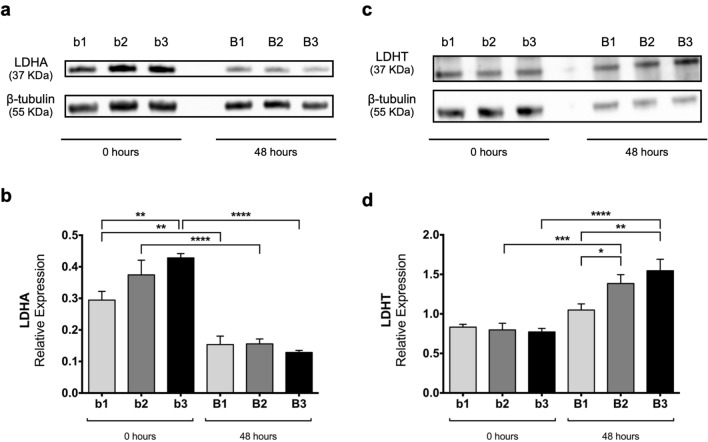
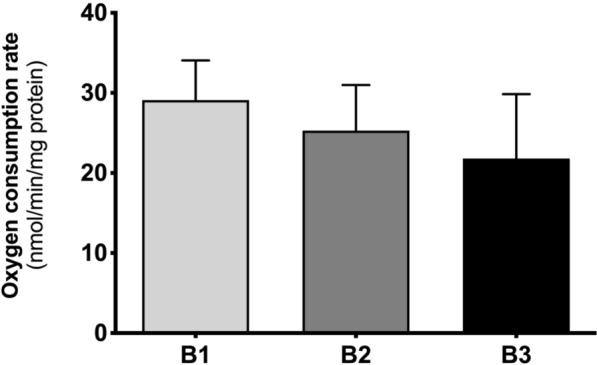
Glucose consumption decreases, whereas alanine, lactate, and acetate production progressively increase as branching morphogenesis proceeds. mRNA analysis revealed variations in the expression levels of key enzymes and transporters from the glycolytic pathway. ldha and ldhb displayed a compartment-specific expression pattern that resembles proximal-distal markers. In addition, high proliferation levels were detected at active branching sites. LDH protein expression levels suggest that LDHB may account for the progressive rise in lactate. Concurrently, there is a stable oxygen consumption rate throughout branching morphogenesis.
This report describes the temporal metabolic changes that accompany the early stages of chicken lung branching morphogenesis. Overall, the embryonic chicken lung seems to shift to a glycolytic lactate-based metabolism as pulmonary branching occurs. Moreover, this metabolic rewiring might play a crucial role during lung development.
肺分支形态发生的特征是上皮-间充质相互作用,最终确定气道传导系统。在整个过程中,能量和结构大分子对于维持高增殖率是必需的。关于肺发育潜在分子机制的广泛知识与胚胎肺代谢需求方面的数据匮乏形成对比。在此,我们研究了与鸡肺早期分支相关的代谢谱。
在本研究中,我们使用了体外肺组织块培养系统,并通过培养基中的氢核磁共振光谱分析与葡萄糖分解代谢相关的细胞外代谢中间体(丙氨酸、乳酸和乙酸)的消耗/产生。然后,我们通过定量聚合酶链反应(qPCR)对代谢物膜转运蛋白(葡萄糖转运蛋白1、葡萄糖转运蛋白3、葡萄糖转运蛋白8、单羧酸转运蛋白1、单羧酸转运蛋白3、单羧酸转运蛋白4和单羧酸转运蛋白8)和糖酵解酶(己糖激酶1、己糖激酶2、磷酸果糖激酶1、乳酸脱氢酶A、乳酸脱氢酶B、丙酮酸脱氢酶E1α和丙酮酸脱氢酶E1β)的转录水平进行了表征。乳酸脱氢酶A和乳酸脱氢酶B信使核糖核酸(mRNA)的空间定位通过原位杂交确定。通过基于5-乙炔基-2'-脱氧尿苷(EdU)的检测直接评估DNA合成来分析增殖情况。此外,我们进行了蛋白质免疫印迹分析以检测乳酸脱氢酶A和乳酸脱氢酶B的蛋白质水平。最后,我们使用克拉克型电极评估肺组织块的呼吸能力。
随着分支形态发生的进行,葡萄糖消耗减少,而丙氨酸、乳酸和乙酸的产生逐渐增加。mRNA分析揭示了糖酵解途径中关键酶和转运蛋白表达水平的变化。乳酸脱氢酶A和乳酸脱氢酶B呈现出类似于近端-远端标志物的区域特异性表达模式。此外,在活跃的分支位点检测到高增殖水平。乳酸脱氢酶蛋白质表达水平表明乳酸脱氢酶B可能是乳酸逐渐增加的原因。同时,在整个分支形态发生过程中氧消耗率保持稳定。
本报告描述了鸡肺分支形态发生早期阶段伴随的时间性代谢变化。总体而言,随着肺分支的发生,胚胎鸡肺似乎转向基于糖酵解产生乳酸的代谢。此外,这种代谢重编程可能在肺发育过程中起关键作用。