
离子对等离子体辅助原子层沉积TiO过程中薄膜保形性和结晶性的影响
Impact of Ions on Film Conformality and Crystallinity during Plasma-Assisted Atomic Layer Deposition of TiO.
作者信息
Arts Karsten, Thepass Harvey, Verheijen Marcel A, Puurunen Riikka L, Kessels Wilhelmus M M, Knoops Harm C M
机构信息
Eindhoven University of Technology, P.O. Box 513, 5600 MB Eindhoven, The Netherlands.
Eurofins Material Science, High Tech, Campus 11, 5656 AE Eindhoven, The Netherlands.
出版信息
Chem Mater. 2021 Jul 13;33(13):5002-5009. doi: 10.1021/acs.chemmater.1c00781. Epub 2021 Apr 29.
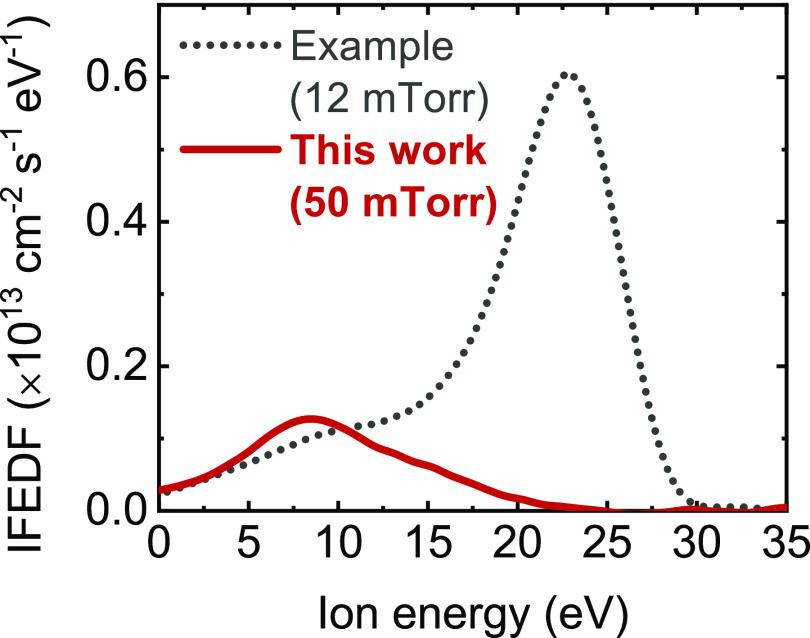
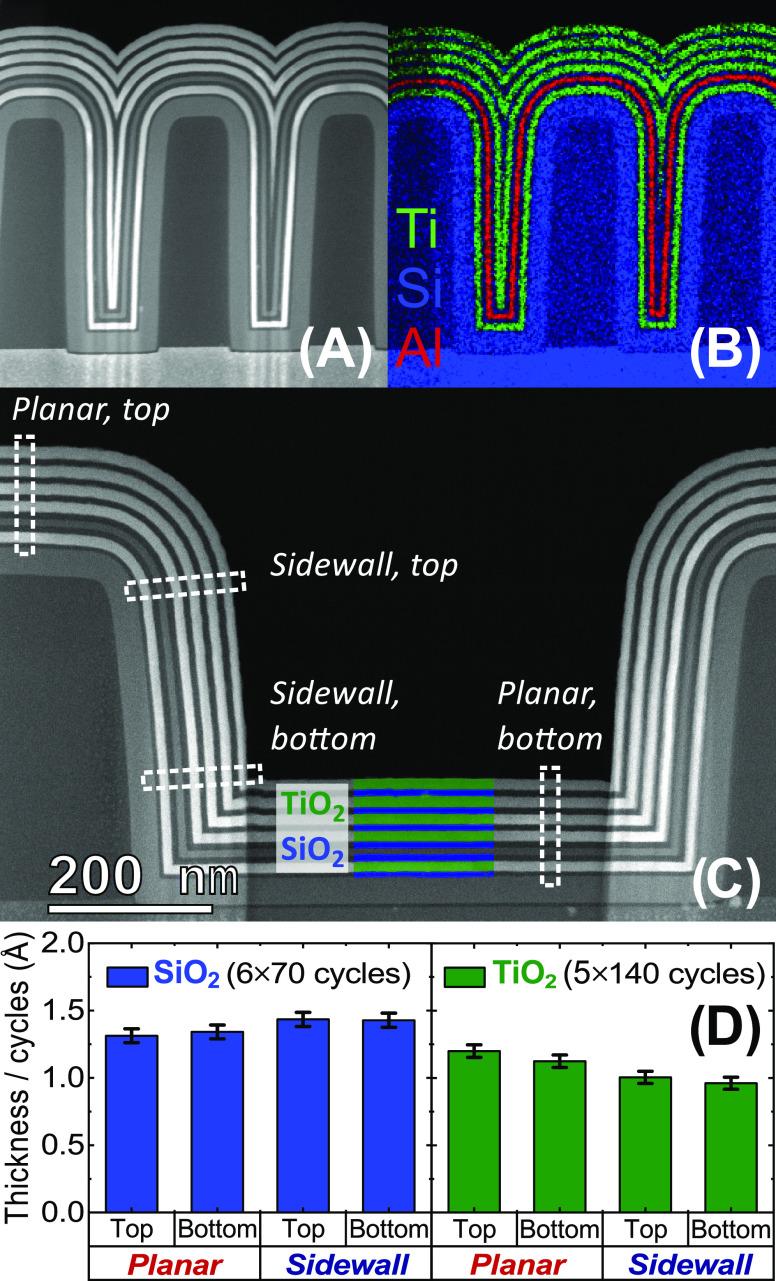
This work demonstrates that ions have a strong impact on the growth per cycle (GPC) and material properties during plasma-assisted atomic layer deposition (ALD) of TiO (titanium dioxide), even under mild plasma conditions with low-energy (<20 eV) ions. Using vertical trench nanostructures and microscopic cavity structures that locally block the flux of ions, it is observed that the impact of (low-energy) ions is an important factor for the TiO film conformality. Specifically, it is demonstrated that the GPC in terms of film thickness can increase by 20 to >200% under the influence of ions, which is correlated with an increase in film crystallinity and an associated strong reduction in the wet etch rate (in 30:1 buffered HF). The magnitude of the influence of ions is observed to depend on multiple parameters such as the deposition temperature, plasma exposure time, and ion energy, which may all be used to minimize or exploit this effect. For example, a relatively moderate influence of ions is observed at 200 °C when using short plasma steps and a grounded substrate, providing a low ion-energy dose of ∼1 eV nm cycle, while a high effect is obtained when using extended plasma exposures or substrate biasing (∼100 eV nm cycle). This work on TiO shows that detailed insight into the role of ions during plasma ALD is essential for precisely controlling the film conformality, material properties, and process reproducibility.
这项工作表明,即使在低能量(<20 eV)离子的温和等离子体条件下,离子在二氧化钛(TiO₂)的等离子体辅助原子层沉积(ALD)过程中对每循环生长(GPC)和材料性能也有强烈影响。使用垂直沟槽纳米结构和微观腔结构来局部阻挡离子通量,观察到(低能量)离子的影响是TiO₂薄膜保形性的一个重要因素。具体而言,已证明在离子影响下,以薄膜厚度计的GPC可增加20%至>200%,这与薄膜结晶度的增加以及湿法蚀刻速率(在30:1缓冲氢氟酸中)的显著降低相关。观察到离子影响的程度取决于多个参数,如沉积温度、等离子体暴露时间和离子能量,所有这些参数都可用于最小化或利用这种效应。例如,在200°C下使用短等离子体步骤和接地衬底时,观察到离子的影响相对适中,提供约1 eV nm/循环的低离子能量剂量,而在使用延长的等离子体暴露或衬底偏置(约100 eV nm/循环)时,可获得高效果。这项关于TiO₂的工作表明,深入了解等离子体ALD过程中离子的作用对于精确控制薄膜保形性、材料性能和工艺可重复性至关重要。





 Zotero 插件