Zhong Suting, Sun Kai, Zuo Xiaobing, Chen Aihong
Department of Emergency Medicine, Hanyang Hospital, Wuhan University of Science and Technology, Wuhan, China.
Department of Neurosurgery, Yantai Penglai Traditional Chinese Medicine Hospital, Yantai, China.
Front Neurosci. 2021 Jun 30;15:684469. doi: 10.3389/fnins.2021.684469. eCollection 2021.
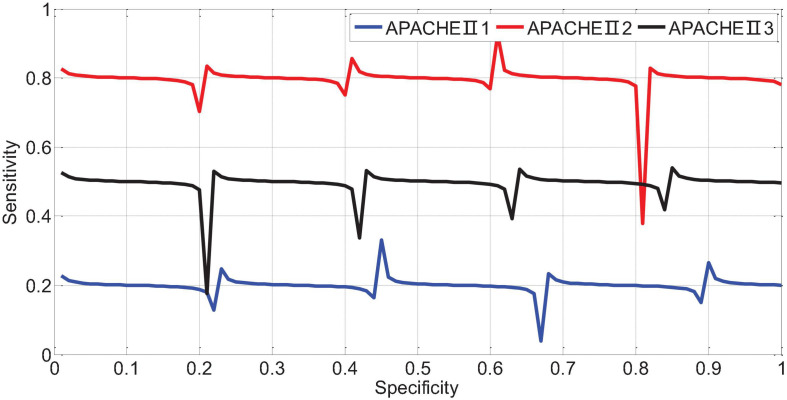
Severe cerebrovascular disease is an acute cerebrovascular event that causes severe neurological damage in patients, and is often accompanied by severe dysfunction of multiple systems such as breathing and circulation. Patients with severe cerebrovascular disease are in critical condition, have many complications, and are prone to deterioration of neurological function. Therefore, they need closer monitoring and treatment. The treatment strategy in the acute phase directly determines the prognosis of the patient. The case of this article selected 90 patients with severe cerebrovascular disease who were hospitalized in four wards of the Department of Neurology and the Department of Critical Care Medicine in a university hospital. The included cases were in accordance with the guidelines for the prevention and treatment of cerebrovascular diseases. Patients with cerebral infarction are given routine treatments such as improving cerebral circulation, protecting nutrient brain cells, dehydration, and anti-platelet; patients with cerebral hemorrhage are treated within the corresponding safe time window. We use Statistical Product and Service Solutions (SPSS) Statistics21 software to perform statistical analysis on the results. Based on the study of the feature extraction process of convolutional neural network, according to the hierarchical principle of convolutional neural network, a backbone neural network MF (Multi-Features)-Dense Net that can realize the fusion, and extraction of multi-scale features is designed. The network combines the characteristics of densely connected network and feature pyramid network structure, and combines strong feature extraction ability, high robustness and relatively small parameter amount. An end-to-end monitoring algorithm for severe cerebrovascular diseases based on MF-Dense Net is proposed. In the experiment, the algorithm showed high monitoring accuracy, and at the same time reached the speed of real-time monitoring on the experimental platform. An improved spatial pyramid pooling structure is designed to strengthen the network's ability to merge and extract local features at the same level and at multiple scales, which can further improve the accuracy of algorithm monitoring by paying a small amount of additional computational cost. At the same time, a method is designed to strengthen the use of low-level features by improving the network structure, which improves the algorithm's monitoring performance on small-scale severe cerebrovascular diseases. For patients with severe cerebrovascular disease in general, APACHEII1, APACHEII2, APACHEII3 and the trend of APACHEII score change are divided into high-risk group and low-risk group. The overall severe cerebrovascular disease, severe cerebral hemorrhage and severe cerebral infarction are analyzed, respectively. The differences are statistically significant.
重症脑血管疾病是一种急性脑血管事件,可导致患者出现严重神经功能损害,且常伴有呼吸、循环等多系统严重功能障碍。重症脑血管疾病患者病情危急,并发症多,神经功能易恶化。因此,需要更密切的监测与治疗。急性期的治疗策略直接决定患者预后。本文病例选取了某大学医院神经内科及重症医学科四个病房收治的90例重症脑血管疾病患者。纳入病例符合脑血管疾病防治指南。脑梗死患者给予改善脑循环、保护营养脑细胞、脱水、抗血小板等常规治疗;脑出血患者在相应安全时间窗内进行治疗。我们使用统计产品与服务解决方案(SPSS)Statistics21软件对结果进行统计分析。基于对卷积神经网络特征提取过程的研究,依据卷积神经网络的层次原理,设计了一种能实现多尺度特征融合与提取的骨干神经网络MF(多特征)-密集网络。该网络结合了密集连接网络和特征金字塔网络结构的特点,兼具强大的特征提取能力、高鲁棒性和相对较小的参数量。提出了一种基于MF-密集网络的重症脑血管疾病端到端监测算法。实验中,该算法显示出较高的监测准确率,同时在实验平台上达到了实时监测速度。设计了一种改进的空间金字塔池化结构,以增强网络在同一级别和多尺度上合并与提取局部特征的能力,通过付出少量额外计算成本可进一步提高算法监测精度。同时,设计了一种方法,通过改进网络结构加强对低级特征的利用,提高了算法对小尺度重症脑血管疾病的监测性能。对于一般重症脑血管疾病患者,将APACHEII1、APACHEII2、APACHEII3及APACHEII评分变化趋势分为高危组和低危组。分别对总体重症脑血管疾病、重症脑出血和重症脑梗死进行分析。差异具有统计学意义。