Jantawong Chanakan, Priprem Aroonsri, Intuyod Kitti, Pairojkul Chawalit, Pinlaor Porntip, Waraasawapati Sakda, Mongkon Itnarin, Chamgramol Yaovalux, Pinlaor Somchai
Biomedical Science Program, Graduate School, Khon Kaen University, Khon Kaen, 40002, Thailand.
Cholangiocarcinoma Research Institute, Khon Kaen University, Khon Kaen, 40002, Thailand.
Toxicol Rep. 2021 Jun 30;8:1346-1357. doi: 10.1016/j.toxrep.2021.06.021. eCollection 2021.
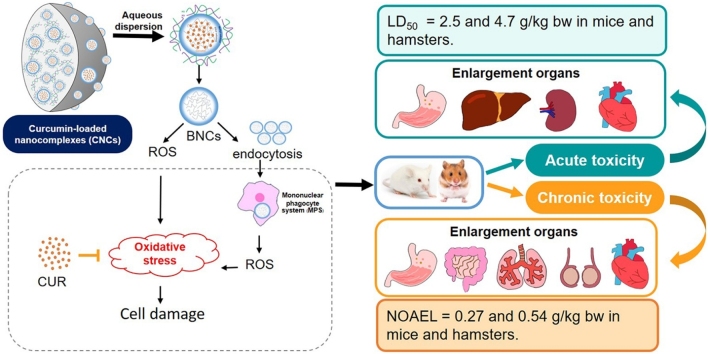
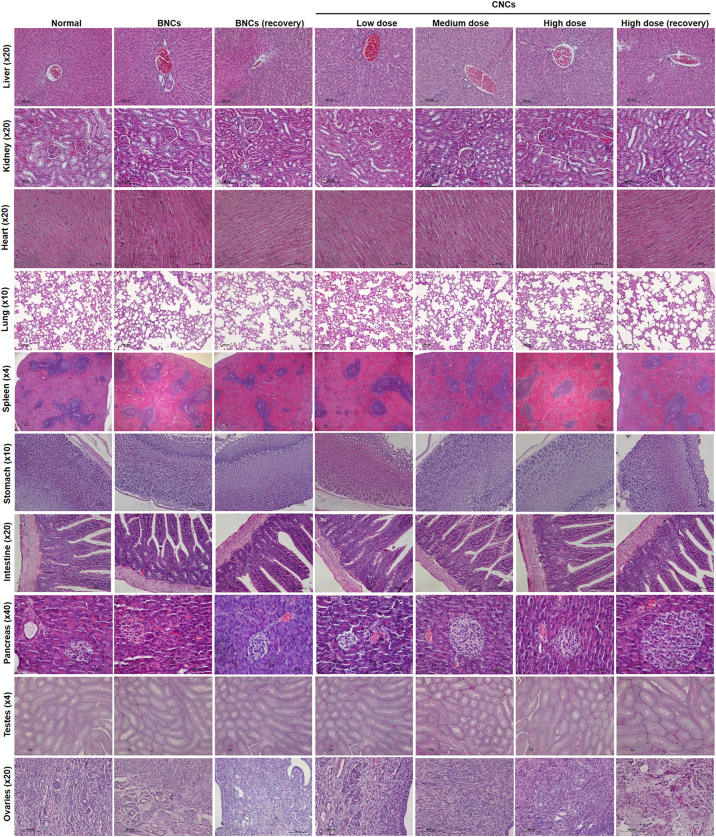
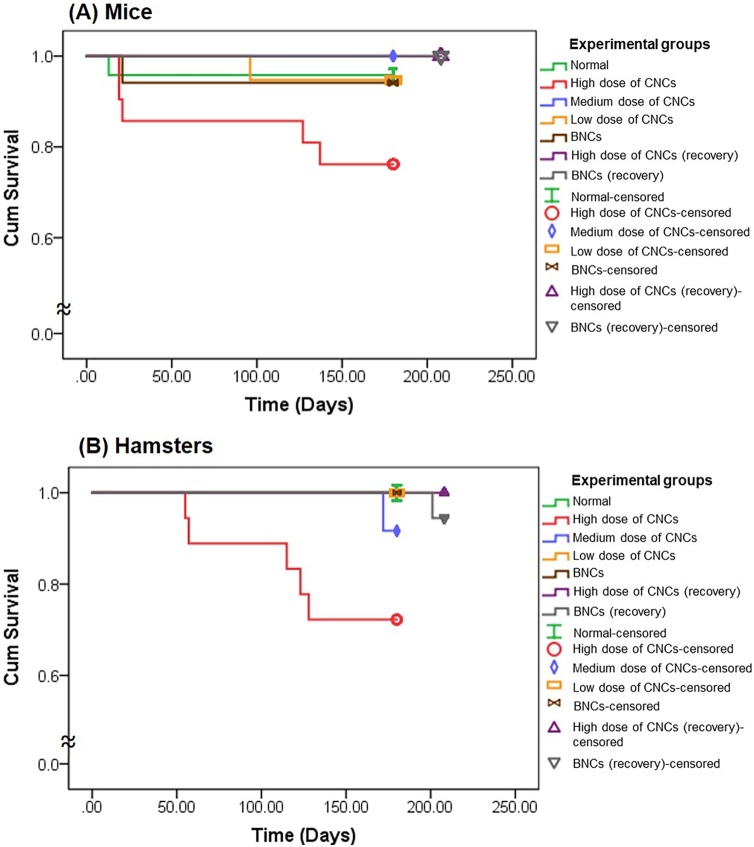
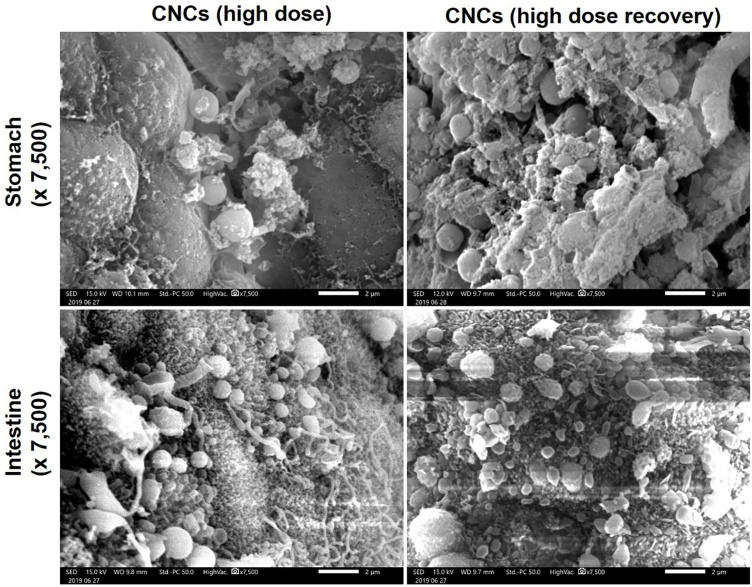
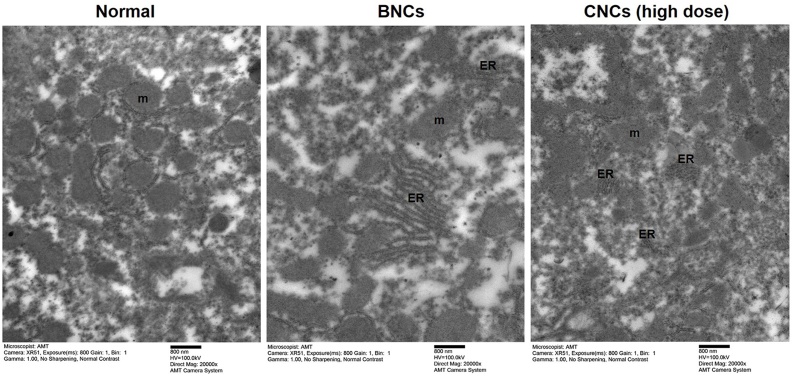
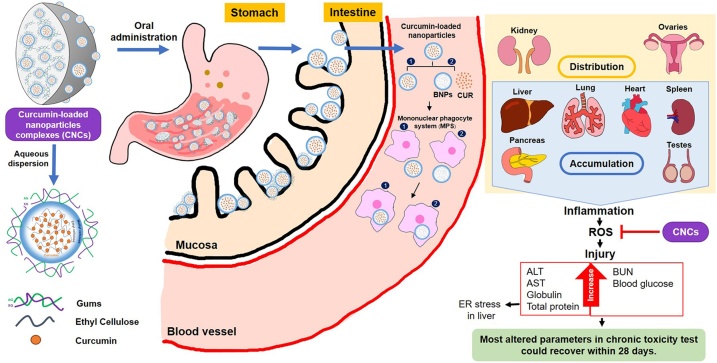
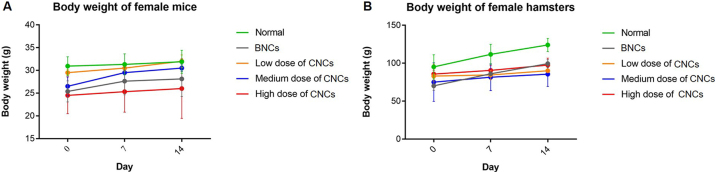
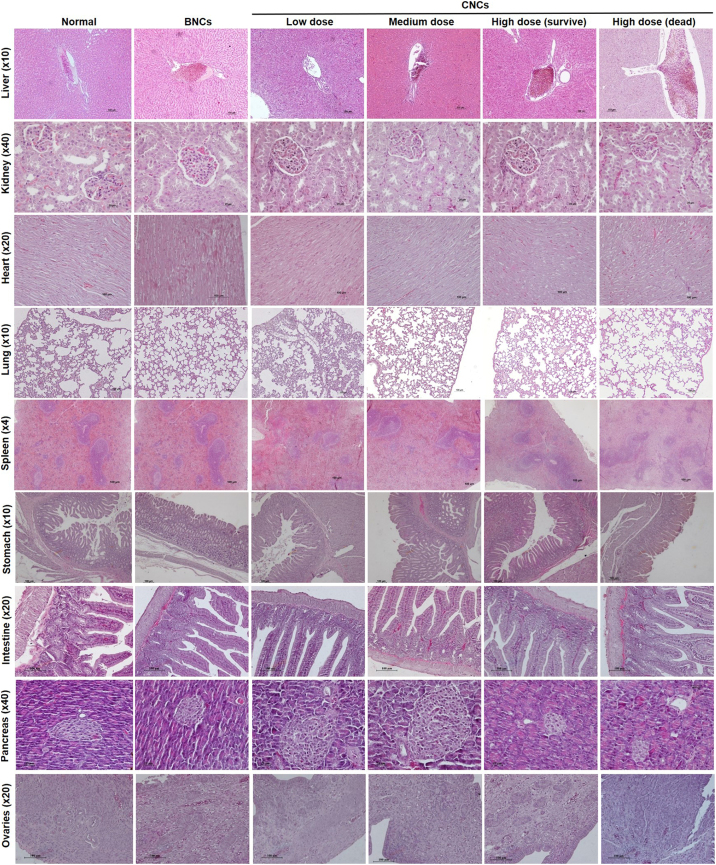
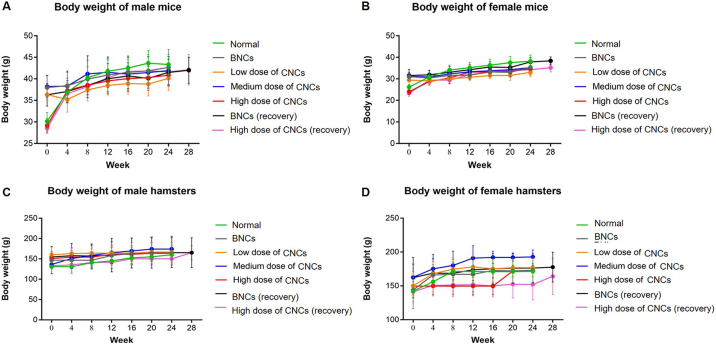
We recently developed a modified solid dispersion of curcumin-loaded nanocomplexes (CNCs) in gums which promoted the prolonged and sustained release of curcumin. However, its safety assessment has not yet been investigated. Here, acute and chronic toxicities of CNCs were assayed using mice and hamsters. CNCs were orally administered to the animals. Doses of CNCs used for acute toxicity testing were 0.1, 1.1, 11.0 g/kg body weight for mice and 0.2, 2.1 and 21.4 g/kg body weight for hamsters. Doses of CNCs for chronic toxicity testing were 0.09, 0.27, 0.8 g/kg body weight/day for mice and 0.18, 0.54 and 1.61 g/kg body weight/day for hamsters. This regimen was followed daily for 6 months. Low and medium doses of CNCs did not induce any side effects in acute and chronic toxicity tests in either animal species. However, in acute toxicity testing, the organ-weight to body-weight ratio of spleen was significantly increased in mice treated with 11 g/kg body weight along with elevated levels of some biochemical parameters. There was a significant increase in organ-weight to body-weight ratios of stomach, liver and heart in hamsters treated with 21.4 g/kg body weight, but no elevated levels of biochemical parameters. Oral LD of CNCs in mice and hamsters were 8.9 and 16.8 g/kg body weight (equivalent to 2.5 and 4.7 g curcumin/kg body weight), respectively. Daily CNCs high-dose treatment for 6 months significantly increased organ-weight to body-weight ratios of stomach and intestine in mice and of lung and heart in hamsters. Elevated levels of glucose, total protein, ALT, AST and globulin in mice, and increased levels of AST, but decrease in cholesterol, in hamsters were concurrently observed with inflammation in liver and lung. These abnormalities were resolved within 28 days after cessation of treatment. The no-observed-adverse-effect level of CNCs was determined at 0.27 and 0.54 g/kg body weight/day in mice and hamsters. In conclusion, toxicity of high-dose CNCs treatment was graded as very low, possibly due to the components of the nanocomplex.
我们最近研发了一种姜黄素负载纳米复合物(CNCs)在树胶中的改良固体分散体,其可促进姜黄素的长效和持续释放。然而,尚未对其进行安全性评估。在此,我们使用小鼠和仓鼠对CNCs的急性和慢性毒性进行了测定。将CNCs经口给予动物。用于急性毒性试验的CNCs剂量,小鼠为0.1、1.1、11.0 g/kg体重,仓鼠为0.2、2.1和21.4 g/kg体重。用于慢性毒性试验的CNCs剂量,小鼠为0.09、0.27、0.8 g/kg体重/天,仓鼠为0.18、0.54和1.61 g/kg体重/天。该给药方案持续每日进行6个月。低剂量和中剂量的CNCs在两种动物的急性和慢性毒性试验中均未诱发任何副作用。然而,在急性毒性试验中,给予11 g/kg体重的小鼠脾脏的脏器重量与体重之比显著增加,同时一些生化参数水平升高。给予21.4 g/kg体重的仓鼠胃、肝脏和心脏的脏器重量与体重之比显著增加,但生化参数水平未升高。CNCs在小鼠和仓鼠中的经口半数致死量分别为8.9和16.8 g/kg体重(相当于2.5和4.7 g姜黄素/kg体重)。每日给予高剂量CNCs治疗6个月显著增加了小鼠胃和肠道以及仓鼠肺和心脏的脏器重量与体重之比。同时观察到小鼠血糖、总蛋白、谷丙转氨酶、谷草转氨酶和球蛋白水平升高,仓鼠谷草转氨酶水平升高但胆固醇水平降低,伴有肝脏和肺部炎症。这些异常在停药后28天内得到缓解。CNCs在小鼠和仓鼠中的未观察到不良反应水平分别确定为0.27和0.54 g/kg体重/天。总之,高剂量CNCs治疗的毒性分级为非常低,这可能归因于纳米复合物的成分。