Parsons Allison, Unaka Ndidi I, Stewart Constance, Foster Jennifer, Perez Valerie, Jones Nana-Hawa Yayah, Kahn Robert, Beck Andrew F, Riley Carley
Division of Critical Care Cincinnati Children's Hospital Medical Center Cincinnati Ohio USA.
Department of Pediatrics University of Cincinnati College of Medicine Cincinnati Ohio USA.
Learn Health Syst. 2021 Jun 22;5(3):e10279. doi: 10.1002/lrh2.10279. eCollection 2021 Jul.
Despite learning health systems' focus on improvement in health outcomes, inequities in outcomes remain deep and persistent. To achieve and sustain health equity, it is critical that learning health systems (LHS) adapt and function in ways that directly prioritize equity.
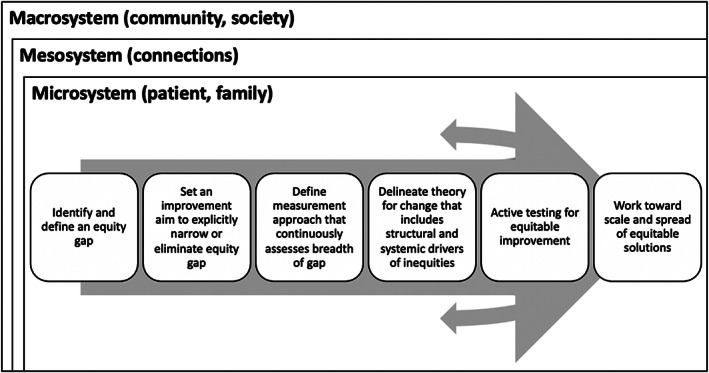
We present guidance, including seven core practices, borne from theory, evidence, and experience, for actors within LHS pursuing equity.
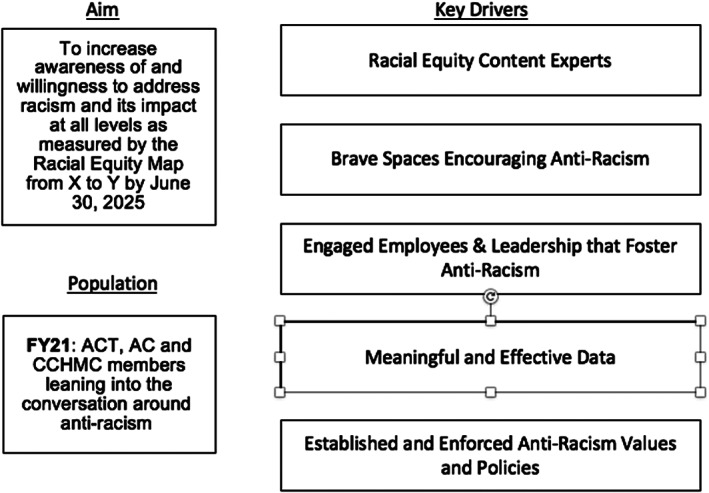
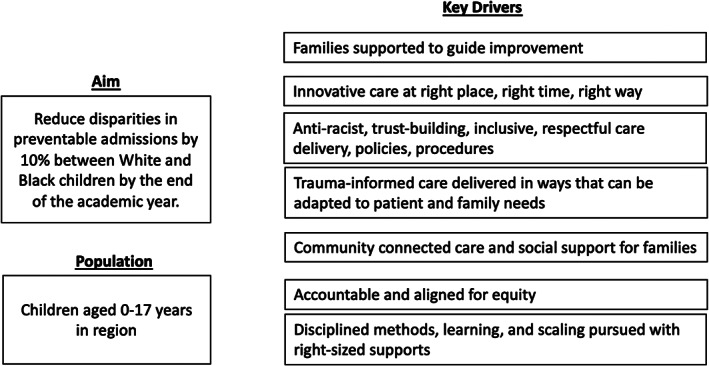
We provide a foundational definition of equity. We then offer seven core practices for how LHS may effectively pursue equity in health: establish principle, measure for equity, lead from lived experience, co-produce, redistribute power, practice a growth mindset, and engage beyond the healthcare system. We include three use cases that illustrate ways in which we have begun to center equity in the work of our own LHS.
The achievement of equity requires real transformation at individual, institutional, and structural levels and requires sustained and persistent effort.
尽管学习型健康系统专注于改善健康结果,但结果的不平等现象仍然严重且持续存在。为了实现并维持健康公平,学习型健康系统以直接将公平作为优先事项的方式进行调整和运作至关重要。
我们为追求公平的学习型健康系统中的行为者提供了源于理论、证据和经验的指导,包括七种核心实践。
我们提供了公平的基本定义。然后,我们针对学习型健康系统如何在健康方面有效追求公平提出了七种核心实践:确立原则、衡量公平、从实际经验出发引领、共同生产、重新分配权力、践行成长型思维以及超越医疗系统进行参与。我们包括三个用例,说明了我们已开始在自己的学习型健康系统工作中以公平为核心的方式。
实现公平需要在个人、机构和结构层面进行真正的变革,并且需要持续不断的努力。