Department of Civil and Environmental Engineering, National University of Singapore, Singapore, 117576, Singapore; Faculty of Environment, University of Science and Technology, The University of Danang, 54 Nguyen Luong Bang Street, Lien Chieu District, Danang City, Viet Nam.
Department of Civil and Environmental Engineering, National University of Singapore, Singapore, 117576, Singapore.
Environ Res. 2021 Nov;202:111711. doi: 10.1016/j.envres.2021.111711. Epub 2021 Jul 17.
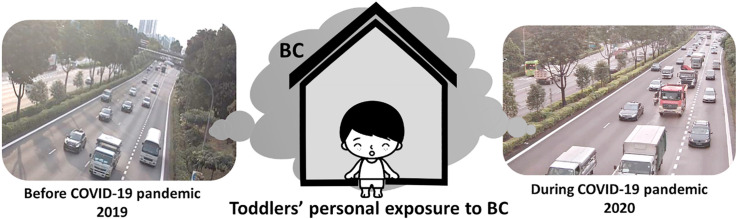
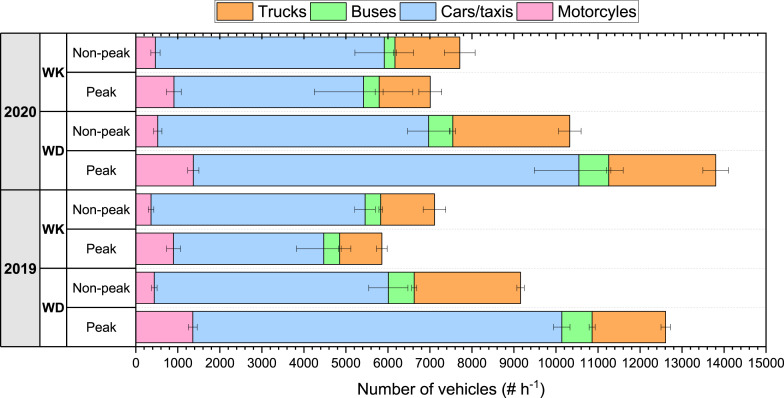
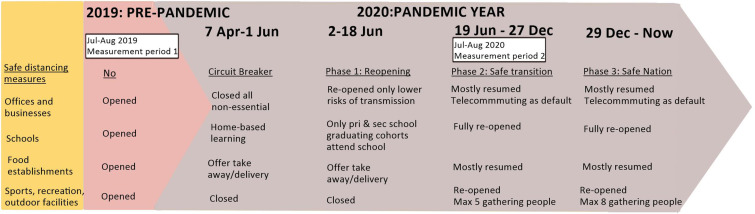
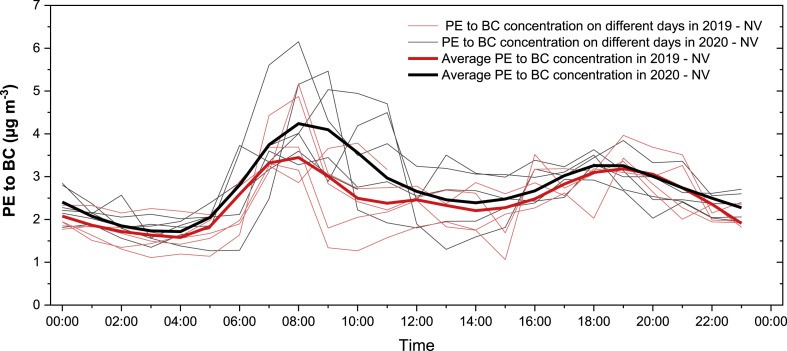
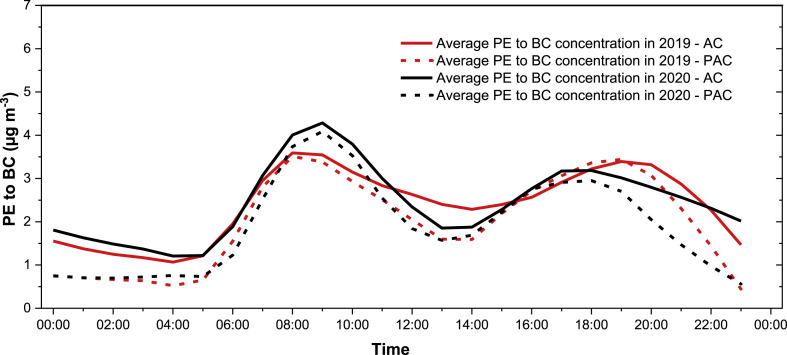
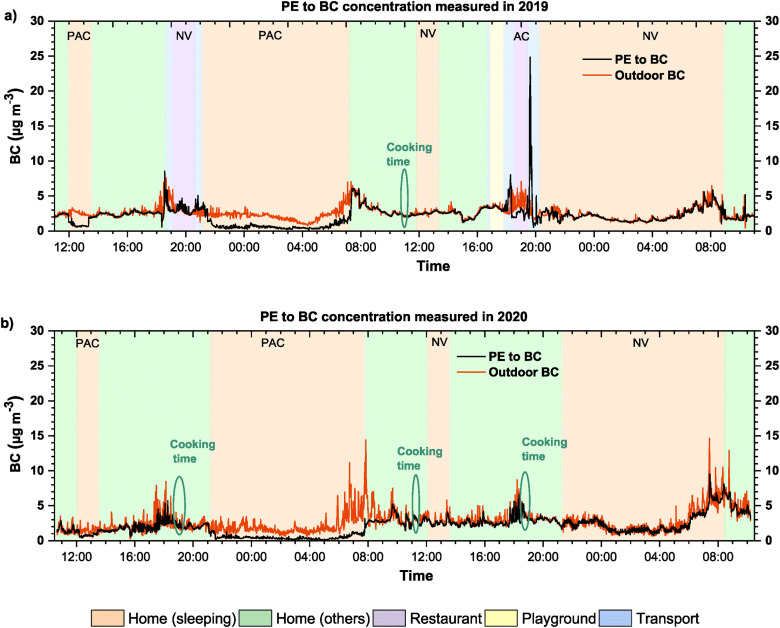
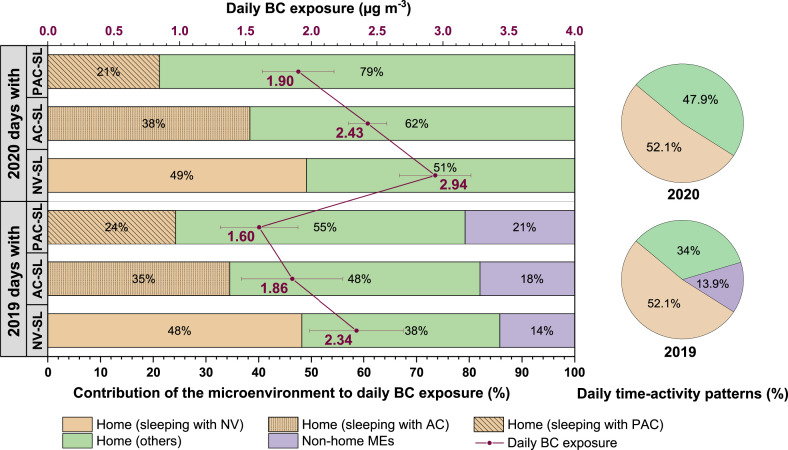
Black carbon (BC), an important indicator of traffic-related air pollution (TRAP) in urban environments, is receiving increased attention because of its adverse health effects. Personal exposure (PE) of adults to BC has been widely studied, but little is known about the exposure of young children (toddlers) to BC in cities. We carried out a pilot study to investigate the integrated daily PE of toddlers to BC in a city-state with a high population density (Singapore). We studied the impact of urban traffic on the PE of toddlers to BC by comparing and contrasting on-road traffic flow (i.e., volume and composition) in Singapore in 2019 (before the COVID-19 pandemic) and in 2020 (during the COVID-19 pandemic). Our observations indicate that the daily BC exposure levels and inhaled doses increased by about 25% in 2020 (2.9 ± 0.3 μg m and 35.5 μg day) compared to that in 2019 (2.3 ± 0.4 μg m and 28.5 μg day for exposure concentration and inhaled dose, respectively). The increased BC levels were associated with the increased traffic volume on both weekdays and weekends in 2020 compared to the same time period in 2019. Specifically, we observed an increase in the number of trucks as well as cars/taxis and motorcycles (private transport) and a decline in the number of buses (public transport) in 2020. The implementation of lockdown measures in 2020 resulted in significant changes in the time, place and duration of PE of toddlers to BC. The recorded daily time-activity patterns indicated that toddlers spent almost all the time in indoor environments during the measurement period in 2020. When we compared different ventilation options (natural ventilation (NV), air conditioning (AC), and portable air cleaner (PAC)) for mitigation of PE to BC in the home environment, we found a significant decrease (>30%) in daily BC exposure levels while using the PAC compared to the NV scenario. Our case study shows that the PE of toddlers to BC is of health concern in indoor environments in 2020 because of the migration of the increased TRAP into naturally ventilated residential homes and more time spent indoors than outdoors. Since toddlers' immune system is weak, technological intervention is necessary to protect their health against inhalation exposure to air pollutants.
黑碳(BC)是城市环境中交通相关空气污染(TRAP)的一个重要指标,由于其对健康的不利影响,正受到越来越多的关注。成年人个人暴露(PE)于 BC 的情况已得到广泛研究,但对城市中幼儿(学步儿童)暴露于 BC 的情况知之甚少。我们进行了一项试点研究,以调查一个人口密度高的城市国家(新加坡)中幼儿的综合日 BC 暴露情况。我们通过比较和对比 2019 年(新冠疫情前)和 2020 年(新冠疫情期间)新加坡的道路交通流量(即流量和组成),研究了城市交通对幼儿 BC 暴露的影响。我们的观察表明,与 2019 年相比,2020 年幼儿的日 BC 暴露水平和吸入剂量分别增加了约 25%(2020 年分别为 2.9 ± 0.3μg/m 和 35.5μg 天,而暴露浓度和吸入剂量分别为 2.3 ± 0.4μg/m 和 28.5μg 天)。与 2019 年同期相比,2020 年工作日和周末的交通量增加导致 BC 水平升高。具体来说,我们观察到 2020 年卡车、汽车/出租车和摩托车(私人交通工具)的数量增加,而公共汽车(公共交通工具)的数量减少。2020 年实施的封锁措施导致幼儿 BC 暴露的时间、地点和持续时间发生了重大变化。记录的每日活动模式表明,2020 年测量期间,幼儿几乎所有时间都在室内环境中度过。当我们比较家庭环境中减轻幼儿对 BC 的 PE 的不同通风选项(自然通风(NV)、空调(AC)和便携式空气净化器(PAC))时,我们发现与 NV 情景相比,使用 PAC 可使每日 BC 暴露水平显著降低(>30%)。我们的案例研究表明,由于增加的 TRAP 迁移到自然通风的住宅中,以及幼儿在室内的时间比在室外多,2020 年室内环境中幼儿的 BC 暴露对健康构成了关注。由于幼儿的免疫系统较弱,因此需要技术干预来保护他们免受吸入空气污染物的侵害。