World Animal Health Information and Analysis Department, World Organisation for Animal Health 75017 Paris, France; Lyon University, UMR EPIA, INRA VetAgro Sup, 69280, Marcy l'Etoile, France.
Clermont Auvergne University, UMR EPIA, INRA VetAgro Sup, 63122, Saint-Genes-Champanelle, France.
Poult Sci. 2021 Sep;100(9):101322. doi: 10.1016/j.psj.2021.101322. Epub 2021 Jun 10.
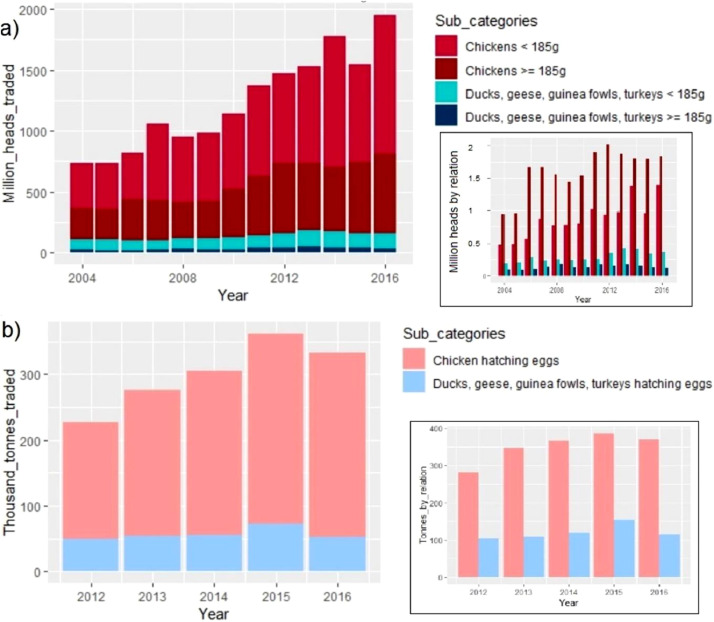
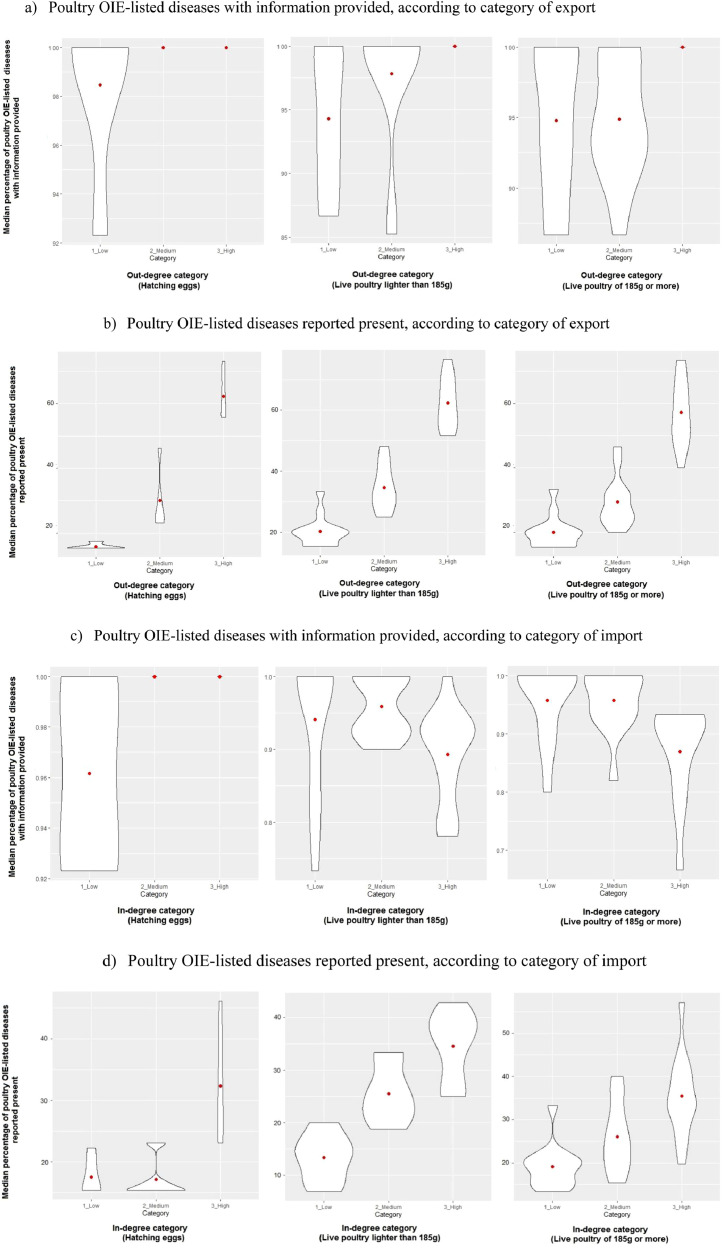
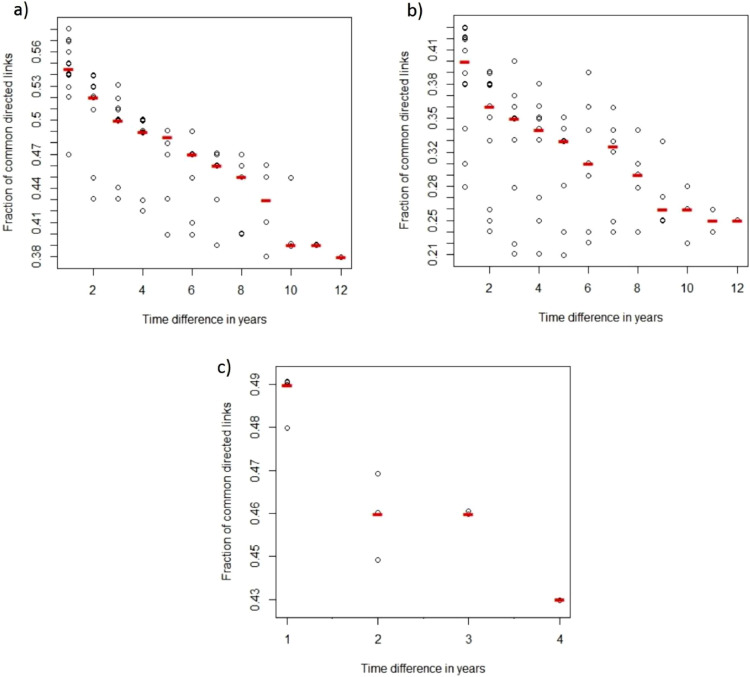
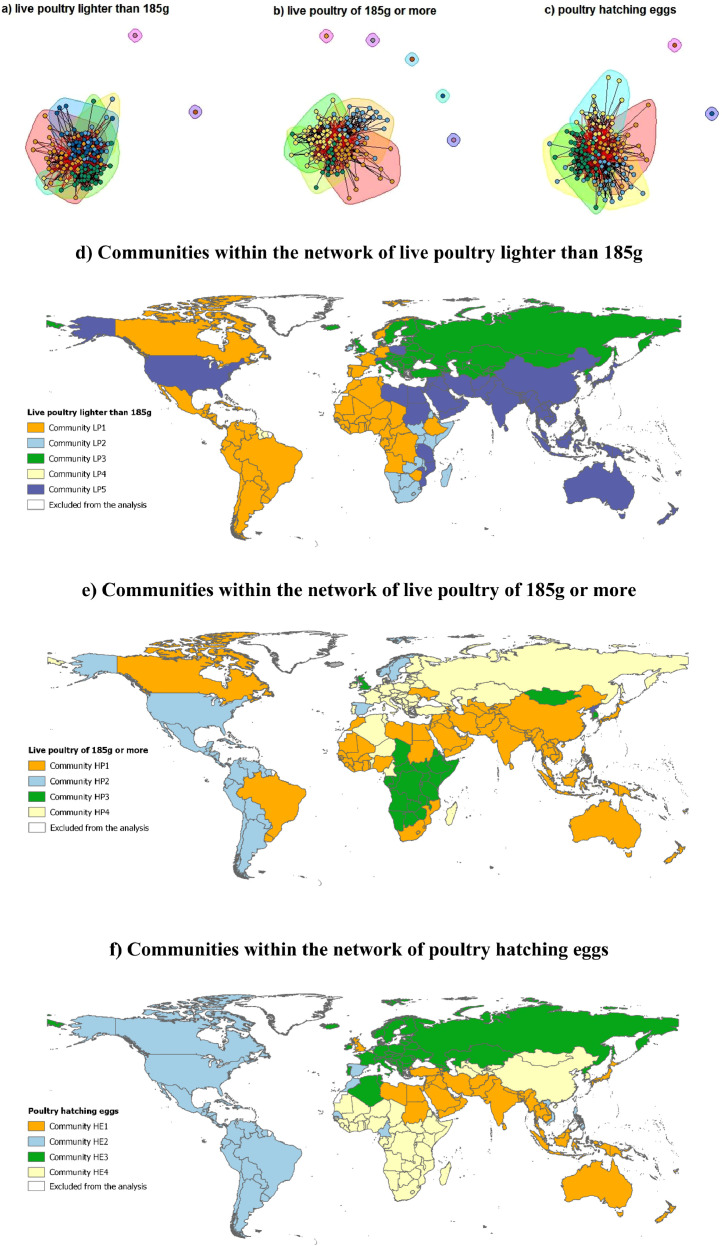
As international trade constitutes one of the main spread pathways of diseases, a better understanding of the trade behaviors of countries will help identify strengths and areas for improvement in the approach of national authorities to controlling poultry diseases globally. Using data reported to the United Nations Comtrade and the World Organisation for Animal Health (OIE) between 2004 and 2016 by 193 countries, we used a network analysis on trade data of poultry hatching eggs, live poultry of less than 185 g and live poultry of 185 g or more to determine that: 1) quantities traded between countries are substantial, and tend to increase (average increase of 800,000 poultry heads and 21,000 tons of hatching eggs each year equivalent to an increase by 2-fold in 17 yr); 2) the stability of the networks was low (a quarter to half of trade relationships maintained between 2 consecutive years) and the subnetworks favorable to the spread of diseases were in general consistent with regional clustering, trade exchanges being equally at intracontinental and intercontinental levels; 3) countries with highest number of partners were located in the same world regions for the 3 poultry networks - Americas and Europe for export (up to 107 partners) and Africa, Asia and Europe for import (up to 36 partners); 4) for live poultry, biggest exporting countries shared more poultry disease surveillance data, and reported more disease presence than others, which did not stop them from trading. Biggest importers reported less poultry disease surveillance data and reported more disease presence than others; and 5) the main structural and trend characteristics of the international trade networks were in general similar for the 3 networks. The information derived from this work underlines the importance of applying the preventive measures advocated by the OIE and will support countries to reduce the risk of introduction of pathogens causing poultry diseases.
由于国际贸易是疾病传播的主要途径之一,因此更好地了解各国的贸易行为将有助于确定国家当局在全球控制家禽疾病方面的优势和改进领域。我们使用联合国贸易数据库(Comtrade)和世界动物卫生组织(OIE)在 2004 年至 2016 年期间报告的 193 个国家的数据,对家禽种蛋、185 克以下活禽和 185 克或以上活禽的贸易数据进行网络分析,结果表明:1)国家间的贸易量很大,而且呈上升趋势(每年种蛋贸易量增加 80 万只,活禽增加 2.1 万只,相当于 17 年内增加了两倍);2)网络的稳定性较低(四分之一到一半的贸易关系在连续两年内得以维持),有利于疾病传播的子网通常与区域聚类一致,贸易交流在洲际和大陆内水平上同样存在;3)在 3 个家禽网络中,拥有最多贸易伙伴的国家位于同一世界区域——出口方面的美洲和欧洲(多达 107 个伙伴)以及进口方面的非洲、亚洲和欧洲(多达 36 个伙伴);4)对于活禽,最大的出口国分享了更多的家禽疾病监测数据,而且比其他国家报告了更多的疾病存在情况,但这并没有阻止它们进行贸易。最大的进口国报告了较少的家禽疾病监测数据,而且比其他国家报告了更多的疾病存在情况;5)3 个网络的国际贸易网络的主要结构和趋势特征总体相似。这项工作所获得的信息强调了应用世界动物卫生组织所倡导的预防措施的重要性,并将支持各国降低引入引起家禽疾病的病原体的风险。