The School of Plant Sciences, University of Arizona, Tucson, AZ, 85721-0036, USA.
BMC Plant Biol. 2021 Jul 19;21(1):342. doi: 10.1186/s12870-021-03119-x.
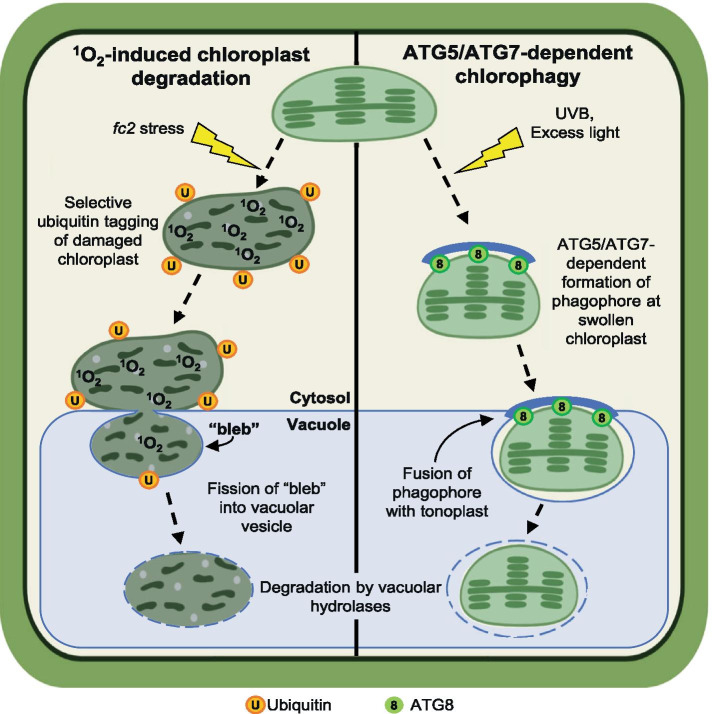
Chloroplasts respond to stress and changes in the environment by producing reactive oxygen species (ROS) that have specific signaling abilities. The ROS singlet oxygen (O) is unique in that it can signal to initiate cellular degradation including the selective degradation of damaged chloroplasts. This chloroplast quality control pathway can be monitored in the Arabidopsis thaliana mutant plastid ferrochelatase two (fc2) that conditionally accumulates chloroplast O under diurnal light cycling conditions leading to rapid chloroplast degradation and eventual cell death. The cellular machinery involved in such degradation, however, remains unknown. Recently, it was demonstrated that whole damaged chloroplasts can be transported to the central vacuole via a process requiring autophagosomes and core components of the autophagy machinery. The relationship between this process, referred to as chlorophagy, and the degradation of O-stressed chloroplasts and cells has remained unexplored.
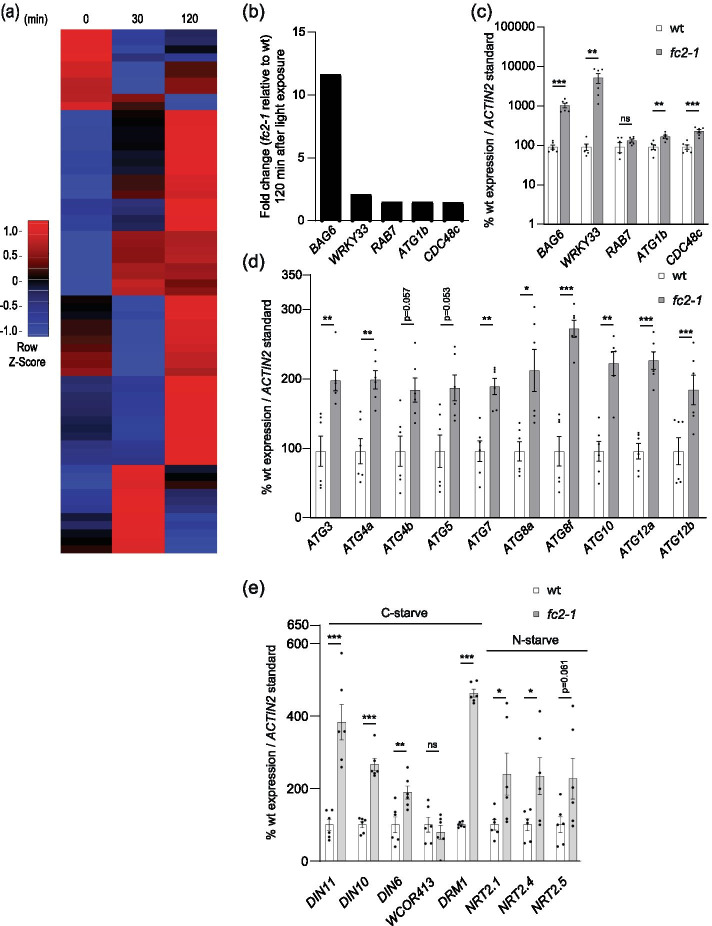
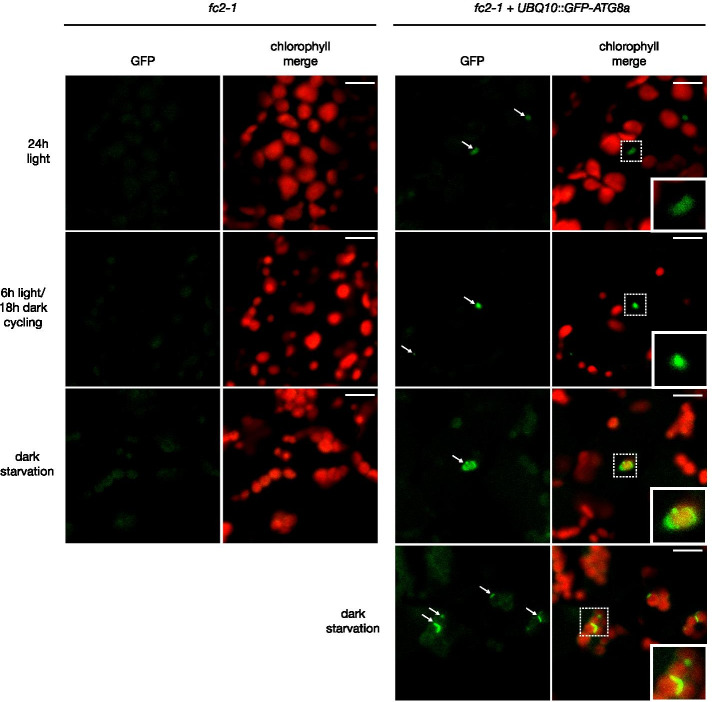
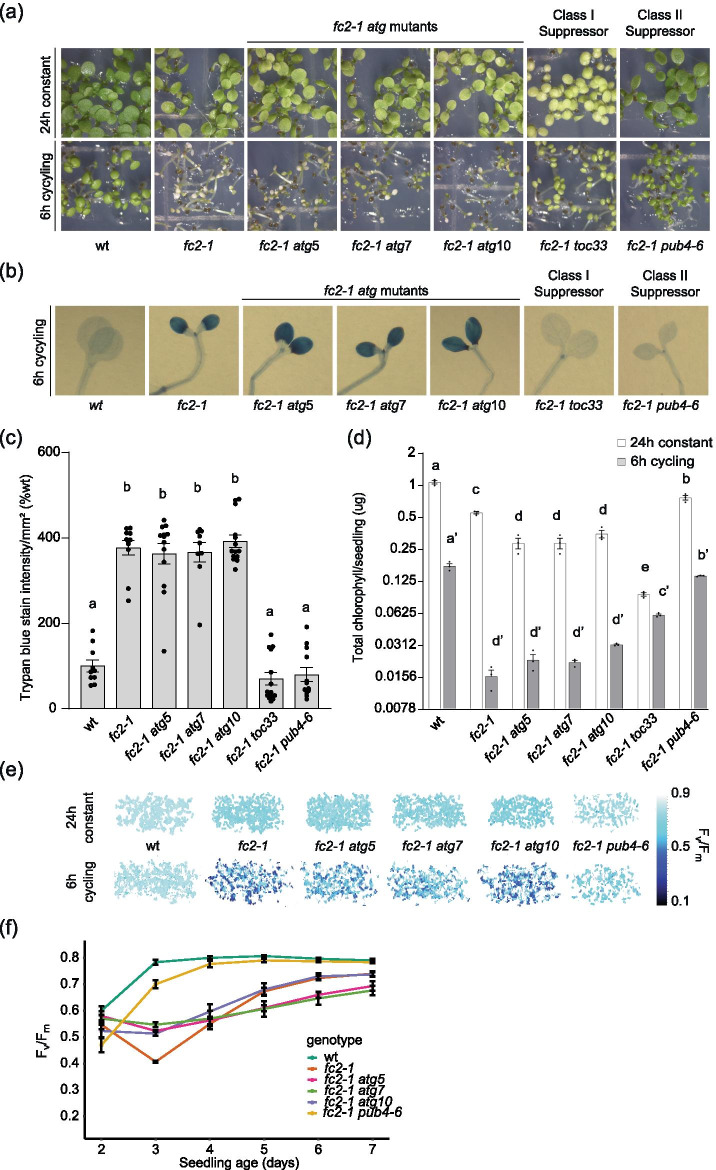
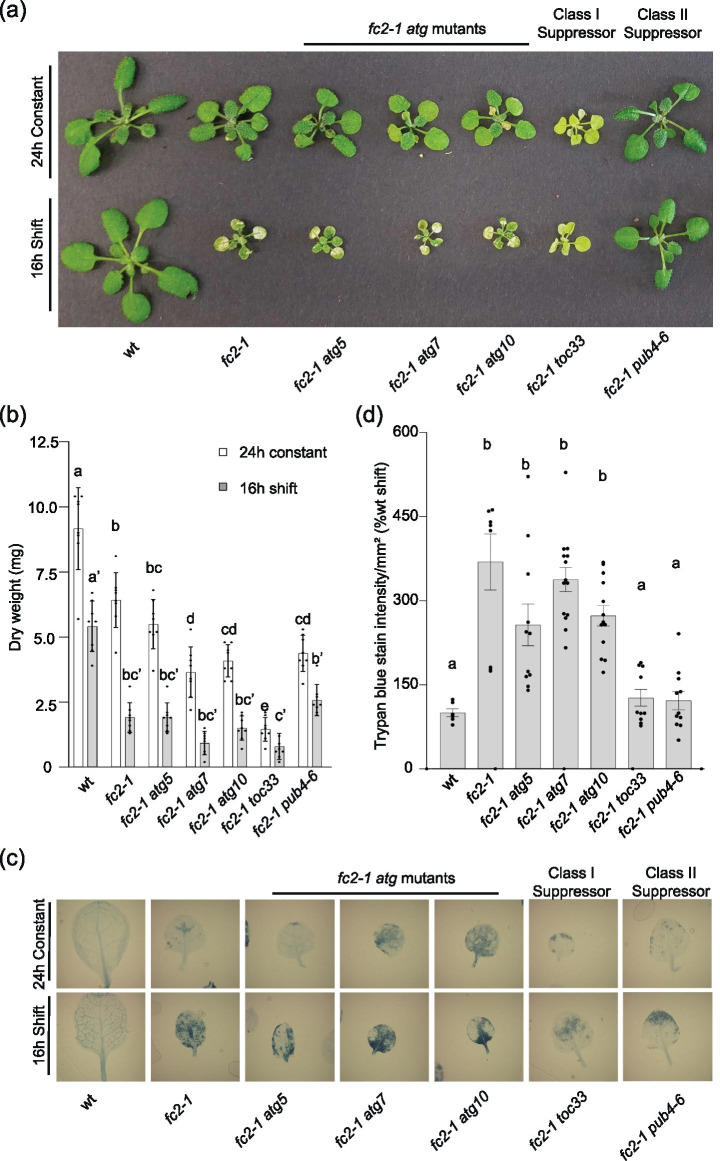
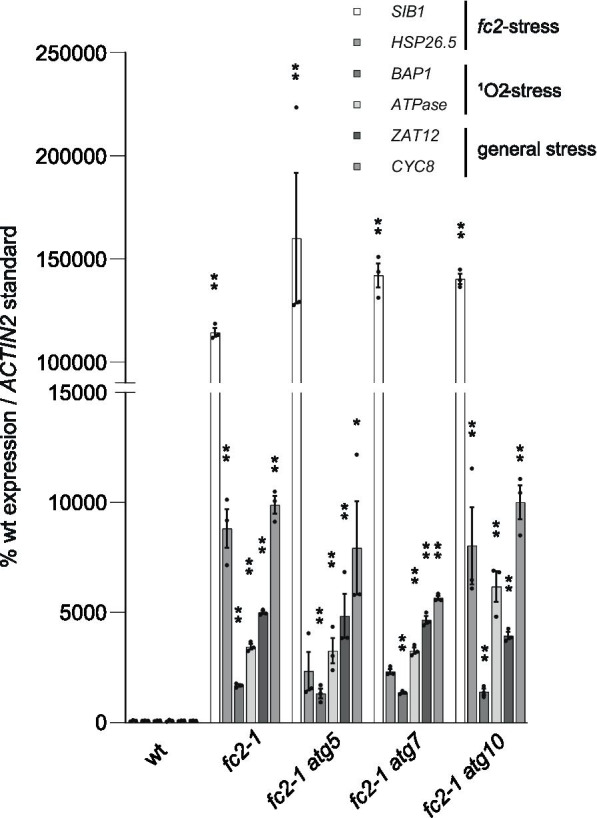
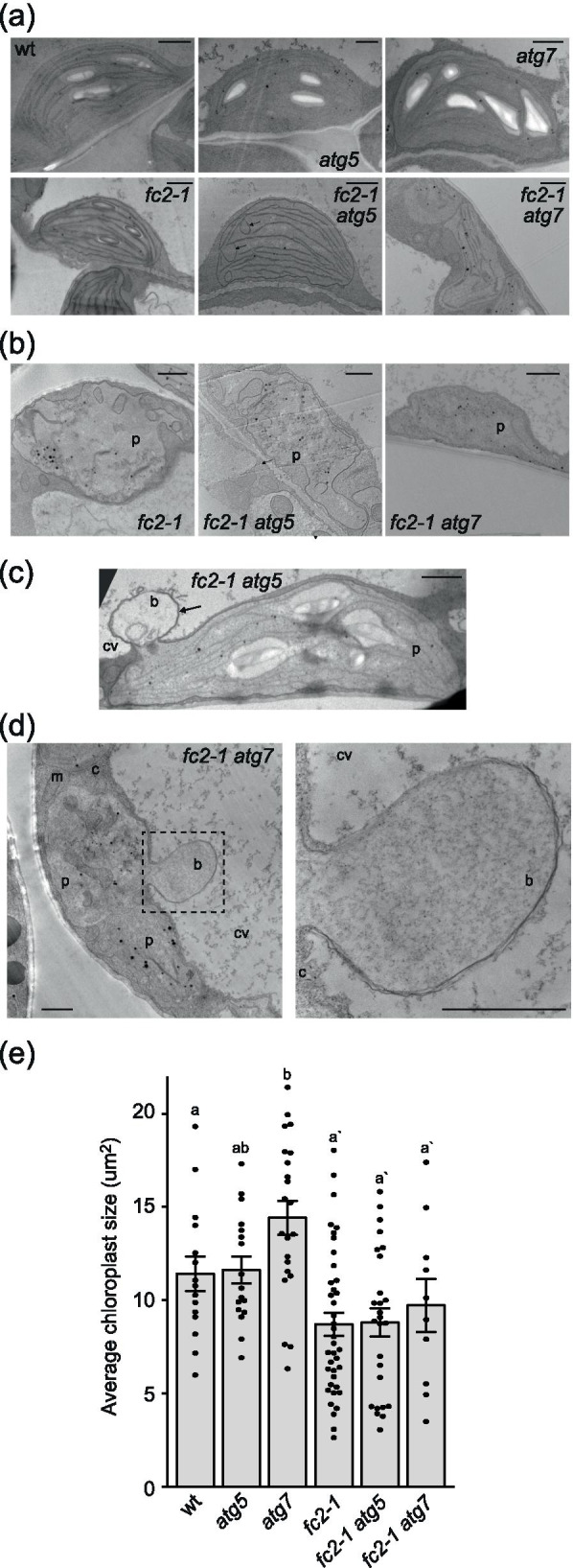
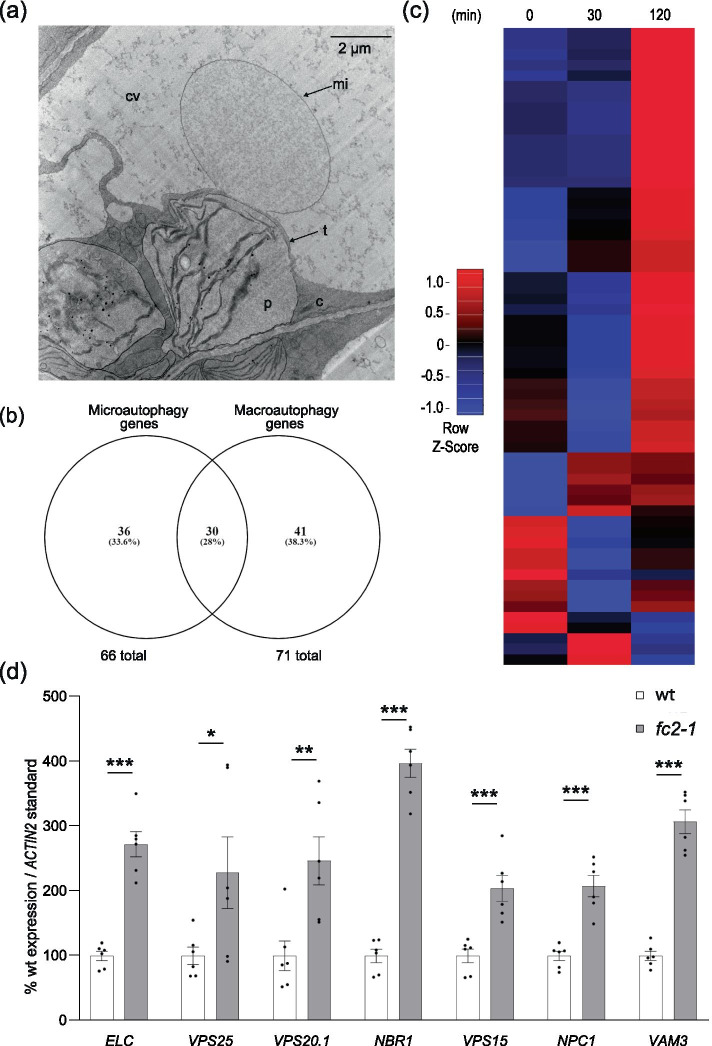
To further understand O-induced cellular degradation and determine what role autophagy may play, the expression of autophagy-related genes was monitored in O-stressed fc2 seedlings and found to be induced. Although autophagosomes were present in fc2 cells, they did not associate with chloroplasts during O stress. Mutations affecting the core autophagy machinery (atg5, atg7, and atg10) were unable to suppress O-induced cell death or chloroplast protrusion into the central vacuole, suggesting autophagosome formation is dispensable for such O-mediated cellular degradation. However, both atg5 and atg7 led to specific defects in chloroplast ultrastructure and photosynthetic efficiencies, suggesting core autophagy machinery is involved in protecting chloroplasts from photo-oxidative damage. Finally, genes predicted to be involved in microautophagy were shown to be induced in stressed fc2 seedlings, indicating a possible role for an alternate form of autophagy in the dismantling of O-damaged chloroplasts.
Our results support the hypothesis that O-dependent cell death is independent from autophagosome formation, canonical autophagy, and chlorophagy. Furthermore, autophagosome-independent microautophagy may be involved in degrading O-damaged chloroplasts. At the same time, canonical autophagy may still play a role in protecting chloroplasts from O-induced photo-oxidative stress. Together, this suggests chloroplast function and degradation is a complex process utilizing multiple autophagy and degradation machineries, possibly depending on the type of stress or damage incurred.
叶绿体通过产生具有特定信号能力的活性氧(ROS)来响应胁迫和环境变化。ROS 单线态氧(O)的独特之处在于,它可以发出信号启动细胞降解,包括选择性降解受损的叶绿体。这种叶绿体质量控制途径可以在拟南芥突变体叶绿体质体亚铁螯合酶二(fc2)中监测到,该突变体在昼夜光循环条件下条件性积累叶绿体 O,导致叶绿体迅速降解并最终导致细胞死亡。然而,参与这种降解的细胞机制仍然未知。最近,研究表明,整个受损的叶绿体可以通过一种需要自噬体和自噬机制核心成分的过程被运输到中央液泡。这个过程被称为噬叶绿体,与 O 胁迫下叶绿体和细胞的降解之间的关系尚未得到探索。
为了进一步了解 O 诱导的细胞降解,并确定自噬可能发挥的作用,监测了 O 胁迫下 fc2 幼苗中自噬相关基因的表达,发现其被诱导。尽管在 fc2 细胞中存在自噬体,但在 O 胁迫下它们与叶绿体没有关联。影响核心自噬机制(atg5、atg7 和 atg10)的突变不能抑制 O 诱导的细胞死亡或叶绿体突起进入中央液泡,这表明自噬体的形成对于这种 O 介导的细胞降解是可有可无的。然而,atg5 和 atg7 都导致叶绿体超微结构和光合作用效率的特定缺陷,这表明核心自噬机制参与保护叶绿体免受光氧化损伤。最后,预测参与微自噬的基因在应激的 fc2 幼苗中被诱导,表明替代形式的自噬可能参与了 O 损伤的叶绿体的解体。
我们的结果支持这样的假设,即 O 依赖性细胞死亡独立于自噬体形成、经典自噬和噬叶绿体。此外,可能涉及自噬体非依赖性微自噬来降解 O 损伤的叶绿体。与此同时,经典自噬可能仍然在保护叶绿体免受 O 诱导的光氧化应激方面发挥作用。总的来说,这表明叶绿体的功能和降解是一个复杂的过程,利用多种自噬和降解机制,可能取决于所遭受的胁迫或损伤的类型。