Department of Cell Biology and Molecular Genetics, University of Maryland, College Park, MD, USA.
Unité de Virologie Structurale, Virology Department and CNRS UMR 3569, Institut Pasteur, Paris, France.
Nat Commun. 2021 Jul 19;12(1):4380. doi: 10.1038/s41467-021-24613-8.
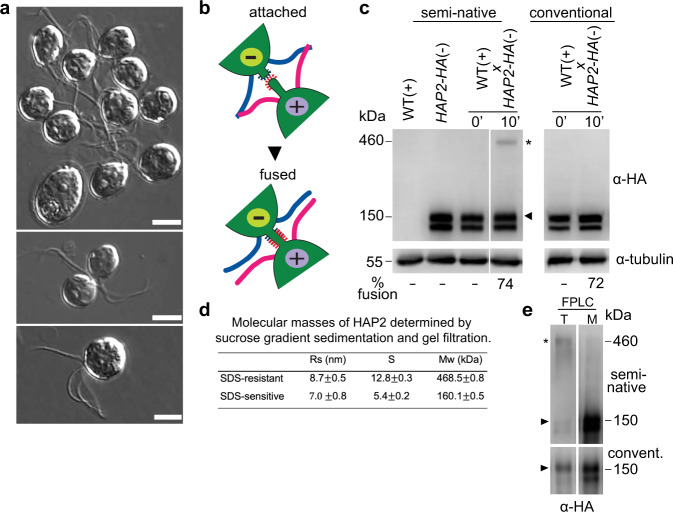
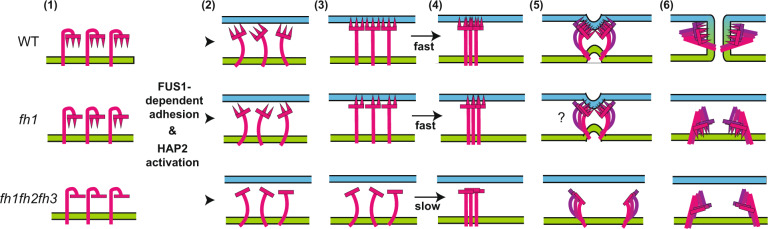
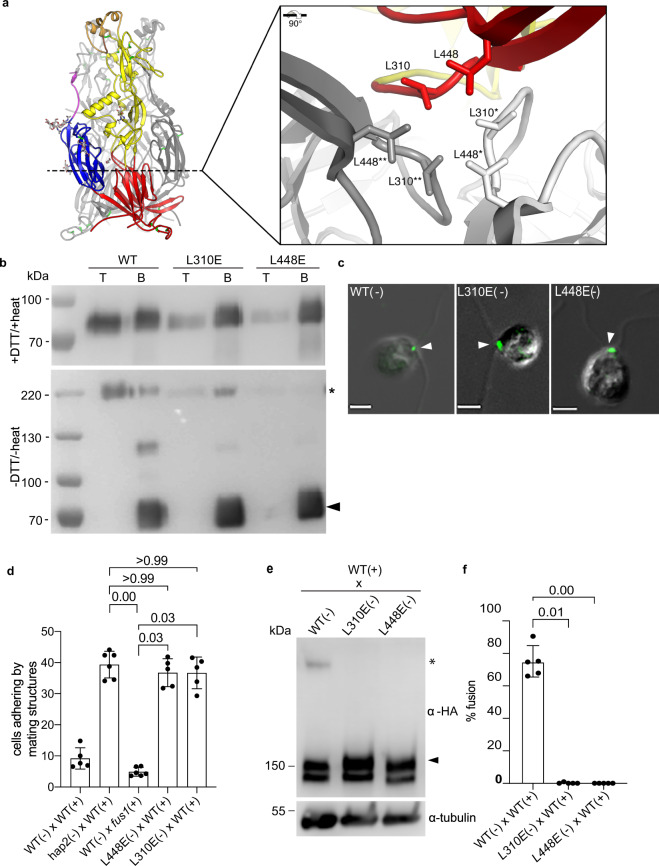
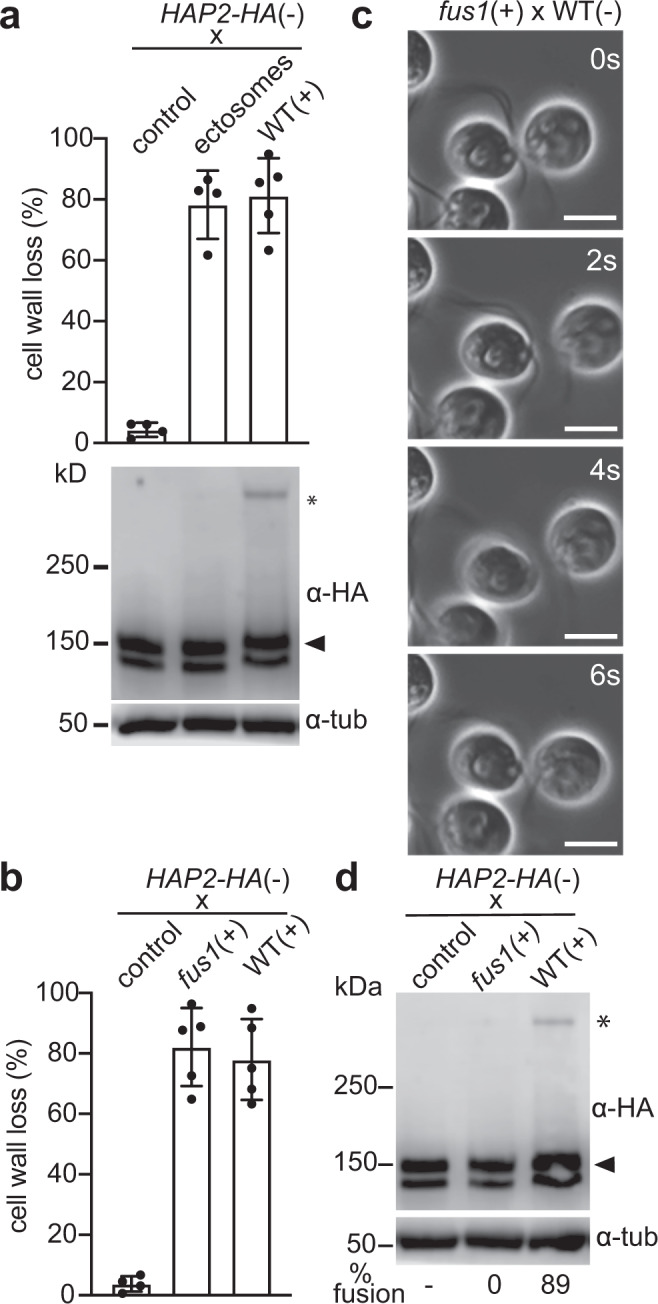
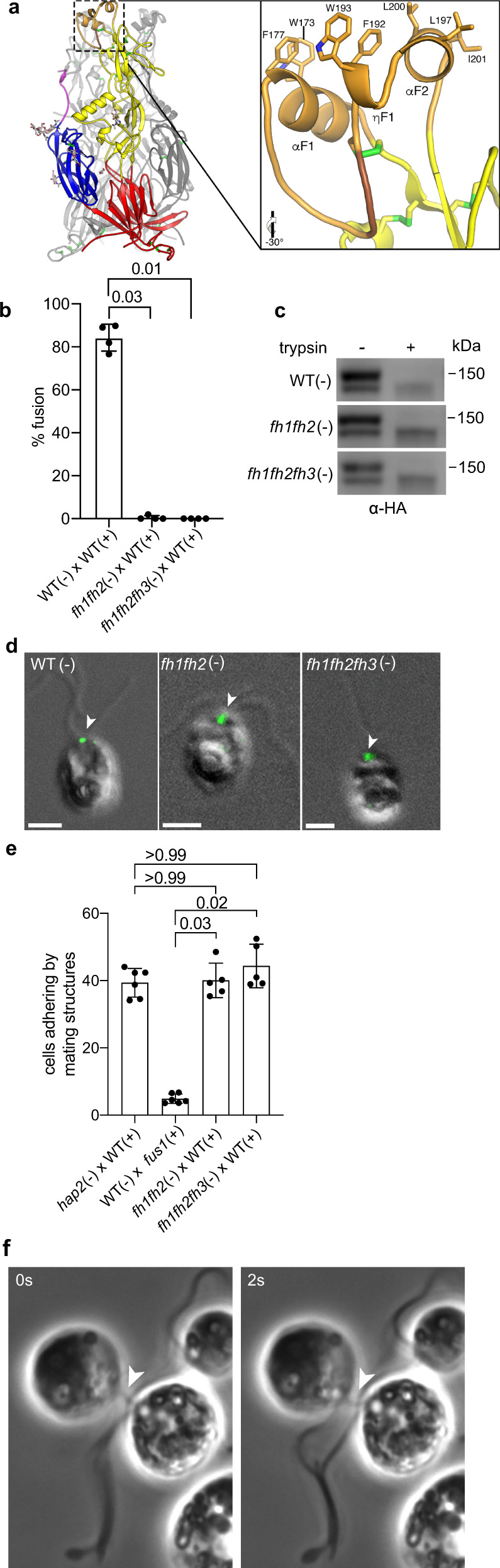
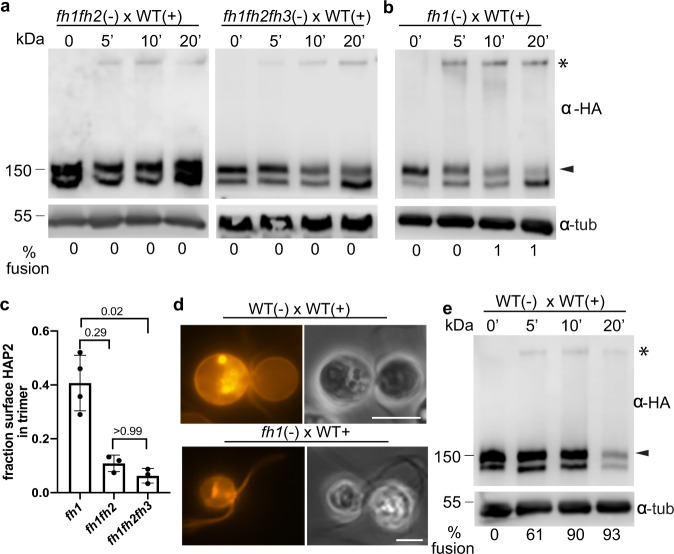
Recognition and fusion between gametes during fertilization is an ancient process. Protein HAP2, recognized as the primordial eukaryotic gamete fusogen, is a structural homolog of viral class II fusion proteins. The mechanisms that regulate HAP2 function, and whether virus-fusion-like conformational changes are involved, however, have not been investigated. We report here that fusion between plus and minus gametes of the green alga Chlamydomonas indeed requires an obligate conformational rearrangement of HAP2 on minus gametes from a labile, prefusion form into the stable homotrimers observed in structural studies. Activation of HAP2 to undergo its fusogenic conformational change occurs only upon species-specific adhesion between the two gamete membranes. Following a molecular mechanism akin to fusion of enveloped viruses, the membrane insertion capacity of the fusion loop is required to couple formation of trimers to gamete fusion. Thus, species-specific membrane attachment is the gateway to fusion-driving HAP2 rearrangement into stable trimers.
在受精过程中,配子的识别和融合是一个古老的过程。蛋白 HAP2 被认为是原始真核配子融合原,它是病毒 II 类融合蛋白的结构同源物。然而,调节 HAP2 功能的机制以及是否涉及病毒融合样构象变化尚未得到研究。我们在这里报告说,绿藻衣藻的正配子和负配子之间的融合确实需要 HAP2 在负配子上从不稳定的预融合形式到结构研究中观察到的稳定三聚体的必需构象重排。只有在两个配子膜之间发生种特异性粘附时,HAP2 才会被激活以发生其融合构象变化。类似于包膜病毒融合的分子机制,融合环的膜插入能力将三聚体的形成与配子融合偶联起来。因此,种特异性膜附着是融合驱动 HAP2 重排为稳定三聚体的入口。