• 文献检索
  • 文档翻译
  • 深度研究
  • 学术资讯
  • Suppr Zotero 插件Zotero 插件
  • 邀请有礼
  • 套餐&价格
  • 历史记录
应用&插件
Suppr Zotero 插件Zotero 插件浏览器插件Mac 客户端Windows 客户端微信小程序
定价
高级版会员购买积分包购买API积分包
服务
文献检索文档翻译深度研究API 文档MCP 服务
关于我们
关于 Suppr公司介绍联系我们用户协议隐私条款
关注我们

Suppr 超能文献

核心技术专利:CN118964589B侵权必究
粤ICP备2023148730 号-1Suppr @ 2026

文献检索

告别复杂PubMed语法,用中文像聊天一样搜索,搜遍4000万医学文献。AI智能推荐,让科研检索更轻松。

立即免费搜索

文件翻译

保留排版,准确专业,支持PDF/Word/PPT等文件格式,支持 12+语言互译。

免费翻译文档

深度研究

AI帮你快速写综述,25分钟生成高质量综述,智能提取关键信息,辅助科研写作。

立即免费体验

开发一种自供电压阻智能鞋垫,配备低功耗 BLE 连接功能,用于远程步态监测。

Development of a Self-Powered Piezo-Resistive Smart Insole Equipped with Low-Power BLE Connectivity for Remote Gait Monitoring.

机构信息

Department of Innovation Engineering, University of Salento, 73100 Lecce, Italy.

Facultad de Ingeniería, Universidad Panamericana, Aguascalientes 20290, Mexico.

出版信息

Sensors (Basel). 2021 Jul 1;21(13):4539. doi: 10.3390/s21134539.

DOI:10.3390/s21134539
PMID:34283073
原文链接:https://pmc.ncbi.nlm.nih.gov/articles/PMC8272025/
Abstract

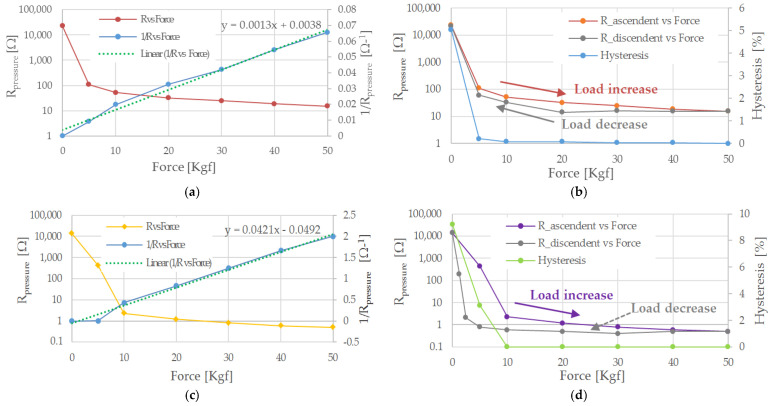
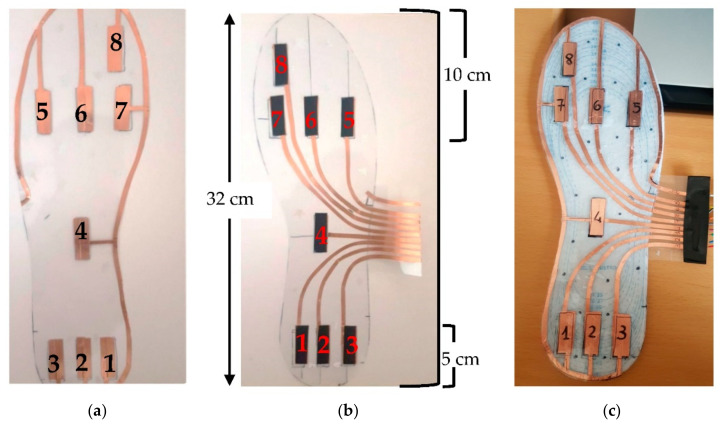
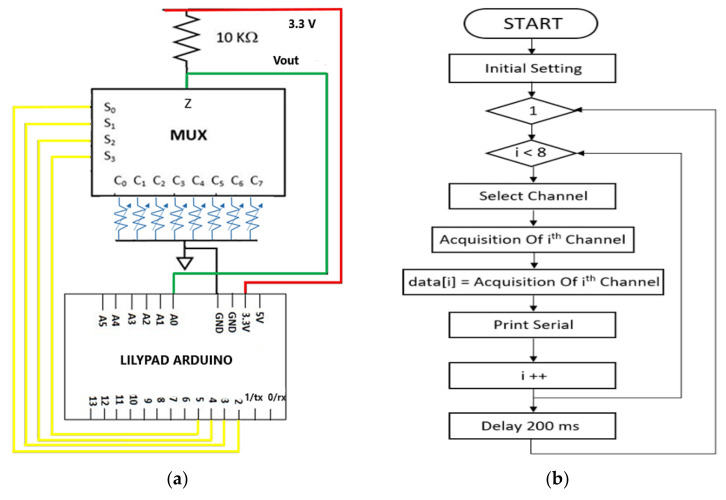
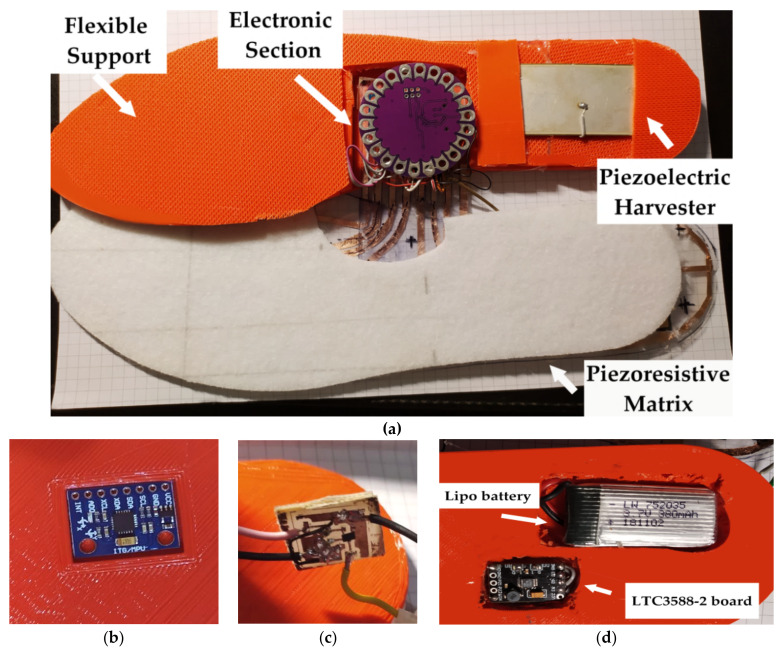
The evolution of low power electronics and the availability of new smart materials are opening new frontiers to develop wearable systems for medical applications, lifestyle monitoring, and performance detection. This paper presents the development and realization of a novel smart insole for monitoring the plantar pressure distribution and gait parameters; indeed, it includes a piezoresistive sensing matrix based on a Velostat layer for transducing applied pressure into an electric signal. At first, an accurate and complete characterization of Velostat-based pressure sensors is reported as a function of sizes, support material, and pressure trend. The realization and testing of a low-cost and reliable piezoresistive sensing matrix based on a sandwich structure are discussed. This last is interfaced with a low power conditioning and processing section based on an Arduino Lilypad board and an analog multiplexer for acquiring the pressure data. The insole includes a 3-axis capacitive accelerometer for detecting the gait parameters (swing time and stance phase time) featuring the walking. A Bluetooth Low Energy (BLE) 5.0 module is included for transmitting in real-time the acquired data toward a PC, tablet or smartphone, for displaying and processing them using a custom Processing application. Moreover, the smart insole is equipped with a piezoelectric harvesting section for scavenging energy from walking. The onfield tests indicate that for a walking speed higher than 1 ms, the device's power requirements (i.e., P¯=5.84 mW) was fulfilled. However, more than 9 days of autonomy are guaranteed by the integrated 380-mAh Lipo battery in the total absence of energy contributions from the harvesting section.

摘要

低功耗电子技术的发展和新型智能材料的可用性正在为医疗应用、生活方式监测和性能检测开发可穿戴系统开辟新的前沿。本文介绍了一种新型智能鞋垫的开发和实现,用于监测足底压力分布和步态参数;实际上,它包括一个基于 Velostat 层的压阻传感矩阵,用于将施加的压力转换为电信号。首先,报告了基于 Velostat 的压力传感器的精确和完整特性,作为尺寸、支撑材料和压力趋势的函数。讨论了基于夹层结构的低成本、可靠的压阻传感矩阵的实现和测试。最后一部分与基于 Arduino Lilypad 板和模拟多路复用器的低功耗调理和处理部分接口,用于获取压力数据。鞋垫包括用于检测步态参数(摆动时间和站立阶段时间)的 3 轴电容加速度计,用于检测行走特征。包括一个蓝牙低能 (BLE) 5.0 模块,用于实时将采集到的数据传输到 PC、平板电脑或智能手机上,并使用自定义处理应用程序对其进行显示和处理。此外,智能鞋垫配备了一个压电能量收集部分,用于从行走中获取能量。现场测试表明,对于步行速度高于 1 ms 的情况,设备的功率需求(即 P¯=5.84 mW)得到了满足。然而,集成的 380 mAh Lipo 电池在没有能量收集部分贡献的情况下,保证了超过 9 天的自主运行时间。

https://cdn.ncbi.nlm.nih.gov/pmc/blobs/130c/8272025/8f735584ed2f/sensors-21-04539-g029.jpg
https://cdn.ncbi.nlm.nih.gov/pmc/blobs/130c/8272025/ea6951835edd/sensors-21-04539-g001.jpg
https://cdn.ncbi.nlm.nih.gov/pmc/blobs/130c/8272025/5a117fc0231f/sensors-21-04539-g002.jpg
https://cdn.ncbi.nlm.nih.gov/pmc/blobs/130c/8272025/3d5b196abad0/sensors-21-04539-g003.jpg
https://cdn.ncbi.nlm.nih.gov/pmc/blobs/130c/8272025/b9624198067c/sensors-21-04539-g004.jpg
https://cdn.ncbi.nlm.nih.gov/pmc/blobs/130c/8272025/ff200d84f687/sensors-21-04539-g005.jpg
https://cdn.ncbi.nlm.nih.gov/pmc/blobs/130c/8272025/f7c043603f34/sensors-21-04539-g006.jpg
https://cdn.ncbi.nlm.nih.gov/pmc/blobs/130c/8272025/bd78815cb141/sensors-21-04539-g007.jpg
https://cdn.ncbi.nlm.nih.gov/pmc/blobs/130c/8272025/497fab4ffd66/sensors-21-04539-g008.jpg
https://cdn.ncbi.nlm.nih.gov/pmc/blobs/130c/8272025/4abd7ada88f8/sensors-21-04539-g009.jpg
https://cdn.ncbi.nlm.nih.gov/pmc/blobs/130c/8272025/d9c6672e6033/sensors-21-04539-g010.jpg
https://cdn.ncbi.nlm.nih.gov/pmc/blobs/130c/8272025/bd931d991f84/sensors-21-04539-g011.jpg
https://cdn.ncbi.nlm.nih.gov/pmc/blobs/130c/8272025/fc321e950a70/sensors-21-04539-g012.jpg
https://cdn.ncbi.nlm.nih.gov/pmc/blobs/130c/8272025/043e5f86d631/sensors-21-04539-g013.jpg
https://cdn.ncbi.nlm.nih.gov/pmc/blobs/130c/8272025/c53843963c8c/sensors-21-04539-g014.jpg
https://cdn.ncbi.nlm.nih.gov/pmc/blobs/130c/8272025/bc8a3d786109/sensors-21-04539-g015.jpg
https://cdn.ncbi.nlm.nih.gov/pmc/blobs/130c/8272025/4a2e2fd72903/sensors-21-04539-g016.jpg
https://cdn.ncbi.nlm.nih.gov/pmc/blobs/130c/8272025/57f0f9383927/sensors-21-04539-g017.jpg
https://cdn.ncbi.nlm.nih.gov/pmc/blobs/130c/8272025/dfea4c86bfcd/sensors-21-04539-g018a.jpg
https://cdn.ncbi.nlm.nih.gov/pmc/blobs/130c/8272025/714c2e9e2fb9/sensors-21-04539-g019.jpg
https://cdn.ncbi.nlm.nih.gov/pmc/blobs/130c/8272025/91ee956c68f1/sensors-21-04539-g020.jpg
https://cdn.ncbi.nlm.nih.gov/pmc/blobs/130c/8272025/364397ac8929/sensors-21-04539-g021.jpg
https://cdn.ncbi.nlm.nih.gov/pmc/blobs/130c/8272025/0df4626deb4e/sensors-21-04539-g022.jpg
https://cdn.ncbi.nlm.nih.gov/pmc/blobs/130c/8272025/89398079b430/sensors-21-04539-g023.jpg
https://cdn.ncbi.nlm.nih.gov/pmc/blobs/130c/8272025/e034be59bf6e/sensors-21-04539-g024.jpg
https://cdn.ncbi.nlm.nih.gov/pmc/blobs/130c/8272025/6e23c206deae/sensors-21-04539-g025.jpg
https://cdn.ncbi.nlm.nih.gov/pmc/blobs/130c/8272025/7709a557b4fe/sensors-21-04539-g026.jpg
https://cdn.ncbi.nlm.nih.gov/pmc/blobs/130c/8272025/f3672394e8ea/sensors-21-04539-g027.jpg
https://cdn.ncbi.nlm.nih.gov/pmc/blobs/130c/8272025/0fe55a18af26/sensors-21-04539-g028.jpg
https://cdn.ncbi.nlm.nih.gov/pmc/blobs/130c/8272025/8f735584ed2f/sensors-21-04539-g029.jpg
https://cdn.ncbi.nlm.nih.gov/pmc/blobs/130c/8272025/ea6951835edd/sensors-21-04539-g001.jpg
https://cdn.ncbi.nlm.nih.gov/pmc/blobs/130c/8272025/5a117fc0231f/sensors-21-04539-g002.jpg
https://cdn.ncbi.nlm.nih.gov/pmc/blobs/130c/8272025/3d5b196abad0/sensors-21-04539-g003.jpg
https://cdn.ncbi.nlm.nih.gov/pmc/blobs/130c/8272025/b9624198067c/sensors-21-04539-g004.jpg
https://cdn.ncbi.nlm.nih.gov/pmc/blobs/130c/8272025/ff200d84f687/sensors-21-04539-g005.jpg
https://cdn.ncbi.nlm.nih.gov/pmc/blobs/130c/8272025/f7c043603f34/sensors-21-04539-g006.jpg
https://cdn.ncbi.nlm.nih.gov/pmc/blobs/130c/8272025/bd78815cb141/sensors-21-04539-g007.jpg
https://cdn.ncbi.nlm.nih.gov/pmc/blobs/130c/8272025/497fab4ffd66/sensors-21-04539-g008.jpg
https://cdn.ncbi.nlm.nih.gov/pmc/blobs/130c/8272025/4abd7ada88f8/sensors-21-04539-g009.jpg
https://cdn.ncbi.nlm.nih.gov/pmc/blobs/130c/8272025/d9c6672e6033/sensors-21-04539-g010.jpg
https://cdn.ncbi.nlm.nih.gov/pmc/blobs/130c/8272025/bd931d991f84/sensors-21-04539-g011.jpg
https://cdn.ncbi.nlm.nih.gov/pmc/blobs/130c/8272025/fc321e950a70/sensors-21-04539-g012.jpg
https://cdn.ncbi.nlm.nih.gov/pmc/blobs/130c/8272025/043e5f86d631/sensors-21-04539-g013.jpg
https://cdn.ncbi.nlm.nih.gov/pmc/blobs/130c/8272025/c53843963c8c/sensors-21-04539-g014.jpg
https://cdn.ncbi.nlm.nih.gov/pmc/blobs/130c/8272025/bc8a3d786109/sensors-21-04539-g015.jpg
https://cdn.ncbi.nlm.nih.gov/pmc/blobs/130c/8272025/4a2e2fd72903/sensors-21-04539-g016.jpg
https://cdn.ncbi.nlm.nih.gov/pmc/blobs/130c/8272025/57f0f9383927/sensors-21-04539-g017.jpg
https://cdn.ncbi.nlm.nih.gov/pmc/blobs/130c/8272025/dfea4c86bfcd/sensors-21-04539-g018a.jpg
https://cdn.ncbi.nlm.nih.gov/pmc/blobs/130c/8272025/714c2e9e2fb9/sensors-21-04539-g019.jpg
https://cdn.ncbi.nlm.nih.gov/pmc/blobs/130c/8272025/91ee956c68f1/sensors-21-04539-g020.jpg
https://cdn.ncbi.nlm.nih.gov/pmc/blobs/130c/8272025/364397ac8929/sensors-21-04539-g021.jpg
https://cdn.ncbi.nlm.nih.gov/pmc/blobs/130c/8272025/0df4626deb4e/sensors-21-04539-g022.jpg
https://cdn.ncbi.nlm.nih.gov/pmc/blobs/130c/8272025/89398079b430/sensors-21-04539-g023.jpg
https://cdn.ncbi.nlm.nih.gov/pmc/blobs/130c/8272025/e034be59bf6e/sensors-21-04539-g024.jpg
https://cdn.ncbi.nlm.nih.gov/pmc/blobs/130c/8272025/6e23c206deae/sensors-21-04539-g025.jpg
https://cdn.ncbi.nlm.nih.gov/pmc/blobs/130c/8272025/7709a557b4fe/sensors-21-04539-g026.jpg
https://cdn.ncbi.nlm.nih.gov/pmc/blobs/130c/8272025/f3672394e8ea/sensors-21-04539-g027.jpg
https://cdn.ncbi.nlm.nih.gov/pmc/blobs/130c/8272025/0fe55a18af26/sensors-21-04539-g028.jpg
https://cdn.ncbi.nlm.nih.gov/pmc/blobs/130c/8272025/8f735584ed2f/sensors-21-04539-g029.jpg

相似文献

1
Development of a Self-Powered Piezo-Resistive Smart Insole Equipped with Low-Power BLE Connectivity for Remote Gait Monitoring.开发一种自供电压阻智能鞋垫,配备低功耗 BLE 连接功能,用于远程步态监测。
Sensors (Basel). 2021 Jul 1;21(13):4539. doi: 10.3390/s21134539.
2
A Systematic Approach to the Design and Characterization of A Smart Insole for Detecting Vertical Ground Reaction Force (vGRF) in Gait Analysis.一种用于步态分析中检测垂直地面反作用力(vGRF)的智能鞋垫的设计和特征描述的系统方法。
Sensors (Basel). 2020 Feb 11;20(4):957. doi: 10.3390/s20040957.
3
A 3D-Printed Capacitive Smart Insole for Plantar Pressure Monitoring.一种用于足底压力监测的三维打印电容智能鞋垫。
Sensors (Basel). 2022 Dec 12;22(24):9725. doi: 10.3390/s22249725.
4
A Self-Powered Insole for Human Motion Recognition.一种用于人体运动识别的自供电鞋垫。
Sensors (Basel). 2016 Sep 15;16(9):1502. doi: 10.3390/s16091502.
5
Self-Powered Smart Insole for Monitoring Human Gait Signals.自供电智能鞋垫,用于监测人体步态信号。
Sensors (Basel). 2019 Dec 4;19(24):5336. doi: 10.3390/s19245336.
6
Smart Shoe Insole Based on Polydimethylsiloxane Composite Capacitive Sensors.基于聚二甲基硅氧烷复合电容传感器的智能鞋垫。
Sensors (Basel). 2023 Jan 23;23(3):1298. doi: 10.3390/s23031298.
7
Design of a Plantar Pressure Insole Measuring System Based on Modular Photoelectric Pressure Sensor Unit.基于模块化光电压力传感器单元的足底压力鞋垫测量系统设计。
Sensors (Basel). 2021 May 29;21(11):3780. doi: 10.3390/s21113780.
8
IoT-Based Wireless System for Gait Kinetics Monitoring in Multi-Device Therapeutic Interventions.基于物联网的无线系统,用于多设备治疗干预中的步态动力学监测。
Sensors (Basel). 2024 Sep 6;24(17):5799. doi: 10.3390/s24175799.
9
Clinometric Gait Analysis Using Smart Insoles in Patients With Hemiplegia After Stroke: Pilot Study.临床步态分析使用智能鞋垫在中风后偏瘫患者:初步研究。
JMIR Mhealth Uhealth. 2020 Sep 10;8(9):e22208. doi: 10.2196/22208.
10
Analysis of dual-task elderly gait using wearable plantar-pressure insoles and accelerometer.使用可穿戴足底压力鞋垫和加速度计对老年人双任务步态进行分析。
Annu Int Conf IEEE Eng Med Biol Soc. 2014;2014:5003-6. doi: 10.1109/EMBC.2014.6944748.

引用本文的文献

1
A feasibility study on using soft insoles for estimating 3D ground reaction forces with incorporated 3D-printed foam-like sensors.一项关于使用带有集成式3D打印泡沫状传感器的软鞋垫来估计三维地面反作用力的可行性研究。
Wearable Technol. 2025 Jan 23;6:e3. doi: 10.1017/wtc.2024.23. eCollection 2025.
2
Gait Pattern Analysis: Integration of a Highly Sensitive Flexible Pressure Sensor on a Wireless Instrumented Insole.步态模式分析:在无线鞋垫式仪器上集成高灵敏度柔性压力传感器。
Sensors (Basel). 2024 May 6;24(9):2944. doi: 10.3390/s24092944.
3
Responsive fungal insoles for pressure detection.

本文引用的文献

1
Polyethylene-Carbon Composite (Velostat) Based Tactile Sensor.基于聚乙烯-碳复合材料(维乐斯塔)的触觉传感器。
Polymers (Basel). 2020 Dec 3;12(12):2905. doi: 10.3390/polym12122905.
2
The Impact of IoT in Healthcare: Global Technological Change & The Roadmap to a Networked Architecture in India.物联网在医疗保健领域的影响:全球技术变革与印度网络化架构路线图。
J Indian Inst Sci. 2020;100(4):773-785. doi: 10.1007/s41745-020-00208-y. Epub 2020 Nov 3.
3
Smart Socks and In-Shoe Systems: State-of-the-Art for Two Popular Technologies for Foot Motion Analysis, Sports, and Medical Applications.
响应式真菌鞋垫,用于压力检测。
Sci Rep. 2023 Mar 21;13(1):4595. doi: 10.1038/s41598-023-31594-9.
4
Wearable Sensors and Smart Devices to Monitor Rehabilitation Parameters and Sports Performance: An Overview.可穿戴传感器和智能设备监测康复参数和运动表现:概述。
Sensors (Basel). 2023 Feb 7;23(4):1856. doi: 10.3390/s23041856.
5
A 3D-Printed Capacitive Smart Insole for Plantar Pressure Monitoring.一种用于足底压力监测的三维打印电容智能鞋垫。
Sensors (Basel). 2022 Dec 12;22(24):9725. doi: 10.3390/s22249725.
6
Customized Textile Capacitive Insole Sensor for Center of Pressure Analysis.定制纺织电容式鞋垫传感器用于压力中心分析。
Sensors (Basel). 2022 Dec 1;22(23):9390. doi: 10.3390/s22239390.
7
Methodologies and Wearable Devices to Monitor Biophysical Parameters Related to Sleep Dysfunctions: An Overview.监测与睡眠功能障碍相关生物物理参数的方法和可穿戴设备:综述
Micromachines (Basel). 2022 Aug 17;13(8):1335. doi: 10.3390/mi13081335.
8
Flexible Ultra-Thin Nanocomposite Based Piezoresistive Pressure Sensors for Foot Pressure Distribution Measurement.基于柔性超薄纳米复合材料的压阻式压力传感器用于足底压力分布测量。
Sensors (Basel). 2021 Sep 10;21(18):6082. doi: 10.3390/s21186082.
智能袜子和鞋内系统:足部运动分析、运动和医疗应用的两种流行技术的最新进展。
Sensors (Basel). 2020 Aug 2;20(15):4316. doi: 10.3390/s20154316.
4
IoT Services and Applications in Rehabilitation: An Interdisciplinary and Meta-Analysis Review.康复中的物联网服务与应用:一项跨学科的元分析综述
IEEE Trans Neural Syst Rehabil Eng. 2020 Sep;28(9):2043-2052. doi: 10.1109/TNSRE.2020.3005616. Epub 2020 Jun 29.
5
A Review of IoT Sensing Applications and Challenges Using RFID and Wireless Sensor Networks.基于射频识别(RFID)和无线传感器网络的物联网传感应用与挑战综述
Sensors (Basel). 2020 Apr 28;20(9):2495. doi: 10.3390/s20092495.
6
A Systematic Approach to the Design and Characterization of A Smart Insole for Detecting Vertical Ground Reaction Force (vGRF) in Gait Analysis.一种用于步态分析中检测垂直地面反作用力(vGRF)的智能鞋垫的设计和特征描述的系统方法。
Sensors (Basel). 2020 Feb 11;20(4):957. doi: 10.3390/s20040957.
7
Self-Powered Smart Insole for Monitoring Human Gait Signals.自供电智能鞋垫,用于监测人体步态信号。
Sensors (Basel). 2019 Dec 4;19(24):5336. doi: 10.3390/s19245336.
8
Learning the signatures of the human grasp using a scalable tactile glove.使用可扩展的触觉手套学习人类抓握的特征。
Nature. 2019 May;569(7758):698-702. doi: 10.1038/s41586-019-1234-z. Epub 2019 May 29.
9
Characterization of Elastic Polymer-Based Smart Insole and a Simple Foot Plantar Pressure Visualization Method Using 16 Electrodes.基于弹性聚合物的智能鞋垫的特性及采用 16 个电极的简单足底压力可视化方法。
Sensors (Basel). 2018 Dec 22;19(1):44. doi: 10.3390/s19010044.
10
Continuous Temperature-Monitoring Socks for Home Use in Patients With Diabetes: Observational Study.糖尿病患者家用连续体温监测袜:观察性研究
J Med Internet Res. 2018 Dec 17;20(12):e12460. doi: 10.2196/12460.