Department of Medicine, Division of Nephrology, University of Groningen, University Medical Centre Groningen, Groningen,The Netherlands.
Department of Medicine, Division of Endocrinology, University of Groningen, University Medical Centre Groningen, Groningen, The Netherlands.
Clin Sci (Lond). 2021 Jul 30;135(14):1669-1687. doi: 10.1042/CS20201290.
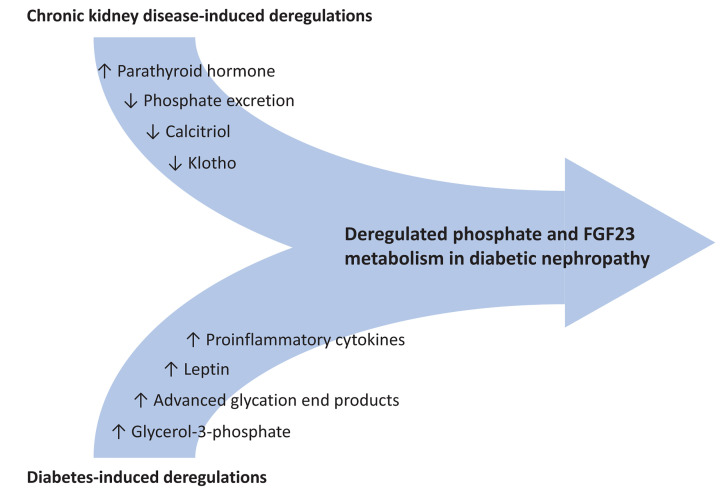
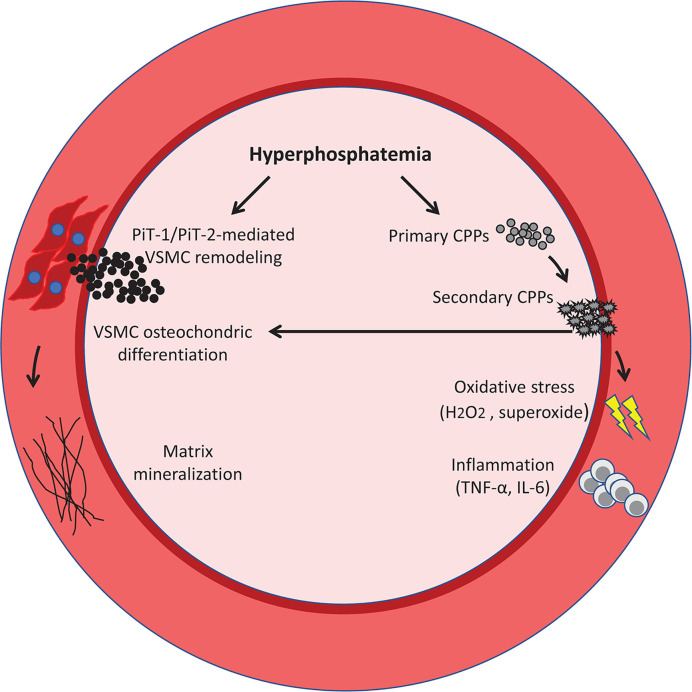
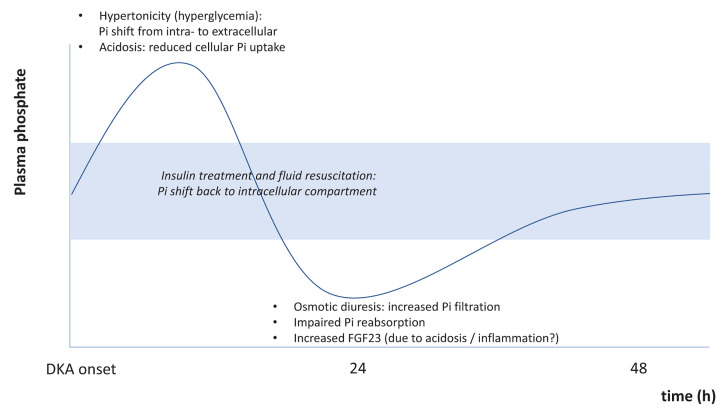
Diabetes is associated with a strongly elevated risk of cardiovascular disease, which is even more pronounced in patients with diabetic nephropathy. Currently available guideline-based efforts to correct traditional risk factors are only partly able to attenuate this risk, underlining the urge to identify novel treatment targets. Emerging data point towards a role for disturbances in phosphate metabolism in diabetes. In this review, we discuss the role of phosphate and the phosphate-regulating hormone fibroblast growth factor 23 (FGF23) in diabetes. We address deregulations of phosphate metabolism in patients with diabetes, including diabetic ketoacidosis. Moreover, we discuss potential adverse consequences of these deregulations, including the role of deregulated phosphate and glucose as drivers of vascular calcification propensity. Finally, we highlight potential treatment options to correct abnormalities in phosphate and FGF23. While further studies are needed to more precisely assess their clinical impact, deregulations in phosphate and FGF23 are promising potential target in diabetes and diabetic nephropathy.
糖尿病与心血管疾病的风险显著升高相关,而在患有糖尿病肾病的患者中更为明显。目前基于指南的纠正传统危险因素的努力只能部分减轻这种风险,这突显了寻找新的治疗靶点的紧迫性。新出现的数据表明,磷酸盐代谢紊乱在糖尿病中起作用。在这篇综述中,我们讨论了磷酸盐和磷酸盐调节激素成纤维细胞生长因子 23(FGF23)在糖尿病中的作用。我们探讨了糖尿病患者中磷酸盐代谢的失调,包括糖尿病酮症酸中毒。此外,我们还讨论了这些失调的潜在不良后果,包括失调的磷酸盐和葡萄糖作为血管钙化倾向的驱动因素的作用。最后,我们强调了纠正磷酸盐和 FGF23 异常的潜在治疗选择。虽然需要进一步的研究来更精确地评估它们的临床影响,但磷酸盐和 FGF23 的失调是糖尿病和糖尿病肾病有前途的潜在治疗靶点。