Department of Genetics and Bioengineering, Faculty of Engineering and Architecture, Yeditepe University, 26 Ağustos Campus, Kayisdagi Cad., Kayisdagi, 34755, Istanbul, Turkey.
Sci Rep. 2021 Jul 20;11(1):14773. doi: 10.1038/s41598-021-93876-4.
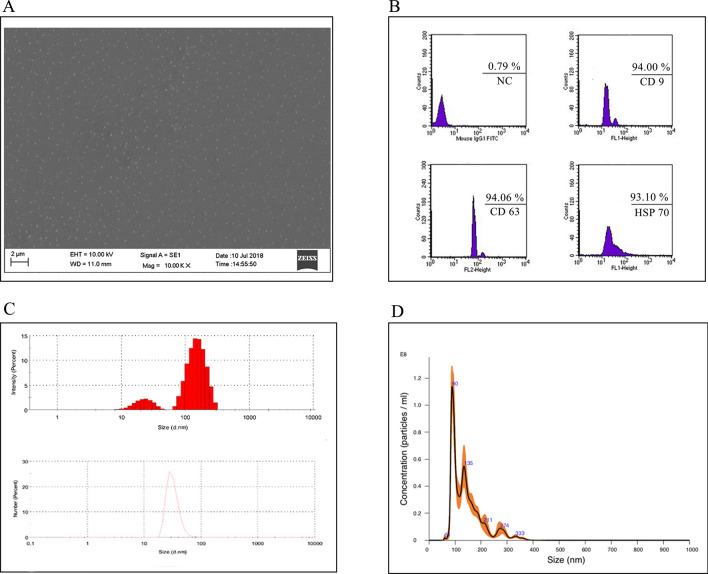
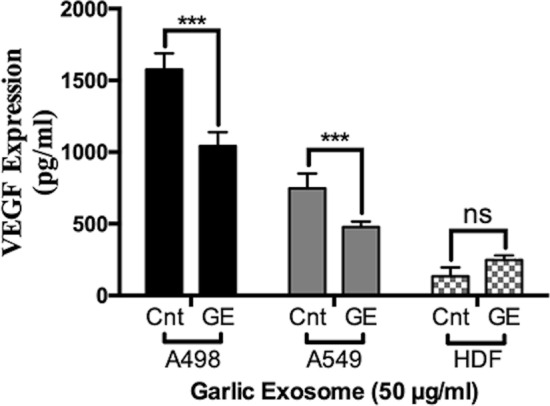
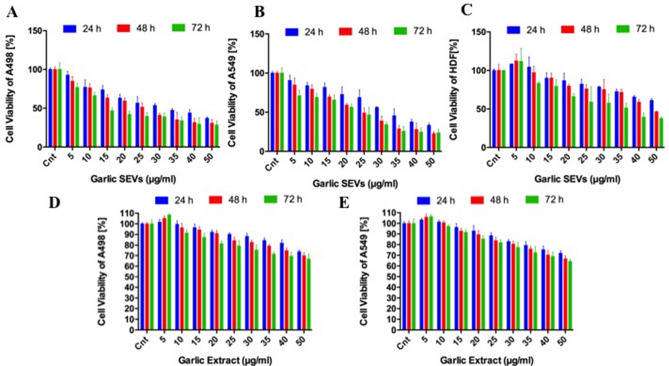
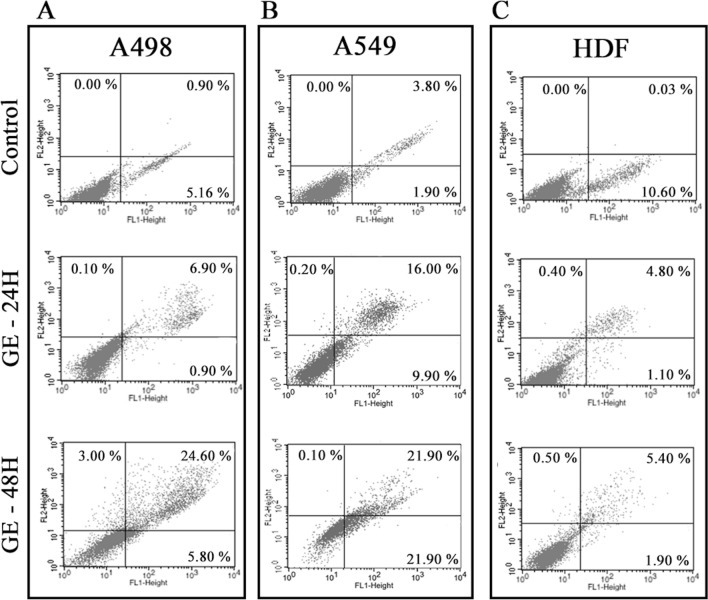
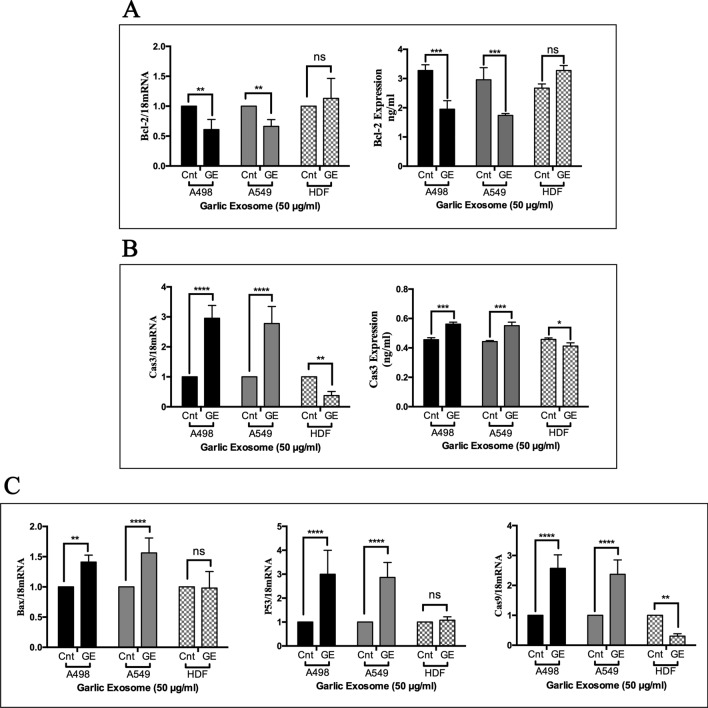
As a key component of the cell-to-cell communication, small extracellular vesicles (SEVs) released from various sources are known to be affecting the physiological conditions of the target cells. Although it has been suggested that edible plant-derived nanoparticles contributes to the cross kingdom communication with the mammalian cells, the effect of these particles on cancer cell progression still needs a further exploration. Here, we isolated and then characterized garlic derived SEVs by nanoparticle tracking analysis, electron microscopy and SEV surface antibodies. In order to investigate anti-cancer property of garlic SEVs A498 human kidney carcinoma, A549 human lung carcinoma were used as cell models along with the normal human dermal fibroblast cell lines. Annexin V/pI staining and analysis of apoptotic mRNA and protein expression levels suggested that garlic SEVs induced apoptosis through activation of intrinsic pathway. Furthermore, angiogenic VEGF protein expression levels significantly decreased in response to SEVs treatment in cancer cells. Our results support that garlic derived SEVs could cause apoptotic cell death among cancer cells while normal cells remain unaffected with the treatment. This study revealed for the first time that plant SEVs possess anti-cancer affects by inducing caspase mediated apoptosis and provided a new alternative for cancer treatment.
作为细胞间通讯的关键组成部分,已知各种来源释放的小细胞外囊泡(SEV)会影响靶细胞的生理状况。虽然已经有人提出,食用植物衍生的纳米颗粒有助于与哺乳动物细胞进行跨王国通讯,但这些颗粒对癌细胞进展的影响仍需要进一步探索。在这里,我们通过纳米颗粒跟踪分析、电子显微镜和 SEV 表面抗体分离和表征了大蒜衍生的 SEV。为了研究大蒜 SEV 对 A498 人肾癌细胞的抗癌特性,我们使用 A549 人肺癌细胞作为细胞模型,以及正常的人皮肤成纤维细胞系。 Annexin V/pI 染色和凋亡 mRNA 和蛋白表达水平的分析表明,大蒜 SEV 通过激活内在途径诱导细胞凋亡。此外,血管生成 VEGF 蛋白表达水平在 SEV 处理后在癌细胞中显著降低。我们的结果表明,大蒜衍生的 SEV 可以在治疗过程中引起癌细胞的凋亡性细胞死亡,而正常细胞不受影响。这项研究首次表明,植物 SEV 通过诱导 caspase 介导的凋亡具有抗癌作用,并为癌症治疗提供了一种新的选择。