Chen Ye-Hui, Dong Ru-Nan, Hou Jian, Lin Ting-Ting, Chen Shao-Hao, Chen Hang, Zhu Jun-Ming, Chen Jia-Yin, Ke Zhi-Bin, Lin Fei, Xue Xue-Yi, Wei Yong, Xu Ning
Department of Urology, Urology Research Institute, the First Affiliated Hospital, Fujian Medical University, Fuzhou, 350005, People's Republic of China.
Fujian Key Laboratory of Precision Medicine for Cancer, the First Affiliated Hospital, Fujian Medical University, Fuzhou, 350005, People's Republic of China.
J Inflamm Res. 2021 Jul 13;14:3217-3229. doi: 10.2147/JIR.S308405. eCollection 2021.
Urethral stricture is a clinical challenge for both patients and clinicians. Post-traumatic urethral stricture is associated with formation of scar tissue caused by excessive inflammation. The aim of this study is exploring potential therapeutic strategies for this condition.
In vivo experiments on New Zealand rabbits and in vitro experiments on THP-1 monocytes and urethral fibroblasts were performed to investigate the effects on post-traumatic urethral stricture of exosomes isolated from IL-1β-treated mesenchymal stem cells (Exo-MSCs) and the role of macrophage M2 polarization in this process. Additionally, related signaling and mechanism behind were explored.
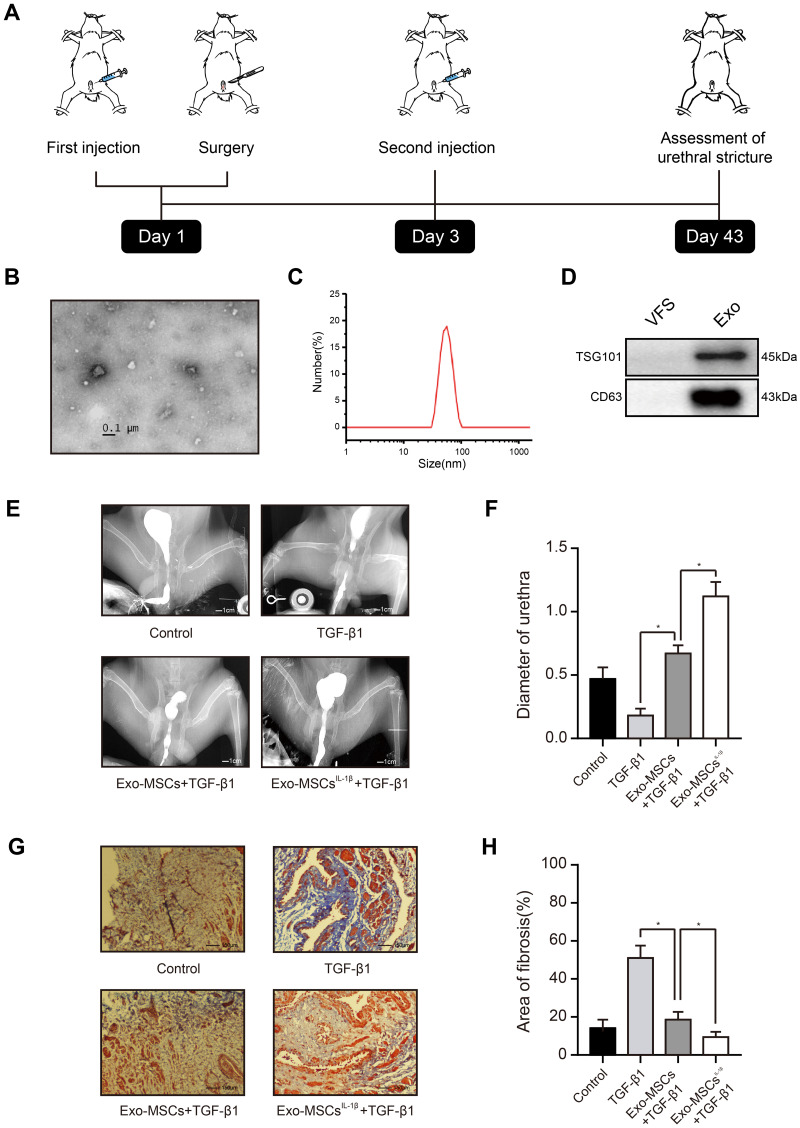
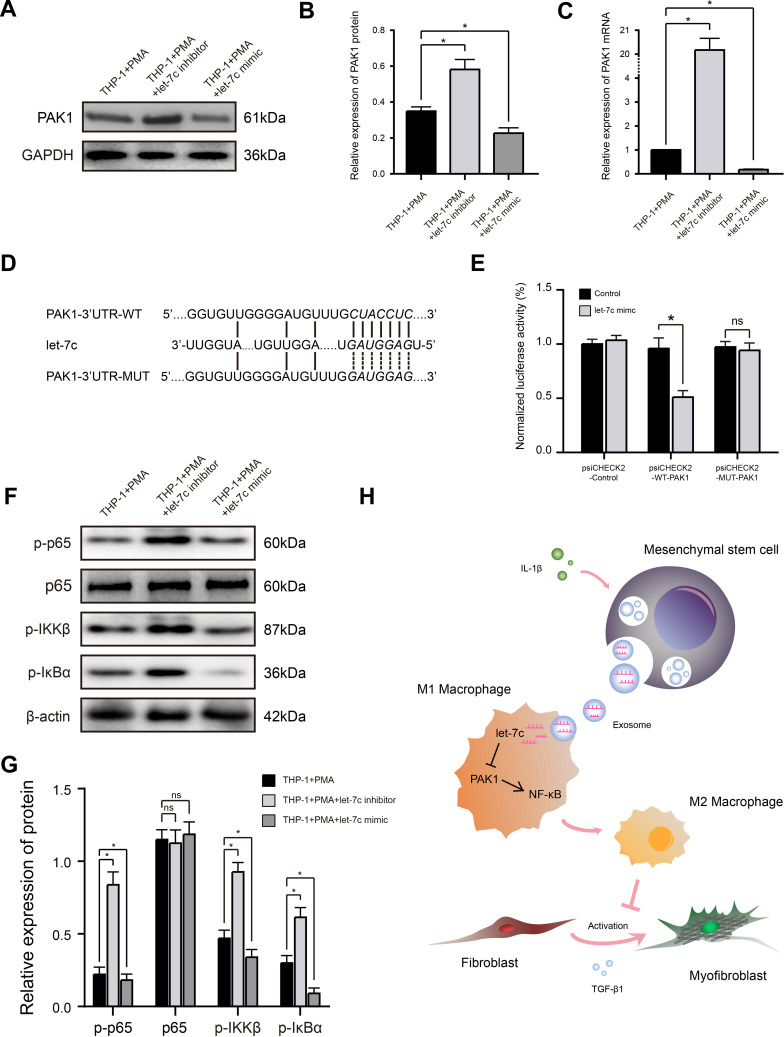
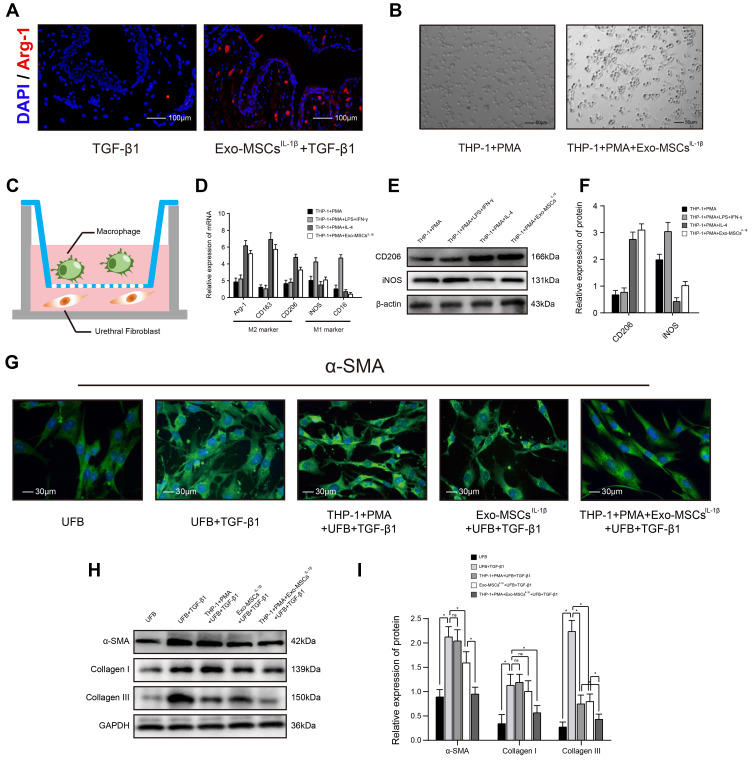
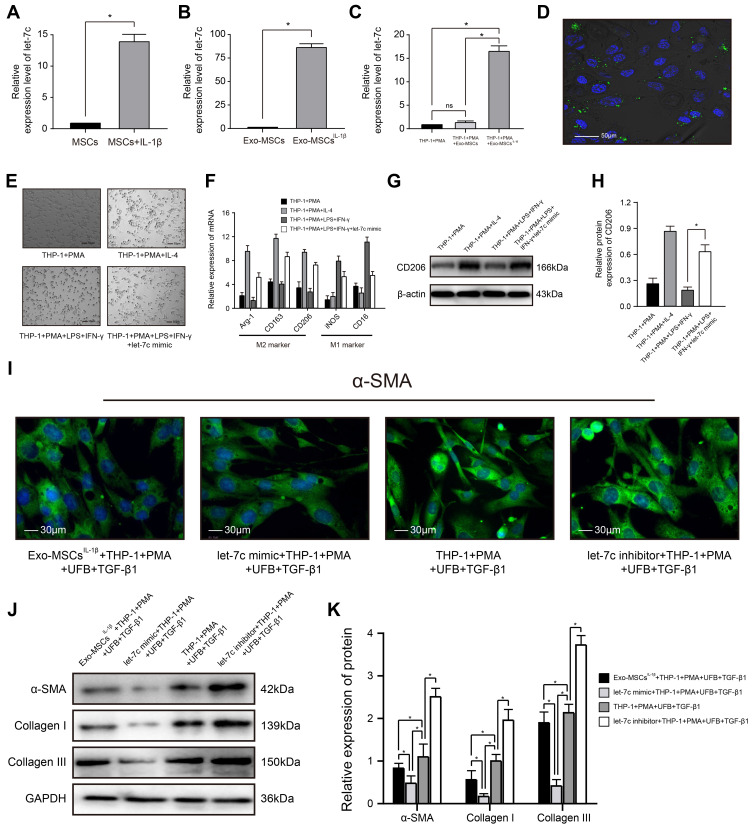
In a New Zealand rabbit model of post-traumatic urethral stricture, injection of Exo-MSCs significantly reduced urethral stricture and collagen fiber accumulation compared with Exo-MSCs. Addition of Exo-MSCs to THP-1 monocytes in vitro induced M2 macrophage polarization, which, in turn, inhibited activation of urethral fibroblasts and synthesis of collagen. Mechanistically, Exo-MSCs were found to contain high levels of the microRNA let-7c, and luciferase reporter assays showed that let-7c interacted with the 3'UTR of PAK1 mRNA. Transfection of THP-1 cells with a let-7c mimic downregulated PAK1 expression and inhibited activation of the NF-κB signaling pathway.
These results support a role for let-7c-containing Exo-MSCs in reducing urethral stricture via inhibition of PAK1-NF-κB signaling, M2 macrophage polarization, and differentiation of urethral myofibroblasts.
尿道狭窄对患者和临床医生而言都是一项临床挑战。创伤后尿道狭窄与过度炎症导致的瘢痕组织形成有关。本研究的目的是探索针对这种情况的潜在治疗策略。
对新西兰兔进行体内实验,对THP-1单核细胞和尿道成纤维细胞进行体外实验,以研究从白细胞介素-1β处理的间充质干细胞(Exo-MSCs)中分离出的外泌体对创伤后尿道狭窄的影响以及巨噬细胞M2极化在此过程中的作用。此外,还探索了其背后的相关信号传导和机制。
在创伤后尿道狭窄的新西兰兔模型中,与对照外泌体相比,注射Exo-MSCs显著减轻了尿道狭窄和胶原纤维堆积。在体外将Exo-MSCs添加到THP-1单核细胞中可诱导M2巨噬细胞极化,进而抑制尿道成纤维细胞的活化和胶原合成。从机制上讲,发现Exo-MSCs含有高水平的微小RNA let-7c,荧光素酶报告基因检测表明let-7c与PAK1 mRNA的3'UTR相互作用。用let-7c模拟物转染THP-1细胞可下调PAK1表达并抑制NF-κB信号通路的激活。
这些结果支持含let-7c的Exo-MSCs通过抑制PAK1-NF-κB信号传导、M2巨噬细胞极化和尿道肌成纤维细胞分化来减轻尿道狭窄的作用。