Liu Tao, Xiang Zi-Jian, Hou Xiao-Meng, Chai Jing-Jing, Yang Yan-Li, Zhang Xiao-Tong
Department of Pulmonary and Critical Care Medicine, Peking Union Medical College Hospital, Chinese Academy of Medical Sciences and Peking Union Medical College, Beijing, China.
Beijing Zhiyun Data Technology Co. LTD, Beijing, China.
Ther Adv Chronic Dis. 2021 Jul 7;12:20406223211028768. doi: 10.1177/20406223211028768. eCollection 2021.
Chronic obstructive pulmonary disease (COPD) is characterized by persistent respiratory symptoms and dyspnea, as well as an increase in the number of leukocytes in the airways, lungs, and pulmonary vessels. A 'One size fits all' approach to COPD patients with different clinical features may be considered outdated. The following are the two major objectives of this meta-analysis: the first is to determine if blood eosinophil counts (BEC) can serve as a prognostic biomarker of COPD outcomes, and the second is to determine which level of BEC is effective for inhaled corticosteroid (ICS) treatment.
We searched articles published before 15 May 2021 in the following four electronic databases: Web of Science, Cochrane Library, EMBASE, and PubMed.
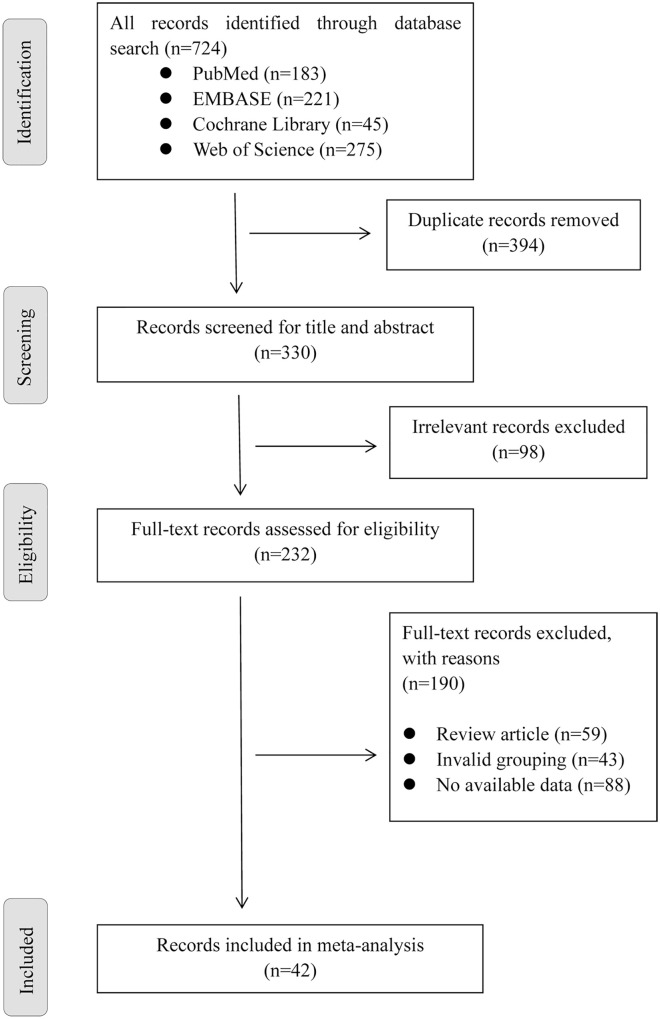
A total of 42 studies, comprising a sampling of 188,710 subjects, were summarized and compared in this meta-analysis. The rate ratio (RR) of exacerbations of COPD (ECOPD) between ICS and non-ICS treatment was statistically significant for the COPD patients with a baseline BEC ⩾ 2% or ⩾ 200 cells/μl, RR = 0.82 (0.73, 0.93) or 0.79 (0.70, 0.89) respectively, while the RR of ECOPD between ICS and non-ICS treatment was statistically insignificant for the COPD patients with baseline BEC < 2% or <200 cells/μl, RR = 0.97 (0.87, 1.08) or 0.97 (0.86, 1.08), suggested that ICS therapy was beneficial to the improvement of ECOPD in patients with a baseline BEC ⩾ 2% or BEC ⩾ 200 cells/μl.
Our research shows that a BEC ⩾ 200 cells/μl or ⩾2% is likely to become the cutoff value of ICS treatment for ECOPD. Moreover, we believe that the baseline BEC can be used as a biomarker for predicting ECOPD. The stability of BEC requires special attention.
慢性阻塞性肺疾病(COPD)的特征为持续的呼吸道症状和呼吸困难,以及气道、肺和肺血管中白细胞数量增加。对具有不同临床特征的COPD患者采用“一刀切”的方法可能已过时。本荟萃分析的两个主要目标如下:第一个是确定血液嗜酸性粒细胞计数(BEC)是否可作为COPD预后的生物标志物,第二个是确定何种水平的BEC对吸入性糖皮质激素(ICS)治疗有效。
我们检索了以下四个电子数据库中2021年5月15日前发表的文章:科学网、考克兰图书馆、EMBASE和PubMed。
本荟萃分析共总结并比较了42项研究,涉及188,710名受试者。对于基线BEC⩾2%或⩾200个/μl的COPD患者,ICS与非ICS治疗之间COPD急性加重(ECOPD)的率比(RR)具有统计学意义,RR分别为0.82(0.73,0.93)或0.79(0.70,0.89),而对于基线BEC<2%或<200个/μl的COPD患者,ICS与非ICS治疗之间ECOPD的RR无统计学意义,RR为0.97(0.87,1.08)或0.97(0.86,1.08),这表明ICS治疗有利于改善基线BEC⩾2%或BEC⩾200个/μl患者的ECOPD。
我们的研究表明,BEC⩾200个/μl或⩾2%可能成为ECOPD的ICS治疗临界值。此外,我们认为基线BEC可作为预测ECOPD的生物标志物。BEC的稳定性需要特别关注。