Program of Molecular Medicine, Affiliated Guangzhou Women and Children's Hospital, Zhongshan School of Medicine, Sun Yat-Sen University, Guangzhou, China.
Sun Yat-sen University Cancer Center, State Key Laboratory of Oncology in South China, Collaborative Innovation Center for Cancer Medicine, Guangzhou, China.
Mol Oncol. 2021 Dec;15(12):3490-3512. doi: 10.1002/1878-0261.13064. Epub 2021 Jul 29.
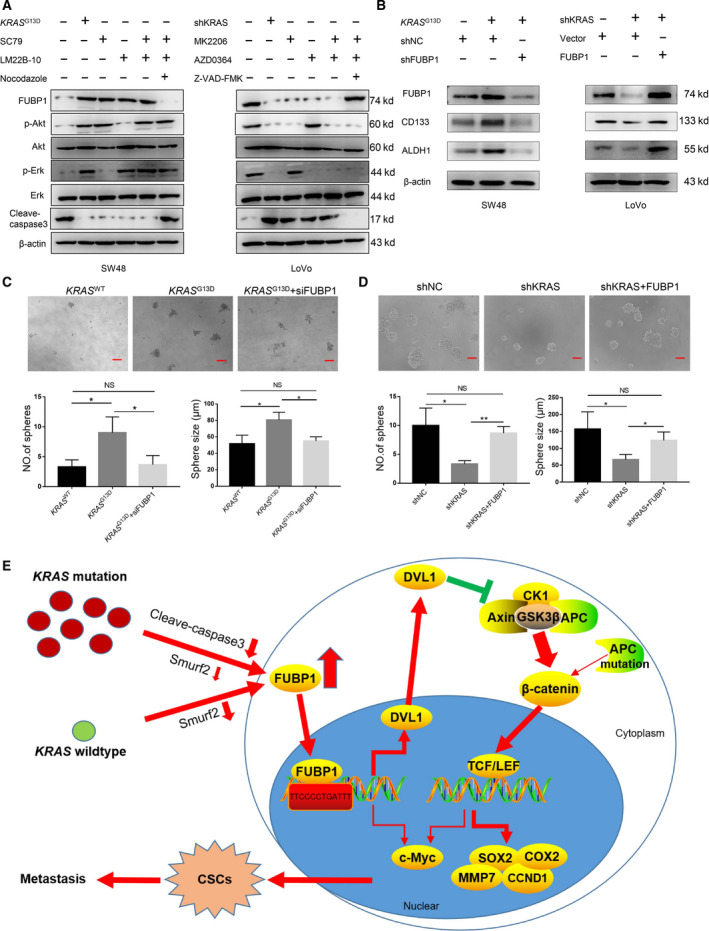
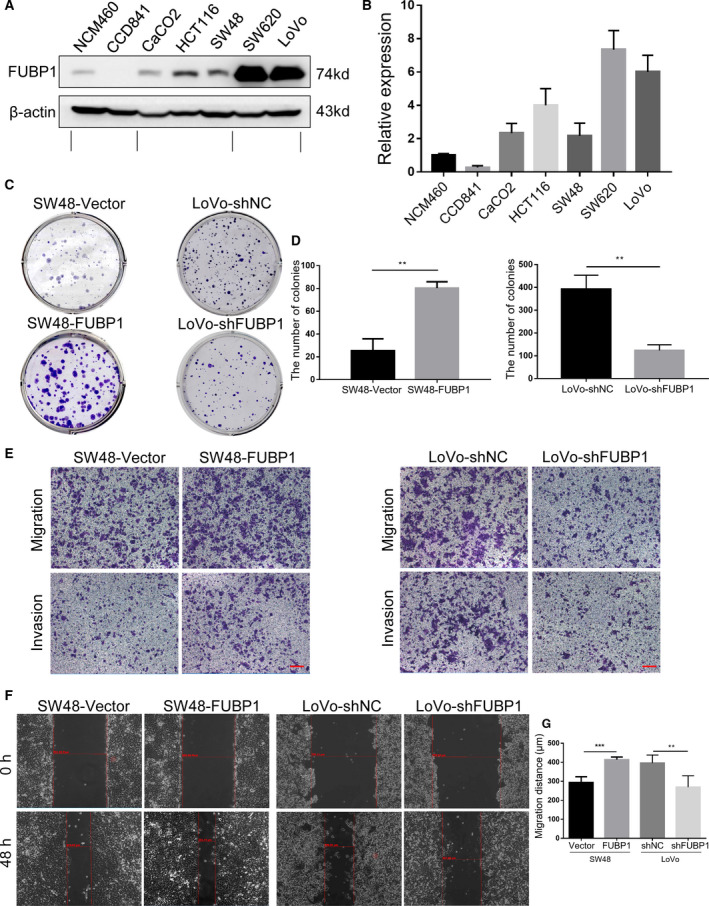
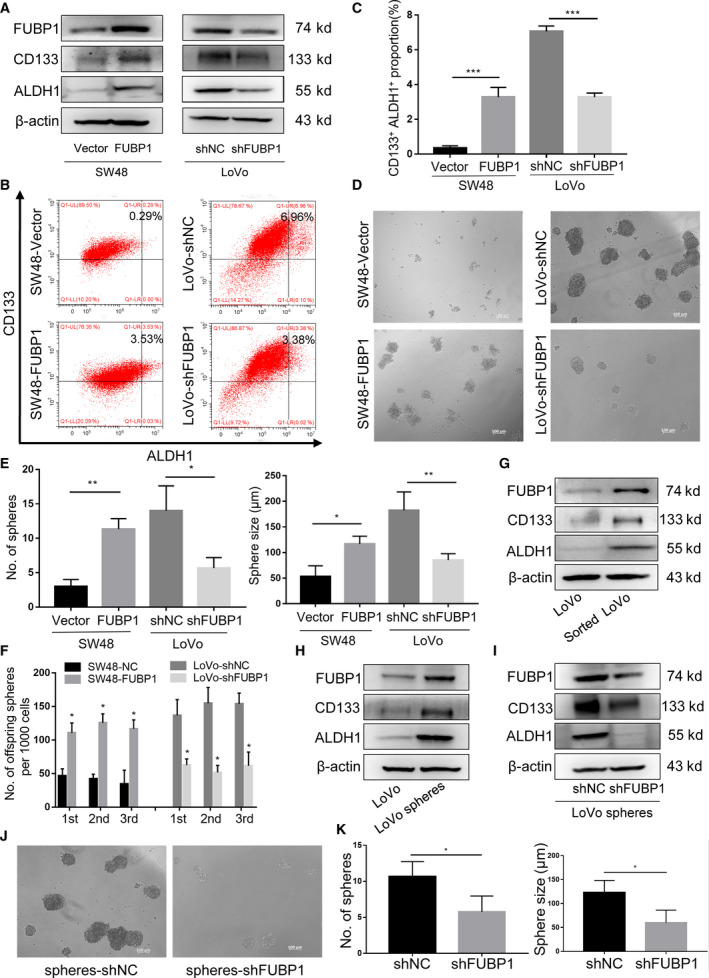
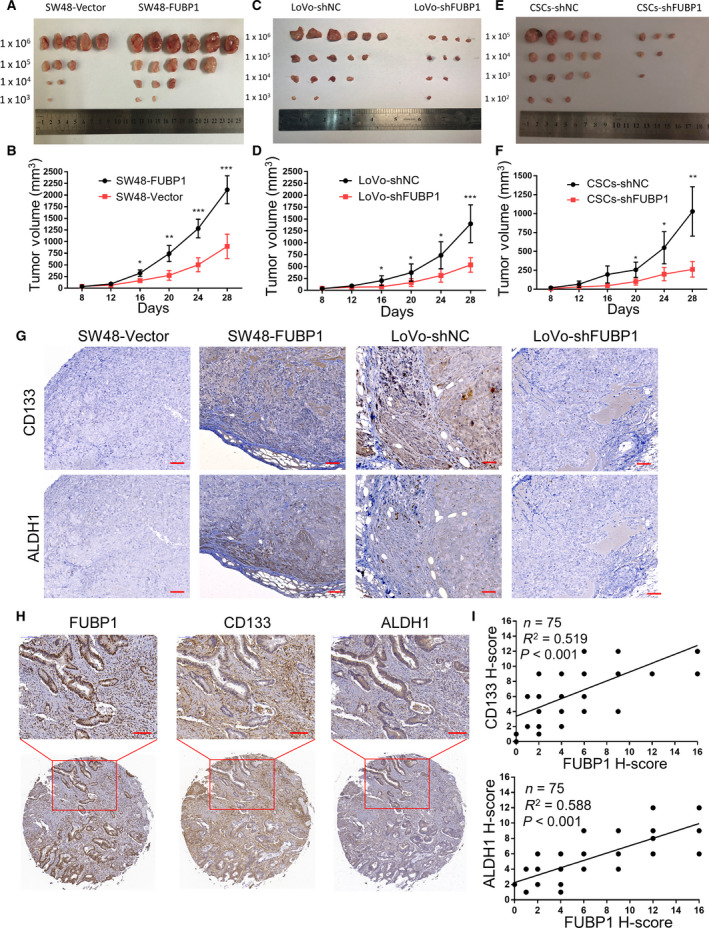
Distant metastasis is, unfortunately, the leading cause of death in colorectal cancer (CRC). Approximately 50% of CRC patients develop liver metastases, while 10-30% of patients develop pulmonary metastases. The occurrence of metastasis is considered to be almost exclusively driven by cancer stem cells (CSCs) formation. However, the key molecules that confer the transformation to stem cells in CRC, and subsequent metastasis, remain unclear. Far upstream element-binding protein 1 (FUBP1), a transcriptional regulator of c-Myc, was screened in CSCs of CRC by mass spectrometry and was examined by immunohistochemistry in a cohort of CRC tissues. FUBP1 was upregulated in 85% of KRAS-mutant and 25% of wild-type CRC patients. Further, whether in KRAS-mutant or wild-type patients, elevated FUBP1 was positively correlated with CRC lymph node metastasis and clinical stage, and negatively associated with overall survival. Overexpression of FUBP1 significantly enhanced CRC cell migration, invasion, tumor sphere formation, and CD133 and ALDH1 expression in vitro, and tumorigenicity in vivo. Mechanistically, FUBP1 promoted the initiation of CSCs by activating Wnt/β-catenin signaling via directly binding to the promoter of DVL1, a potent activator of β-catenin. Knockdown of DVL1 significantly inhibited the transformation to stem cells in, as well as the tumorigenicity of, CRC. Activation of Wnt/β-catenin signaling by DVL1 increased pluripotent transcription factors, including c-Myc, NANOG, and SOX2. Moreover, FUBP1 was upregulated at the post-transcriptional level. Elevated FUBP1 levels in KRAS wild-type CRC patients is due to the decrease in Smurf2, which promotes ubiquitin-mediated degradation of FUBP1. In contrast, FUBP1 was upregulated in KRAS-mutant patients through both inhibition of caspase 3-dependent cleavage and decreased Smurf2. Our results demonstrate, for the first time, that FUBP1 is an oncogene, initiating the development of CSCs, as well as a new powerful endogenous Wnt-signaling agonist that could provide an important prognostic factor and therapeutic target for metastasis in both KRAS-mutant and wild-type CRC.
远处转移是结直肠癌(CRC)死亡的主要原因。大约 50%的 CRC 患者发生肝转移,而 10-30%的患者发生肺转移。转移的发生被认为几乎完全是由癌症干细胞(CSC)的形成驱动的。然而,赋予 CRC 中向干细胞转化以及随后转移的关键分子仍不清楚。远上游元件结合蛋白 1(FUBP1)是 c-Myc 的转录调节剂,通过质谱法在 CRC 的 CSC 中筛选,并通过免疫组化在 CRC 组织队列中检查。FUBP1 在 85%的 KRAS 突变和 25%的野生型 CRC 患者中上调。此外,无论在 KRAS 突变型还是野生型患者中,FUBP1 的升高均与 CRC 淋巴结转移和临床分期呈正相关,与总生存期呈负相关。FUBP1 的过表达显著增强了 CRC 细胞的迁移、侵袭、肿瘤球形成以及体外 CD133 和 ALDH1 的表达,并在体内增强了肿瘤发生能力。在机制上,FUBP1 通过直接结合 DVL1 的启动子来激活 Wnt/β-catenin 信号,从而促进 CSCs 的起始,DVL1 是 β-catenin 的有效激活剂。DVL1 的敲低显著抑制了 CRC 向干细胞的转化以及肿瘤的发生。DVL1 激活的 Wnt/β-catenin 信号增加了多能转录因子,包括 c-Myc、NANOG 和 SOX2。此外,FUBP1 在转录后水平上调。KRAS 野生型 CRC 患者中 FUBP1 水平的升高是由于 Smurf2 的减少所致,Smurf2 促进 FUBP1 的泛素介导降解。相比之下,FUBP1 在 KRAS 突变型患者中上调是通过抑制 caspase 3 依赖性切割和减少 Smurf2 来实现的。我们的研究结果首次表明,FUBP1 是一种癌基因,它启动了 CSCs 的发展,也是一种新的强大的内源性 Wnt 信号激动剂,可为 KRAS 突变型和野生型 CRC 的转移提供重要的预后因素和治疗靶点。