iHuman Institute, ShanghaiTech University, Shanghai 201210, China.
School of Life Science and Technology, ShanghaiTech University, Shanghai 201210, China.
Sci Adv. 2021 Jul 21;7(30). doi: 10.1126/sciadv.abf0634. Print 2021 Jul.
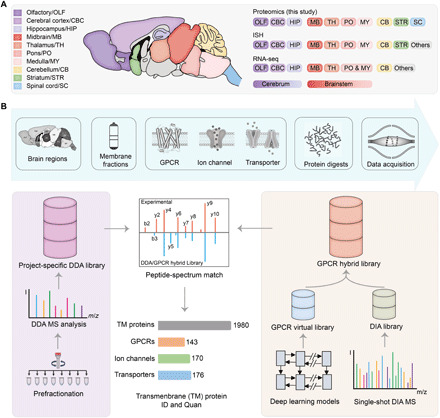
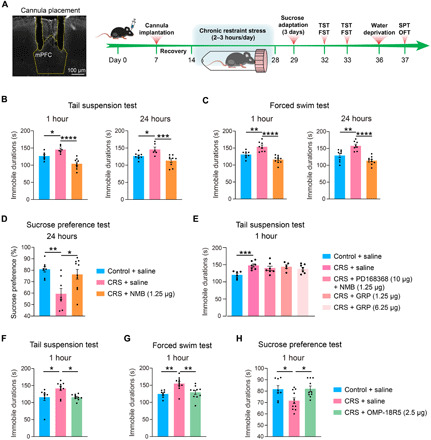
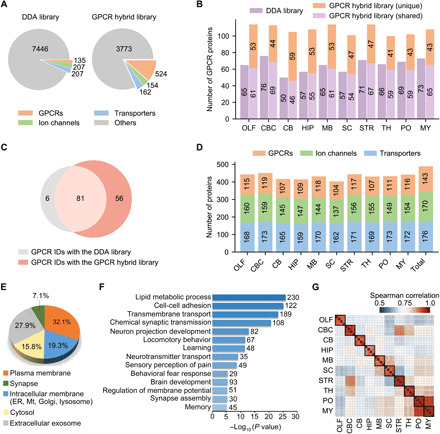
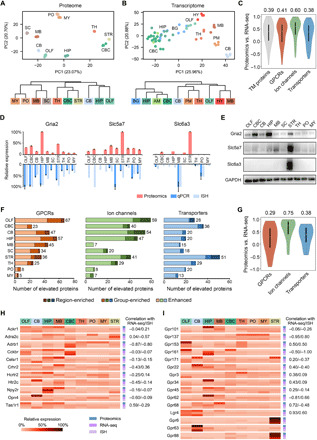
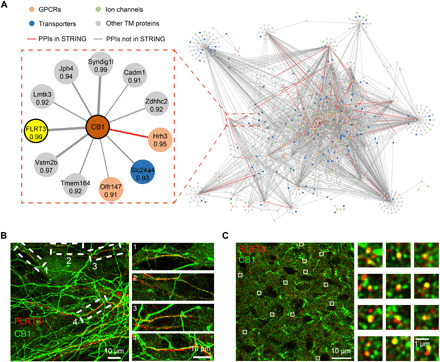
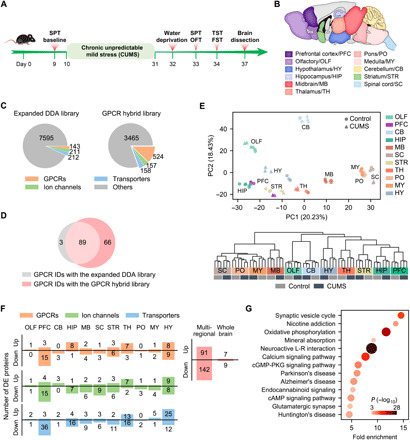
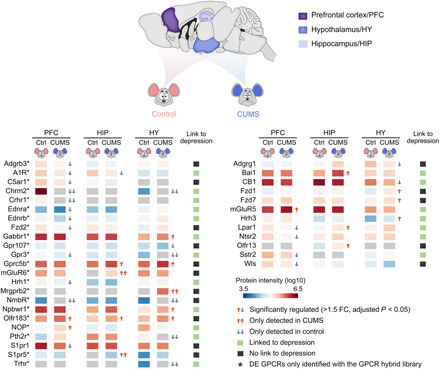
Transmembrane proteins play vital roles in mediating synaptic transmission, plasticity, and homeostasis in the brain. However, these proteins, especially the G protein-coupled receptors (GPCRs), are underrepresented in most large-scale proteomic surveys. Here, we present a new proteomic approach aided by deep learning models for comprehensive profiling of transmembrane protein families in multiple mouse brain regions. Our multiregional proteome profiling highlights the considerable discrepancy between messenger RNA and protein distribution, especially for region-enriched GPCRs, and predicts an endogenous GPCR interaction network in the brain. Furthermore, our new approach reveals the transmembrane proteome remodeling landscape in the brain of a mouse depression model, which led to the identification of two previously unknown GPCR regulators of depressive-like behaviors. Our study provides an enabling technology and rich data resource to expand the understanding of transmembrane proteome organization and dynamics in the brain and accelerate the discovery of potential therapeutic targets for depression treatment.
跨膜蛋白在介导大脑中的突触传递、可塑性和动态平衡方面发挥着至关重要的作用。然而,这些蛋白质,特别是 G 蛋白偶联受体(GPCR),在大多数大规模蛋白质组学调查中代表性不足。在这里,我们提出了一种新的蛋白质组学方法,该方法借助深度学习模型,可全面分析多种小鼠脑区的跨膜蛋白家族。我们的多区域蛋白质组分析突出了信使 RNA 和蛋白质分布之间的巨大差异,尤其是对于区域特异性富集的 GPCR,并且预测了大脑中的内源性 GPCR 相互作用网络。此外,我们的新方法揭示了抑郁模型小鼠大脑中的跨膜蛋白质组重塑景观,从而鉴定出两种以前未知的调节抑郁样行为的 GPCR 调节剂。我们的研究提供了一种使能技术和丰富的数据资源,可扩展对大脑中跨膜蛋白质组组织和动态的理解,并加速发现治疗抑郁症的潜在治疗靶标。