Department of Radiation Oncology, Weill Cornell Medicine, New York, NY, USA.
Department of Biochemistry and Molecular Genetics, University of Colorado Denver, Anschutz Medical Campus, Aurora, CO, USA.
Nat Commun. 2021 Jul 21;12(1):4447. doi: 10.1038/s41467-021-24785-3.
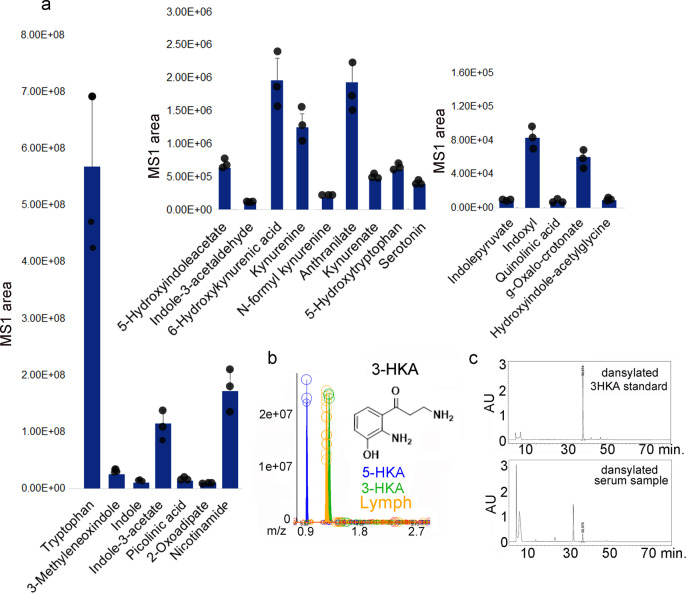
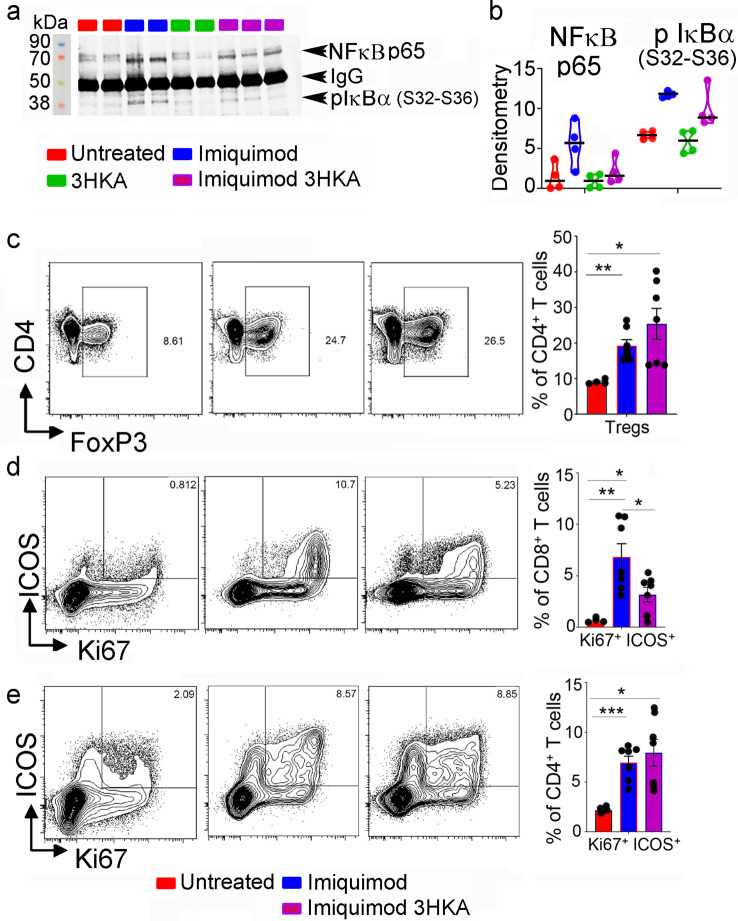
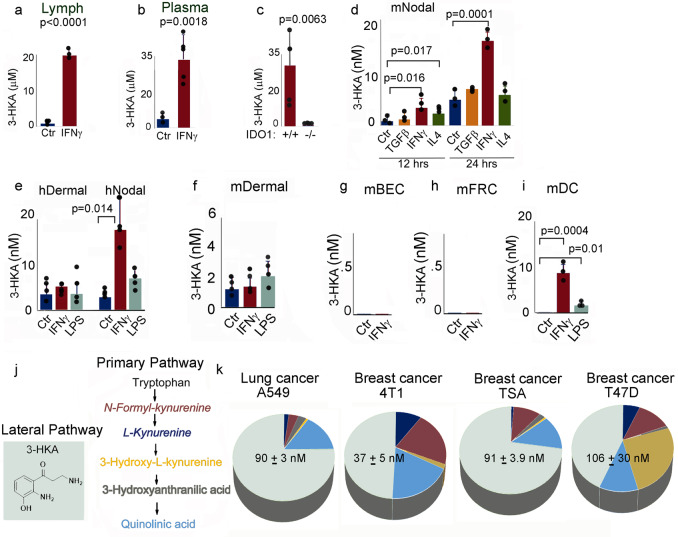
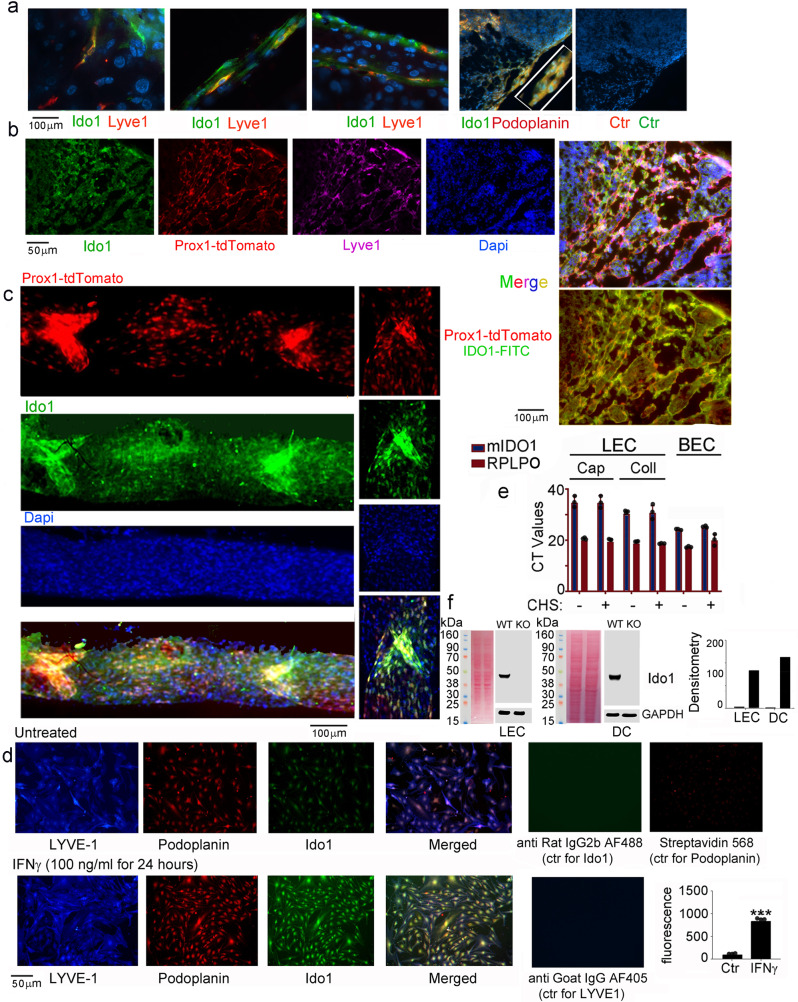
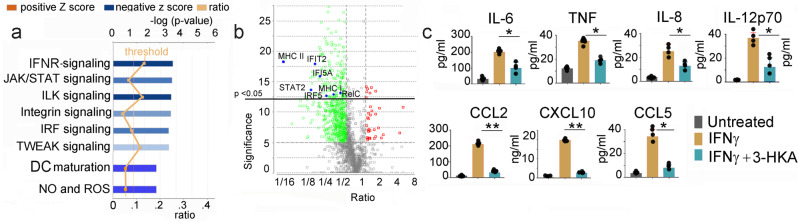
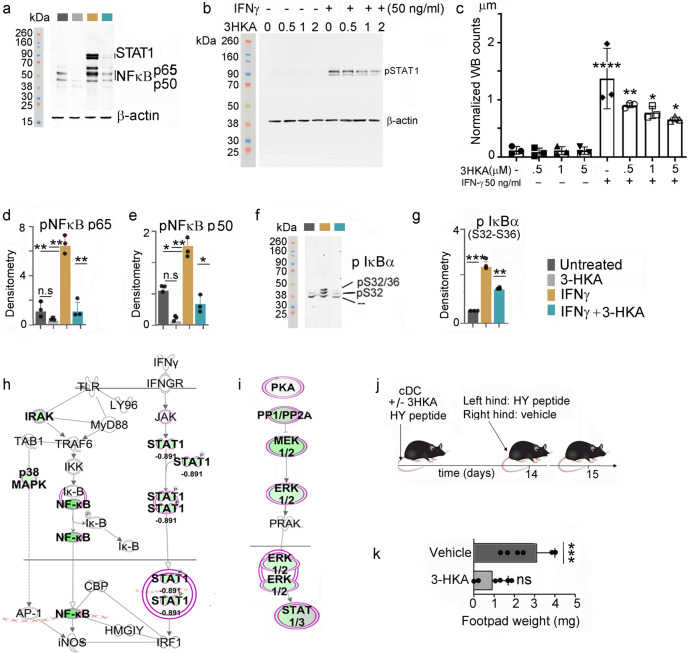
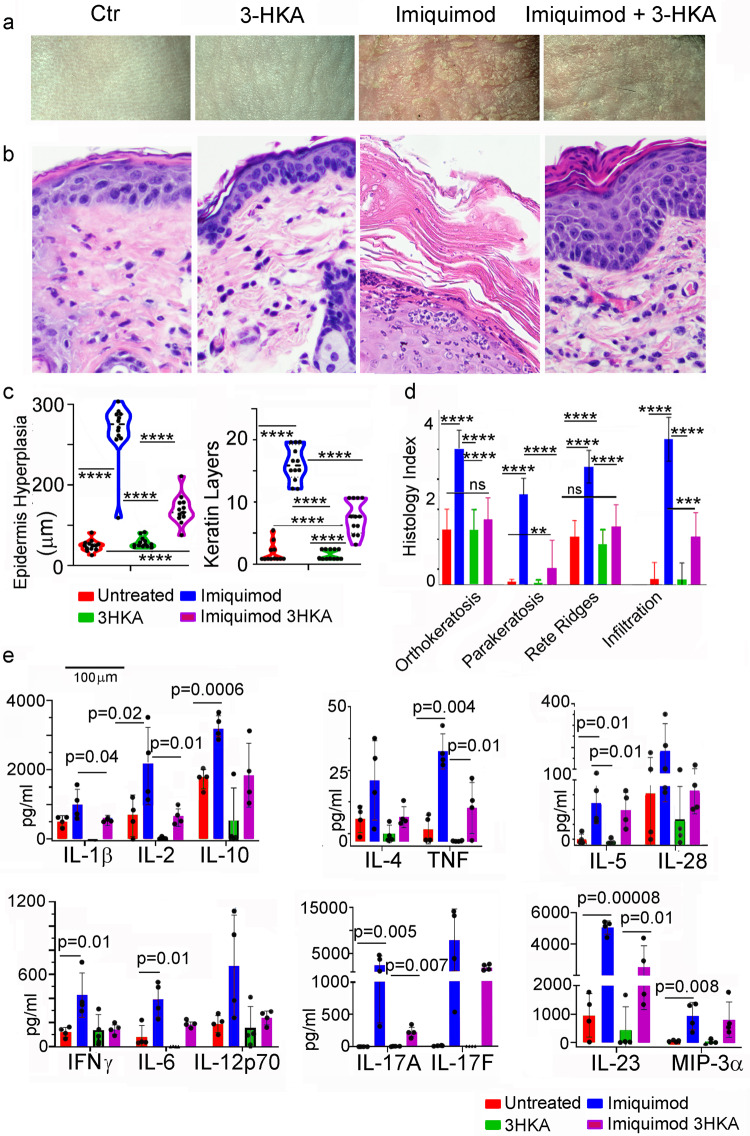
Tryptophan catabolism is a major metabolic pathway utilized by several professional and non-professional antigen presenting cells to maintain immunological tolerance. Here we report that 3-hydroxy-L-kynurenamine (3-HKA) is a biogenic amine produced via an alternative pathway of tryptophan metabolism. In vitro, 3-HKA has an anti-inflammatory profile by inhibiting the IFN-γ mediated STAT1/NF-κΒ pathway in both mouse and human dendritic cells (DCs) with a consequent decrease in the release of pro-inflammatory chemokines and cytokines, most notably TNF, IL-6, and IL12p70. 3-HKA has protective effects in an experimental mouse model of psoriasis by decreasing skin thickness, erythema, scaling and fissuring, reducing TNF, IL-1β, IFN-γ, and IL-17 production, and inhibiting generation of effector CD8 T cells. Similarly, in a mouse model of nephrotoxic nephritis, besides reducing inflammatory cytokines, 3-HKA improves proteinuria and serum urea nitrogen, overall ameliorating immune-mediated glomerulonephritis and renal dysfunction. Overall, we propose that this biogenic amine is a crucial component of tryptophan-mediated immune tolerance.
色氨酸分解代谢是几种专业和非专业抗原呈递细胞用来维持免疫耐受的主要代谢途径。在这里,我们报告 3-羟基-L-犬尿氨酸(3-HKA)是一种生物胺,通过色氨酸代谢的替代途径产生。在体外,3-HKA 通过抑制 IFN-γ 介导的 STAT1/NF-κΒ 通路,在小鼠和人树突状细胞(DCs)中具有抗炎作用,从而减少促炎趋化因子和细胞因子的释放,尤其是 TNF、IL-6 和 IL12p70。3-HKA 通过降低皮肤厚度、红斑、鳞屑和皲裂,减少 TNF、IL-1β、IFN-γ 和 IL-17 的产生,抑制效应性 CD8 T 细胞的产生,在银屑病的实验小鼠模型中具有保护作用。同样,在肾毒性肾炎的小鼠模型中,除了减少炎症细胞因子外,3-HKA 还可改善蛋白尿和血清尿素氮,从而全面改善免疫介导的肾小球肾炎和肾功能障碍。总的来说,我们提出这种生物胺是色氨酸介导免疫耐受的关键组成部分。