Porzionato Andrea, Stocco Elena, Emmi Aron, Contran Martina, Macchi Veronica, Riccetti Silvia, Sinigaglia Alessandro, Barzon Luisa, De Caro Raffaele
Department of Neuroscience, Section of Human Anatomy, University of Padova, Padova, Italy.
Department of Molecular Medicine, University of Padova, Padova, Italy.
Front Immunol. 2021 Jul 5;12:676828. doi: 10.3389/fimmu.2021.676828. eCollection 2021.
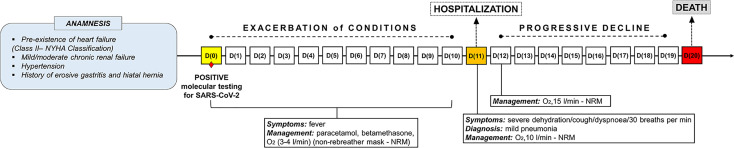
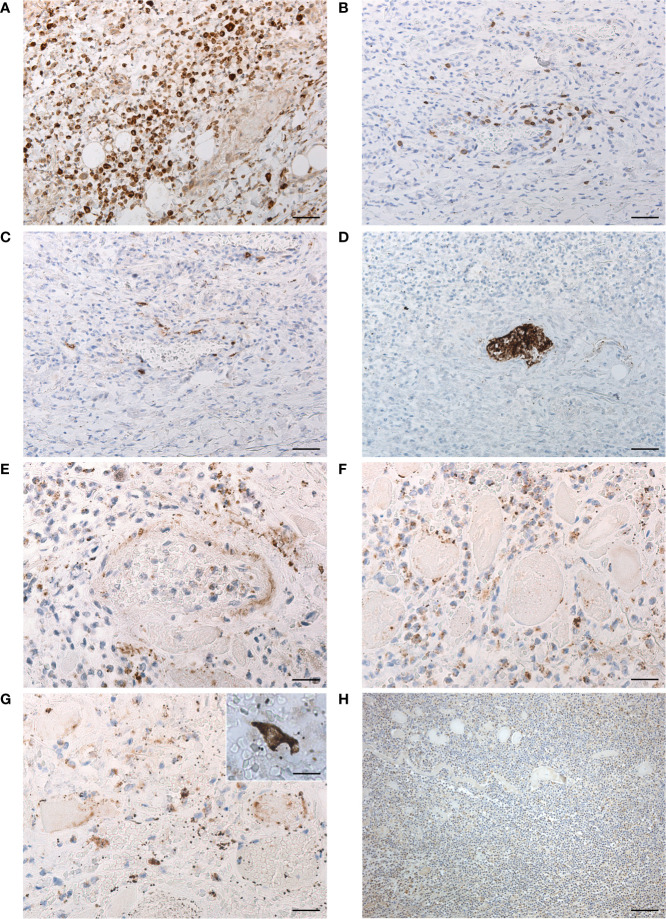
In coronavirus disease 2019 (COVID-19), ulcerative lesions have been episodically reported in various segments of the gastrointestinal (GI) tract, including the oral cavity, oropharynx, esophagus, stomach and bowel. In this report, we describe an autopsy case of a COVID-19 patient who showed two undiagnosed ulcers at the level of the anterior and posterior walls of the hypopharynx. Molecular testing of viruses involved in pharyngeal ulcers demonstrated the presence of severe acute respiratory syndrome - coronavirus type 2 (SARS-CoV-2) RNA, together with herpes simplex virus 1 DNA. Histopathologic analysis demonstrated full-thickness lympho-monocytic infiltration (mainly composed of CD68-positive cells), with hemorrhagic foci and necrosis of both the mucosal layer and deep skeletal muscle fibers. Fibrin and platelet microthrombi were also found. Cytological signs of HSV-1 induced damage were not found. Cells expressing SARS-CoV-2 spike subunit 1 were immunohistochemically identified in the inflammatory infiltrations. Immunohistochemistry for HSV1 showed general negativity for inflammatory infiltration, although in the presence of some positive cells. Thus, histopathological, immunohistochemical and molecular findings supported a direct role by SARS-CoV-2 in producing local ulcerative damage, although a possible contributory role by HSV-1 reactivation cannot be excluded. From a clinical perspective, this autopsy report of two undiagnosed lesions put the question if ulcers along the GI tract could be more common (but frequently neglected) in COVID-19 patients.
在2019冠状病毒病(COVID-19)中,胃肠道各段(包括口腔、口咽、食管、胃和肠道)均偶有溃疡性病变的报道。在本报告中,我们描述了一例COVID-19患者的尸检病例,该患者下咽前后壁有两处未被诊断出的溃疡。对咽部溃疡相关病毒的分子检测显示存在严重急性呼吸综合征冠状病毒2型(SARS-CoV-2)RNA,以及单纯疱疹病毒1型DNA。组织病理学分析显示全层淋巴细胞浸润(主要由CD68阳性细胞组成),伴有出血灶以及黏膜层和深部骨骼肌纤维坏死。还发现了纤维蛋白和血小板微血栓。未发现单纯疱疹病毒1型诱导损伤的细胞学迹象。在炎性浸润中通过免疫组化鉴定出表达SARS-CoV-2刺突亚基1的细胞。单纯疱疹病毒1型免疫组化显示炎性浸润总体呈阴性,不过存在一些阳性细胞。因此,组织病理学(原文为histopathological,疑为拼写错误,应为histological)、免疫组化和分子学研究结果支持SARS-CoV-2在产生局部溃疡性损伤中起直接作用,尽管不能排除单纯疱疹病毒1型再激活可能起的促成作用。从临床角度来看,这份关于两处未被诊断出病变的尸检报告提出了一个问题,即COVID-19患者胃肠道溃疡是否可能更常见(但常被忽视)。