University of Waterloo, Waterloo, ON, Canada.
PLoS One. 2021 Jul 22;16(7):e0254965. doi: 10.1371/journal.pone.0254965. eCollection 2021.
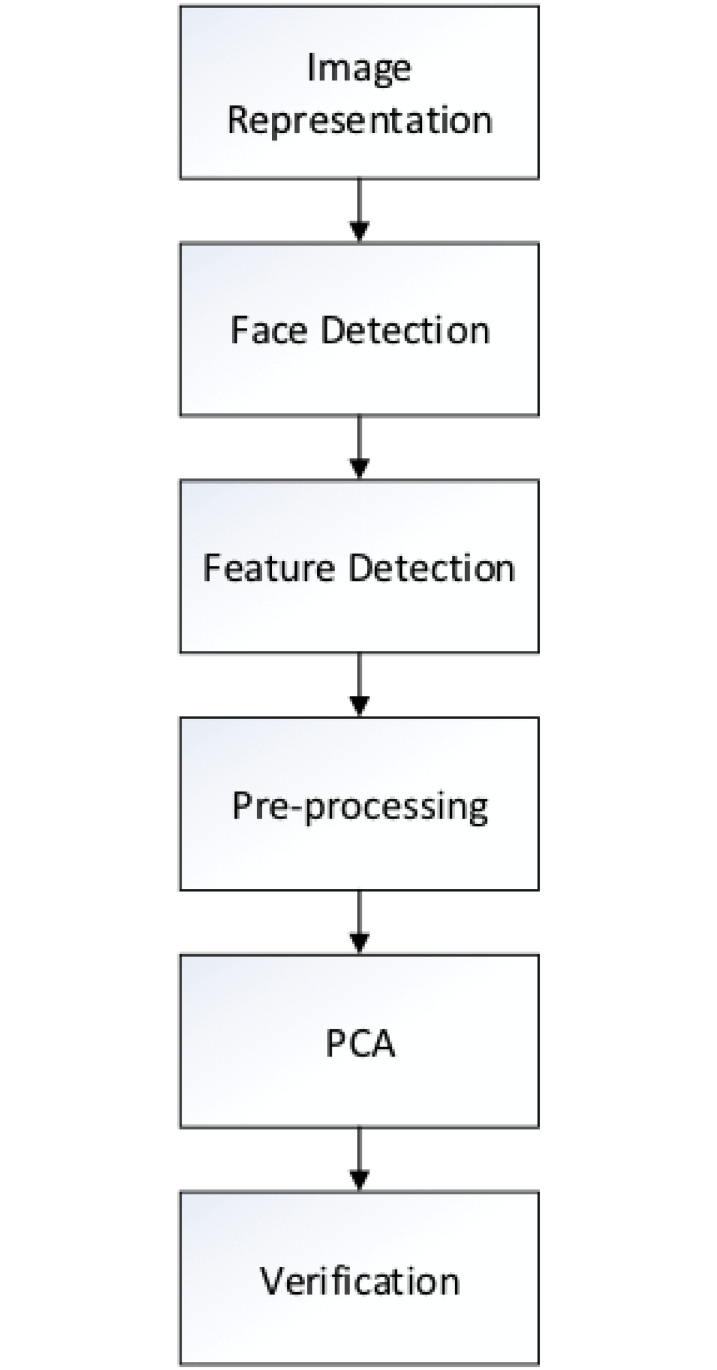
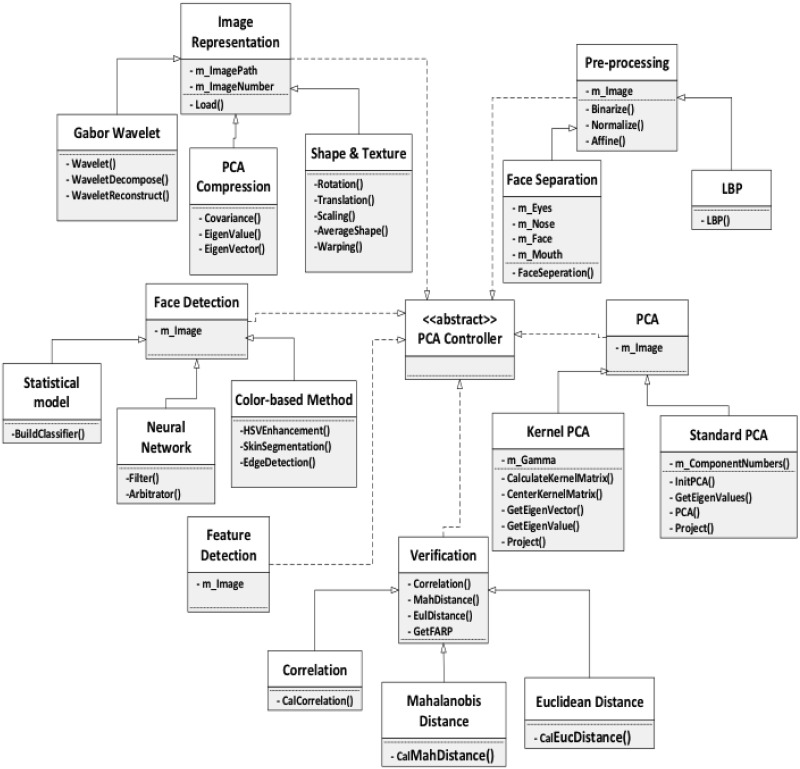
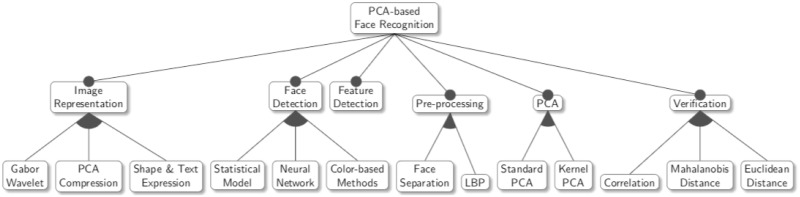
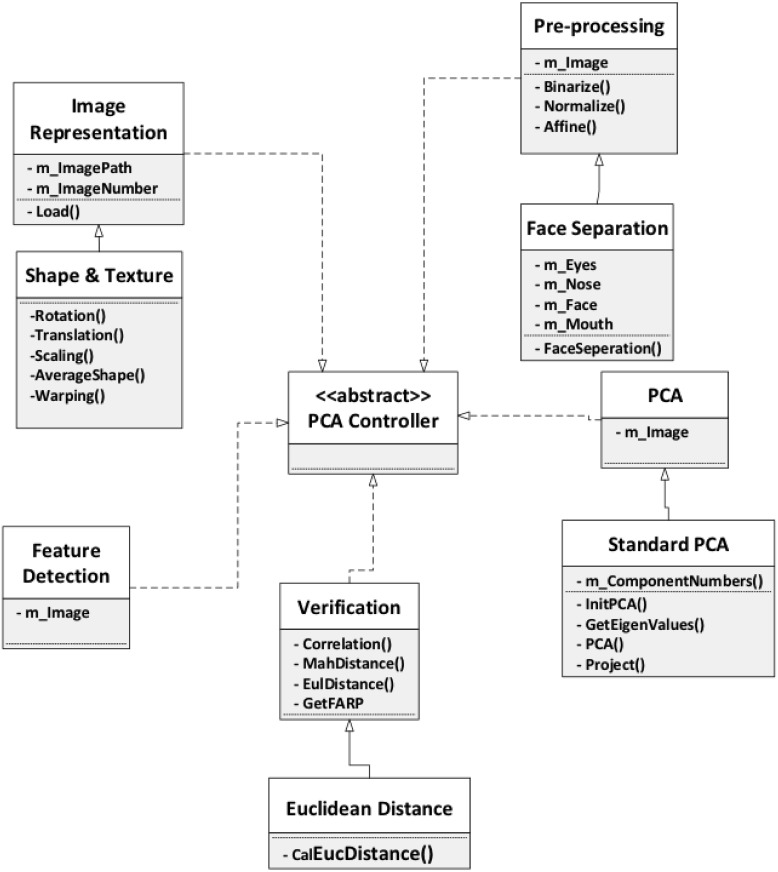
Face recognition, as one of the major biometrics identification methods, has been applied in different fields involving economics, military, e-commerce, and security. Its touchless identification process and non-compulsory rule to users are irreplaceable by other approaches, such as iris recognition or fingerprint recognition. Among all face recognition techniques, principal component analysis (PCA), proposed in the earliest stage, still attracts researchers because of its property of reducing data dimensionality without losing important information. Nevertheless, establishing a PCA-based face recognition system is still time-consuming, since there are different problems that need to be considered in practical applications, such as illumination, facial expression, or shooting angle. Furthermore, it still costs a lot of effort for software developers to integrate toolkit implementations in applications. This paper provides a software framework for PCA-based face recognition aimed at assisting software developers to customize their applications efficiently. The framework describes the complete process of PCA-based face recognition, and in each step, multiple variations are offered for different requirements. Some of the variations in the same step can work collaboratively and some steps can be omitted in specific situations; thus, the total number of variations exceeds 150. The implementation of all approaches presented in the framework is provided.
人脸识别作为主要的生物识别方法之一,已经应用于经济、军事、电子商务和安全等不同领域。它的非接触式识别过程和对用户的非强制性规则是其他方法(如虹膜识别或指纹识别)无法替代的。在所有的人脸识别技术中,最早提出的主成分分析(PCA)仍然吸引着研究人员,因为它具有在不丢失重要信息的情况下降低数据维度的特性。然而,建立一个基于 PCA 的人脸识别系统仍然需要花费大量的时间,因为在实际应用中需要考虑不同的问题,例如光照、面部表情或拍摄角度。此外,软件开发者在将工具包实现集成到应用程序中仍然需要付出很多努力。本文提供了一个基于 PCA 的人脸识别软件框架,旨在帮助软件开发者高效地定制他们的应用程序。该框架描述了基于 PCA 的人脸识别的完整过程,并且在每个步骤中,都为不同的需求提供了多种变化。同一步骤中的一些变化可以协同工作,而在特定情况下,某些步骤可以省略;因此,总的变化数量超过 150 种。框架中提出的所有方法的实现都提供了。