Karandish Fatemeh, Nouri Hamideh, Brugnach Marcela
Water Engineering Department, University of Zabol, Zabol, Iran.
Multidisciplinary Water Management, Faculty of Engineering Technology, University of Twente, Enschede, The Netherlands.
Sci Rep. 2021 Jul 22;11(1):15022. doi: 10.1038/s41598-021-93928-9.
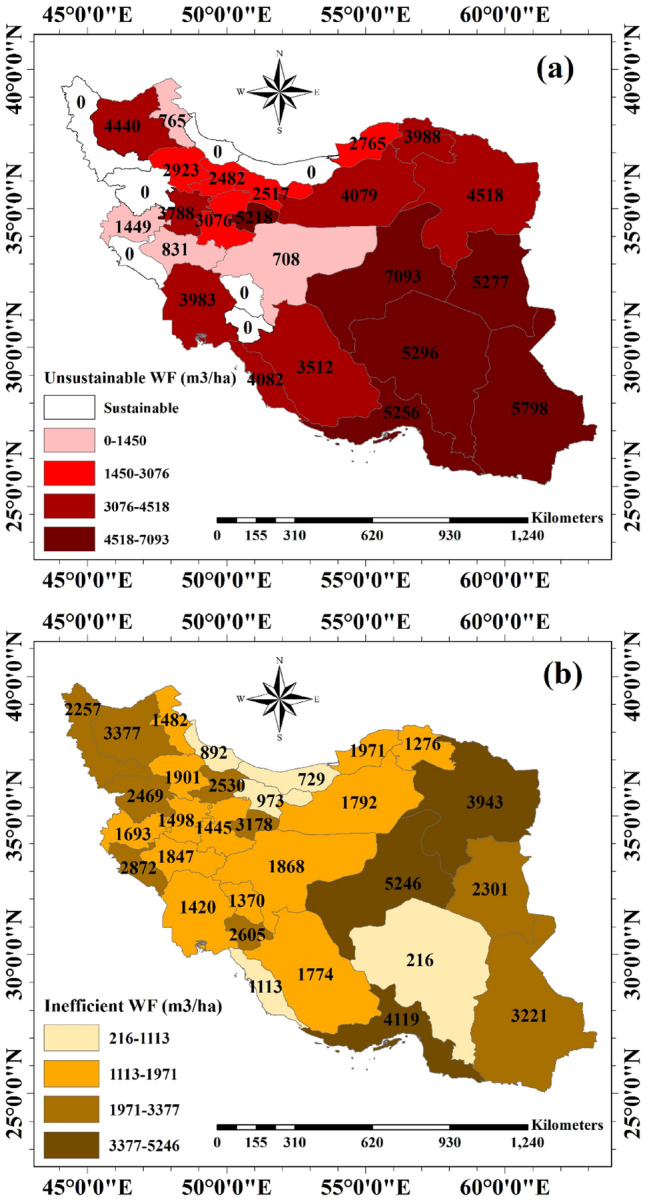
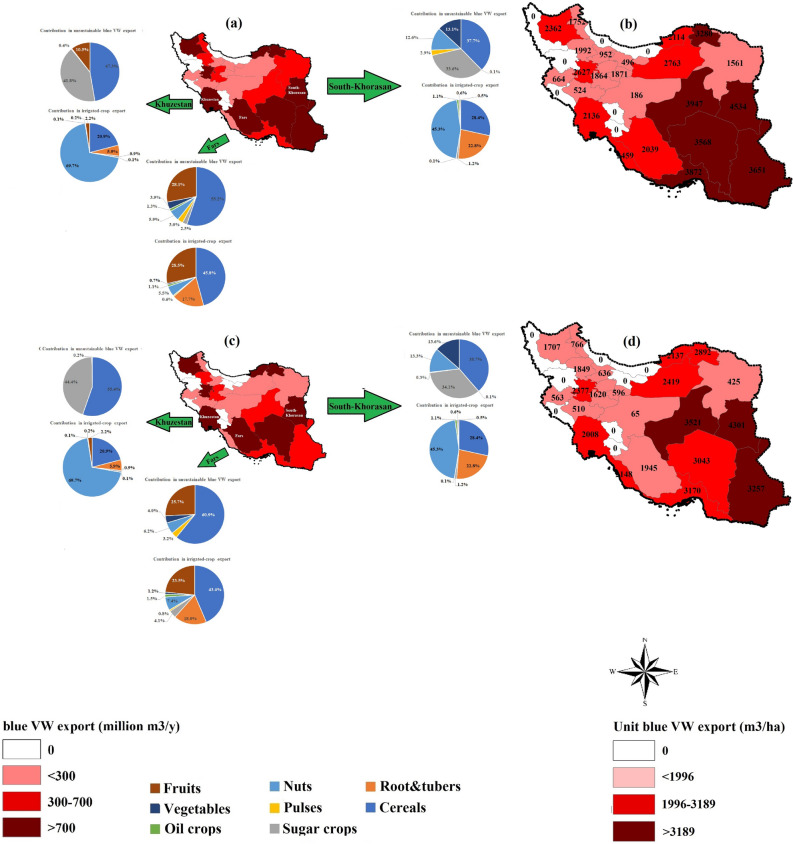
Ending hunger and ensuring food security are among targets of 2030's SDGs. While food trade and the embedded (virtual) water (VW) may improve food availability and accessibility for more people all year round, the sustainability and efficiency of food and VW trade needs to be revisited. In this research, we assess the sustainability and efficiency of food and VW trades under two food security scenarios for Iran, a country suffering from an escalating water crisis. These scenarios are (1) Individual Crop Food Security (ICFS), which restricts calorie fulfillment from individual crops and (2) Crop Category Food Security (CCFS), which promotes "eating local" by suggesting food substitution within the crop category. To this end, we simulate the water footprint and VW trades of 27 major crops, within 8 crop categories, in 30 provinces of Iran (2005-2015). We investigate the impacts of these two scenarios on (a) provincial food security (FS) and exports; (b) sustainable and efficient blue water consumption, and (c) blue VW export. We then test the correlation between agro-economic and socio-environmental indicators and provincial food security. Our results show that most provinces were threatened by unsustainable and inefficient blue water consumption for crop production, particularly in the summertime. This water mismanagement results in 14.41 and 8.45 billion m y unsustainable and inefficient blue VW exports under ICFS. "Eating local" improves the FS value by up to 210% which lessens the unsustainable and inefficient blue VW export from hotspots. As illustrated in the graphical abstract, the FS value strongly correlates with different agro-economic and socio-environmental indicators, but in different ways. Our findings promote "eating local" besides improving agro-economic and socio-environmental conditions to take transformative steps toward eradicating food insecurity not only in Iran but also in other countries facing water limitations.
消除饥饿和确保粮食安全是2030年可持续发展目标的一部分。虽然粮食贸易以及隐含(虚拟)水(VW)可能会使更多人全年的粮食供应和获取情况得到改善,但粮食和虚拟水贸易的可持续性和效率仍需重新审视。在本研究中,我们评估了伊朗这一面临日益严重水危机的国家在两种粮食安全情景下粮食和虚拟水贸易的可持续性和效率。这两种情景分别是:(1)单一作物粮食安全(ICFS),即限制单一作物的热量满足;(2)作物类别粮食安全(CCFS),即通过建议在作物类别内进行食物替代来促进“食用本地食物”。为此,我们模拟了伊朗30个省份(2005 - 2015年)8个作物类别中27种主要作物的水足迹和虚拟水贸易。我们研究了这两种情景对(a)省级粮食安全(FS)和出口;(b)可持续和高效的蓝水消耗,以及(c)蓝水虚拟水出口的影响。然后,我们测试了农业经济和社会环境指标与省级粮食安全之间的相关性。我们的结果表明,大多数省份受到作物生产中不可持续和低效的蓝水消耗的威胁,尤其是在夏季。这种水资源管理不善导致在单一作物粮食安全情景下有144.1亿立方米和84.5亿立方米不可持续和低效的蓝水虚拟水出口。“食用本地食物”使粮食安全值提高了210%,减少了热点地区不可持续和低效的蓝水虚拟水出口。如图形摘要所示,粮食安全值与不同的农业经济和社会环境指标密切相关,但方式不同。我们的研究结果不仅促进了“食用本地食物”,还改善了农业经济和社会环境条件,朝着消除伊朗以及其他面临水资源限制国家的粮食不安全问题迈出变革性步伐。