Niu Dong, Chen Kun-Lin, Wang Yi, Li Xiao-Qing, Liu Lu, Ma Xiang, Duan Xing
Key Laboratory of Applied Technology on Green-Eco-Healthy Animal Husbandry of Zhejiang Province, College of Animal Science and Technology, College of Veterinary Medicine, Zhejiang A&F University, Hangzhou, China.
Front Cell Dev Biol. 2021 Jul 6;9:708980. doi: 10.3389/fcell.2021.708980. eCollection 2021.
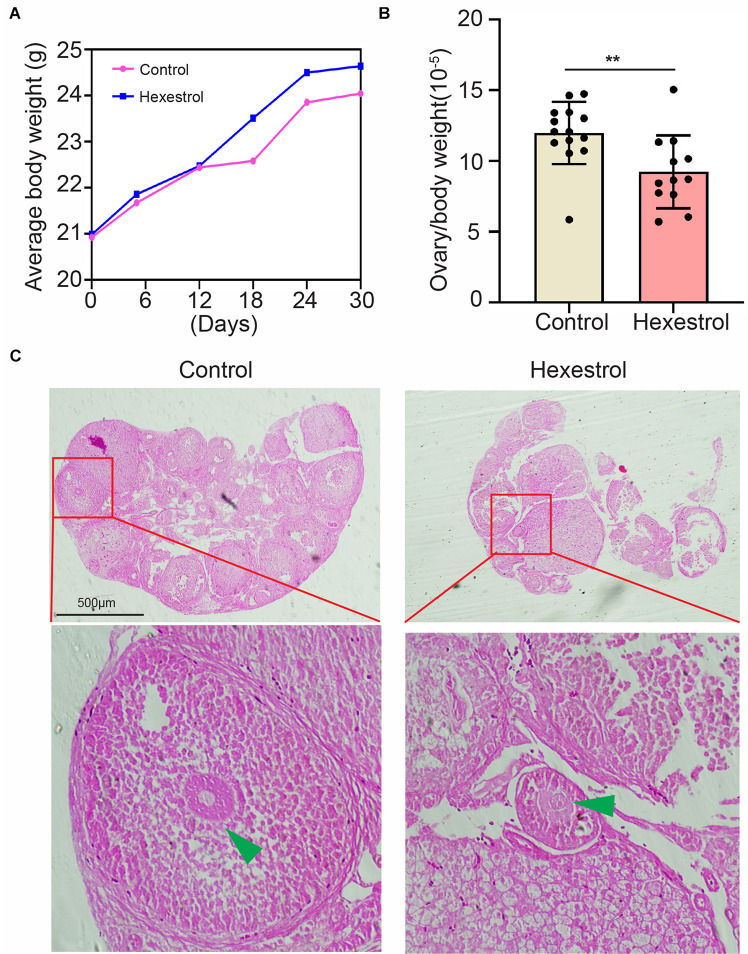
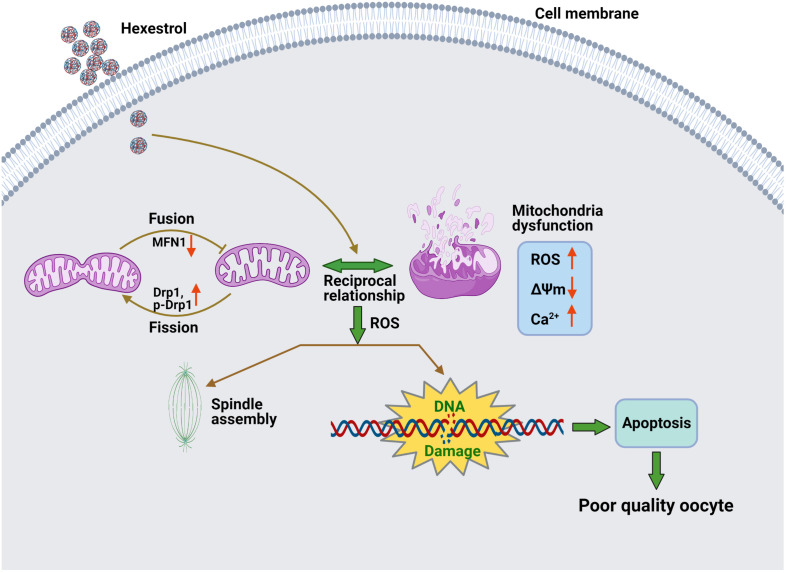
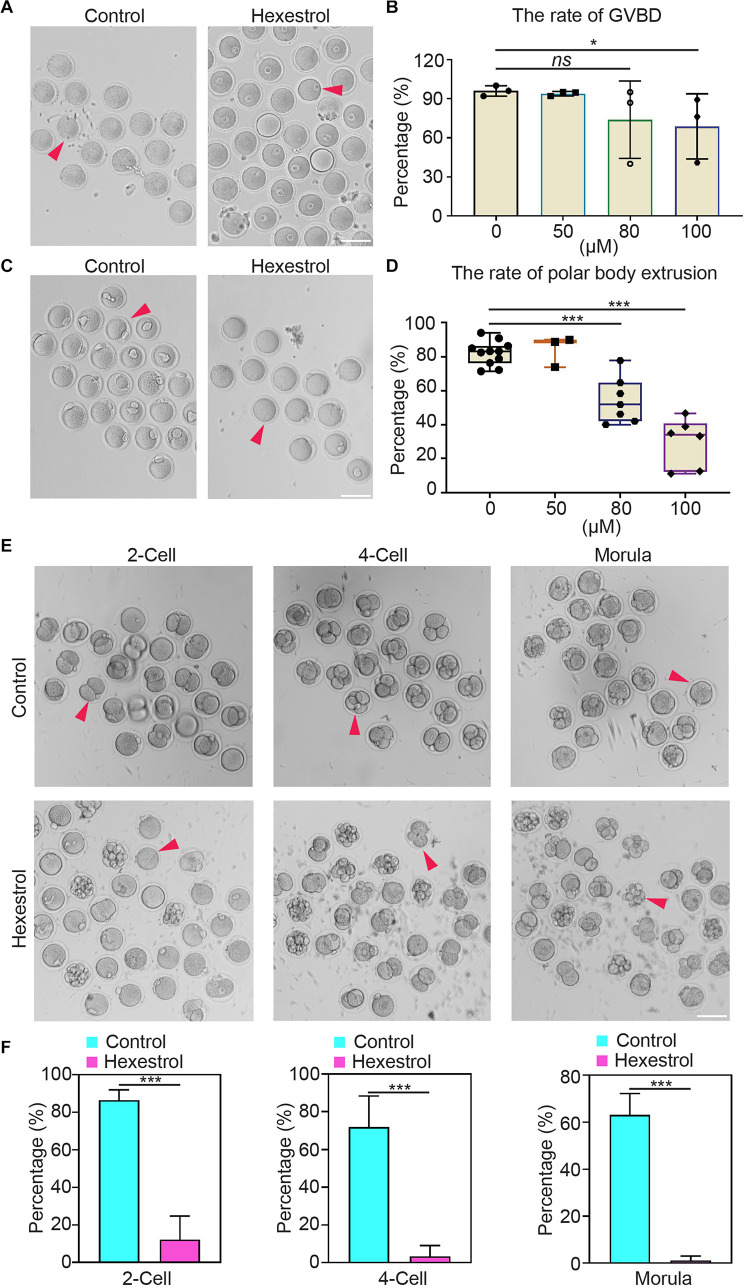
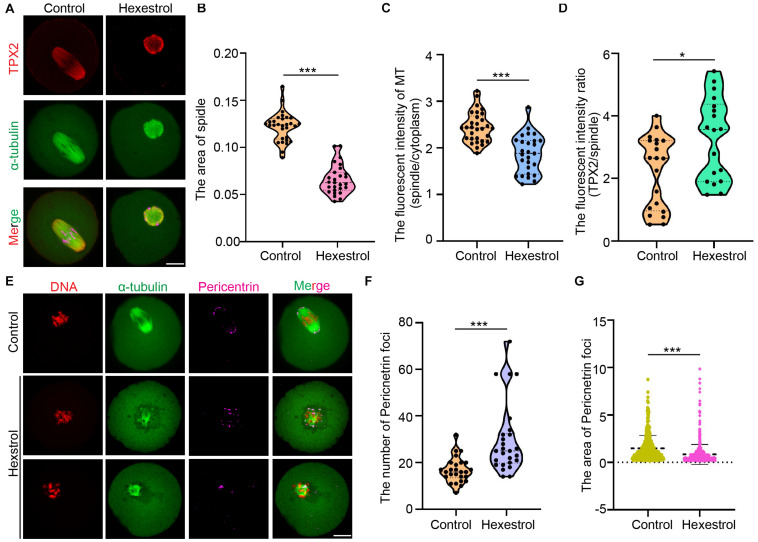
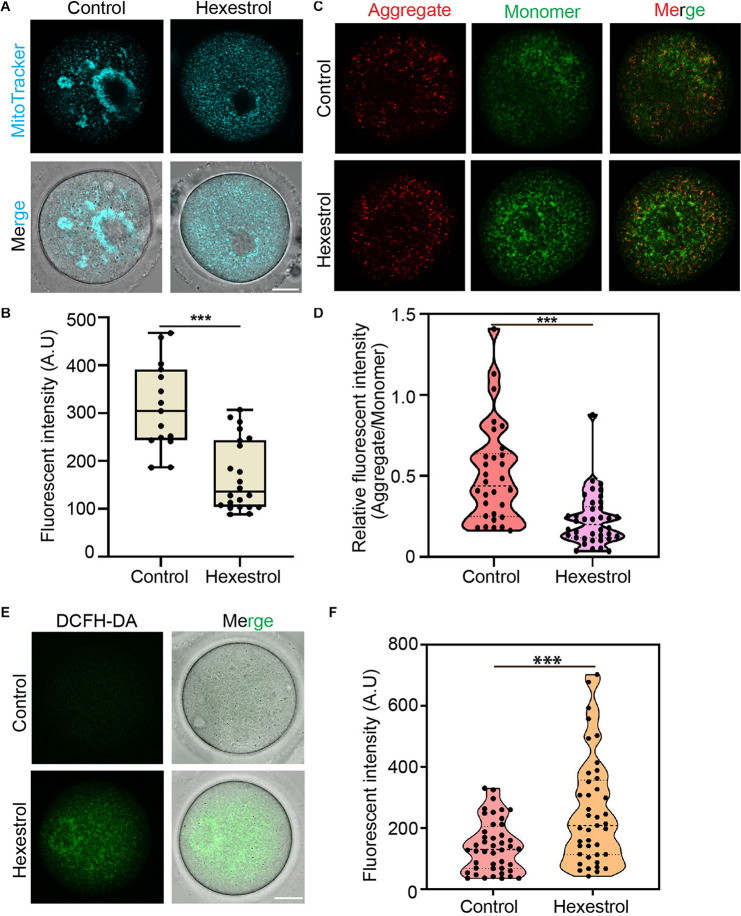
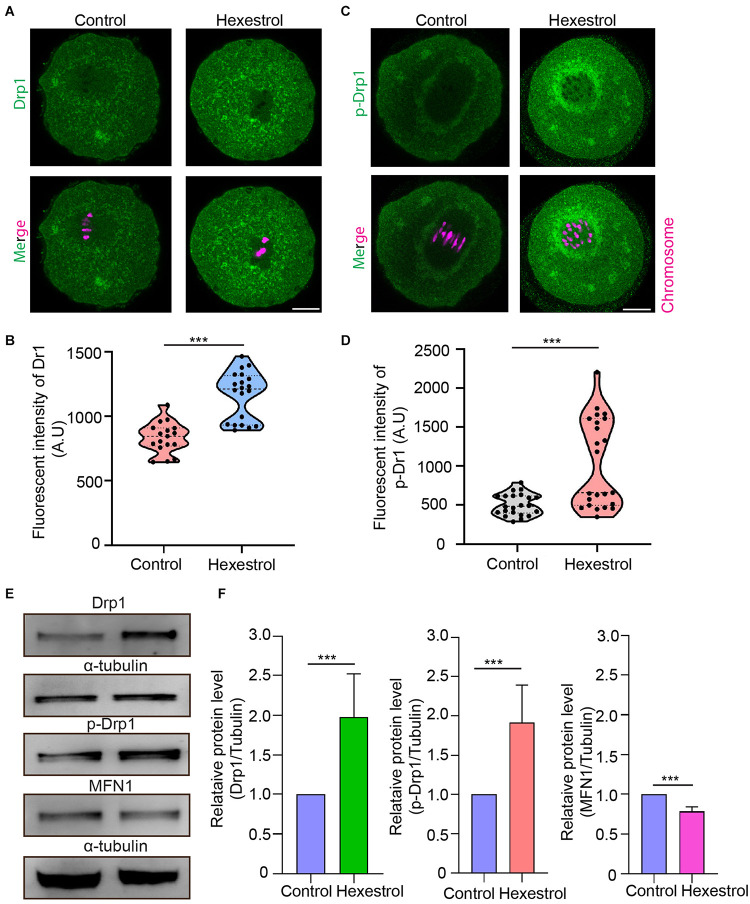
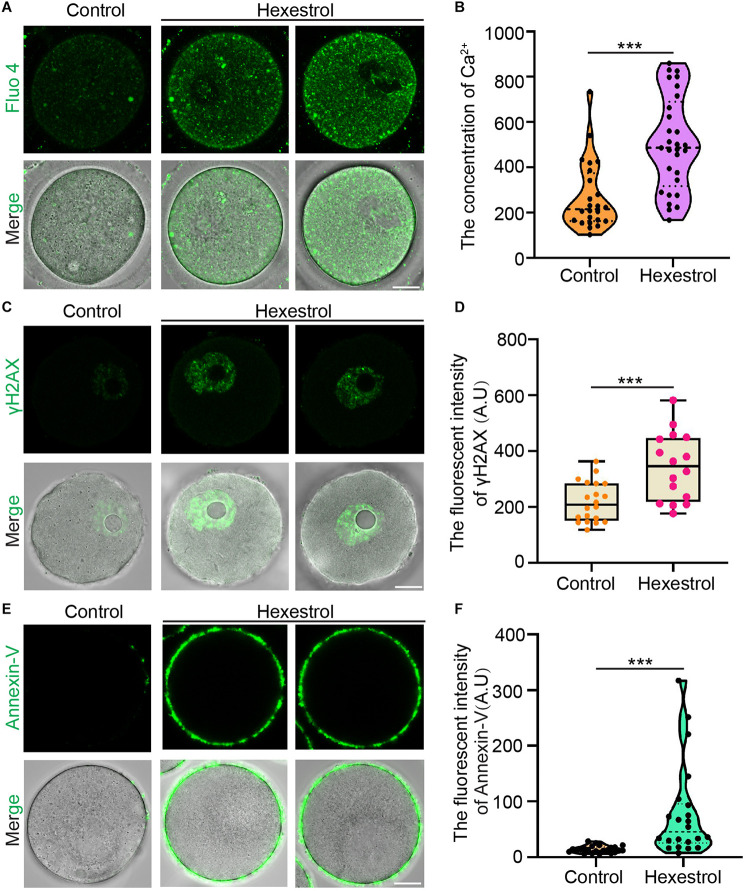
Hexestrol (HES) is a synthetic non-steroidal estrogen that was widely used illegally to boost the growth rate in livestock production and aquaculture. HES can also be transferred to humans from treated animals and the environment. HES has been shown to have an adverse effect on ovarian function and oogenesis, but the potential mechanism has not been clearly defined. To understand the potential mechanisms regarding how HES affect female ovarian function, we assessed oocyte quality by examining the critical events during oocyte maturation. We found that HES has an adverse effect on oocyte quality, indicated by the decreased capacity of oocyte maturation and early embryo development competency. Specifically, HES-exposed oocytes exhibited aberrant microtubule nucleation and spindle assembly, resulting in meiotic arrest. In addition, HES exposure disrupted mitochondrial distribution and the balance of mitochondrial fission and fusion, leading to aberrant mitochondrial membrane potential and accumulation of reactive oxygen species. Lastly, we found that HES exposure can increase cytosolic Ca levels and induce DNA damage and early apoptosis. In summary, these results demonstrate that mitochondrial dysfunction and perturbation of normal mitochondrial fission and fusion dynamics could be major causes of reduced oocyte quality after HES exposure.
己烯雌酚(HES)是一种合成的非甾体雌激素,曾被广泛非法用于提高畜牧生产和水产养殖中的生长速度。HES也可从经过处理的动物和环境转移至人体。已表明HES对卵巢功能和卵子发生有不良影响,但其潜在机制尚未明确界定。为了解HES影响女性卵巢功能的潜在机制,我们通过检查卵母细胞成熟过程中的关键事件来评估卵母细胞质量。我们发现HES对卵母细胞质量有不良影响,表现为卵母细胞成熟能力和早期胚胎发育能力下降。具体而言,暴露于HES的卵母细胞表现出异常的微管成核和纺锤体组装,导致减数分裂停滞。此外,暴露于HES会破坏线粒体分布以及线粒体分裂与融合的平衡,导致线粒体膜电位异常和活性氧积累。最后,我们发现暴露于HES会增加胞质钙水平,并诱导DNA损伤和早期凋亡。总之,这些结果表明线粒体功能障碍以及正常线粒体分裂与融合动态的紊乱可能是HES暴露后卵母细胞质量下降的主要原因。