INSERM UMR 1272, Université Sorbonne Paris-Nord, Bobigny, France.
Service de Pneumologie, AP-HP, Hôpital Avicenne, 125 rue de Stalingrad, 93009, Bobigny, France.
Adv Ther. 2021 Sep;38(9):4605-4627. doi: 10.1007/s12325-021-01832-5. Epub 2021 Jul 22.
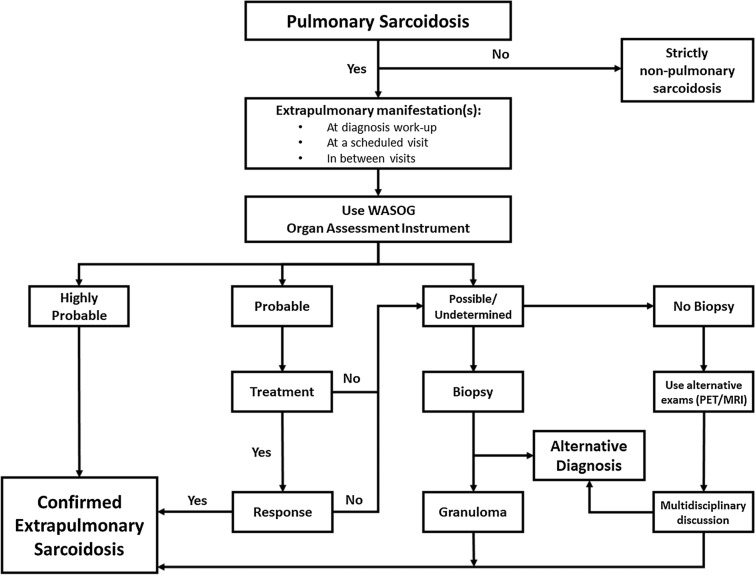
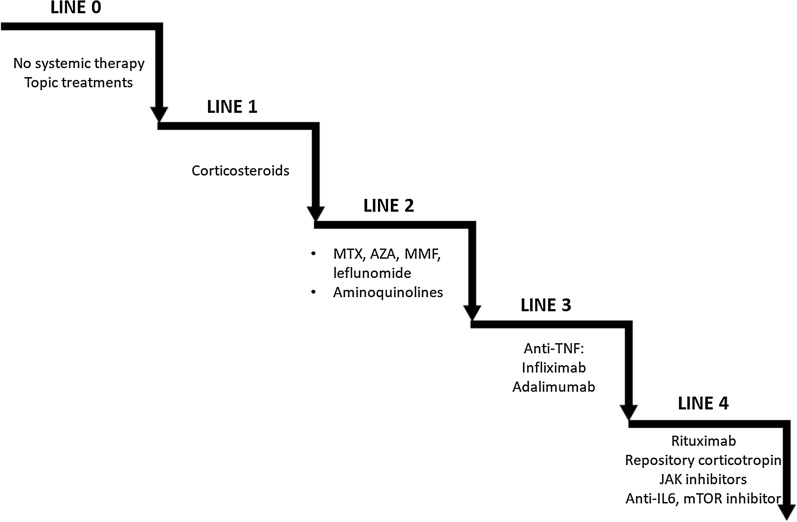
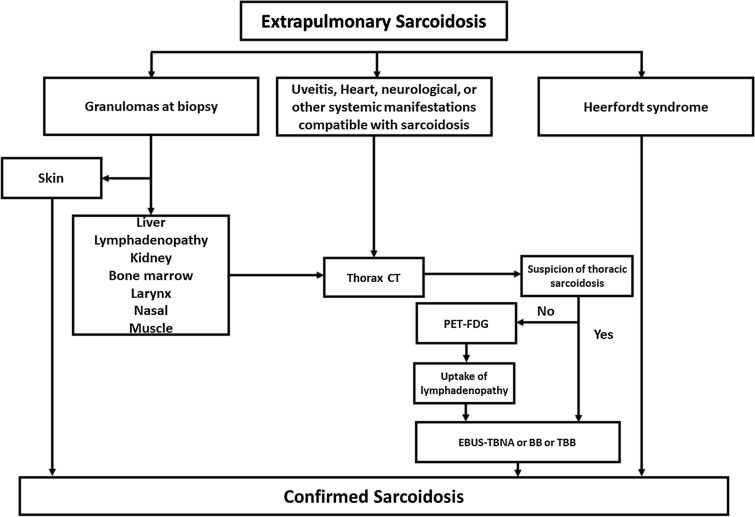
Extrapulmonary sarcoidosis occurs in 30-50% of cases of sarcoidosis, most often in association with pulmonary involvement, and virtually any organ can be involved. Its incidence depends according to the organs considered, clinical phenotype, and history of sarcoidosis, but also on epidemiological factors like age, sex, geographic ancestry, and socio-professional factors. The presentation, symptomatology, organ dysfunction, severity, and lethal risk vary from and to patient even at the level of the same organ. The presentation may be specific or not, and its occurrence is at variable times in the history of sarcoidosis from initial to delayed. There are schematically two types of presentation, one when pulmonary sarcoidosis is first discovered, the problem is then to detect extrapulmonary localizations and to assess their link with sarcoidosis, while the other presentation is when extrapulmonary manifestations are indicative of the disease with the need to promptly make the diagnosis of sarcoidosis. To improve diagnosis accuracy, extrapulmonary manifestations need to be known and a medical strategy is warranted to avoid both under- and over-diagnosis. An accurate estimation of impairment and risk linked to extrapulmonary sarcoidosis is essential to offer the best treatment. Most frequent extrapulmonary localizations are skin lesions, arthritis, uveitis, peripheral lymphadenopathy, and hepatic involvement. Potentially severe involvement may stem from the heart, nervous system, kidney, eye and larynx. There is a lack of randomized trials to support recommendations which are often derived from what is known for lung sarcoidosis and from the natural history of the disease at the level of the respective organ. The treatment needs to be holistic and personalized, taking into account not only extrapulmonary localizations but also lung involvement, parasarcoidosis syndrome if any, symptoms, quality of life, medical history, drugs contra-indications, and potential adverse events and patient preferences. The treatment is based on the use of anti-sarcoidosis drugs, on treatments related to organ dysfunction and supportive treatments. Multidisciplinary discussions and referral to sarcoidosis centers of excellence may be helpful for difficult diagnosis and treatment decisions.
肺外结节病发生在 30-50%的结节病病例中,最常与肺部受累有关,几乎任何器官都可能受累。其发病率取决于所考虑的器官、临床表型、结节病病史,还取决于年龄、性别、地理来源和社会职业等流行病学因素。即使在同一器官中,患者的表现、症状、器官功能障碍、严重程度和致死风险也各不相同。表现可能是特异性的,也可能是非特异性的,其发生时间在结节病的历史上从初始到延迟不等。从理论上讲,有两种表现类型,一种是当发现肺部结节病时,问题是检测肺外定位并评估其与结节病的关系,另一种是当肺外表现提示疾病时,需要及时诊断结节病。为了提高诊断准确性,需要了解肺外表现,并制定医疗策略以避免过度诊断和诊断不足。准确估计肺外结节病的损害和风险对于提供最佳治疗至关重要。最常见的肺外定位是皮肤损伤、关节炎、葡萄膜炎、外周淋巴结病和肝受累。潜在严重的受累可能源于心脏、神经系统、肾脏、眼睛和喉咙。缺乏随机试验来支持建议,这些建议通常来自对肺部结节病的了解以及相应器官的疾病自然史。治疗需要全面和个体化,不仅要考虑肺外定位,还要考虑肺受累、有无副结节病综合征、症状、生活质量、病史、药物禁忌以及潜在的不良反应和患者偏好。治疗基于使用抗结节病药物、与器官功能障碍相关的治疗和支持性治疗。多学科讨论和向结节病卓越中心转诊可能有助于困难的诊断和治疗决策。