Chen Jianqiang, Jin Xiangxiang, Mei Yanan, Shen Zhe, Zhu Jufan, Shi Hongyi, Wang Minshan, Zheng Xiaohui, Liang Guang
Chemical Biology Research Center, School of Pharmaceutical Sciences, Wenzhou Medical University, Wenzhou, China.
The Affiliated Xiangshan Hospital, Wenzhou Medical University, Ningbo, China.
Cell Prolif. 2021 Sep;54(9):e13101. doi: 10.1111/cpr.13101. Epub 2021 Jul 23.
Osteosarcoma (OS) is characterized by high levels of the tumour-associated inflammatory microenvironment. Moreover, in approximately 60% of OS, telomere length is maintained by alternative lengthening of telomeres (ALT) pathway. Whether the ALT pathway can be exploited for OS therapeutic treatment and how the OS inflammatory microenvironment influences the anti-cancer drug effect remains unknown. Here, we examined the biological effects of TMPyP4 and cisplatin in the inflammatory microenvironment of OS cells.
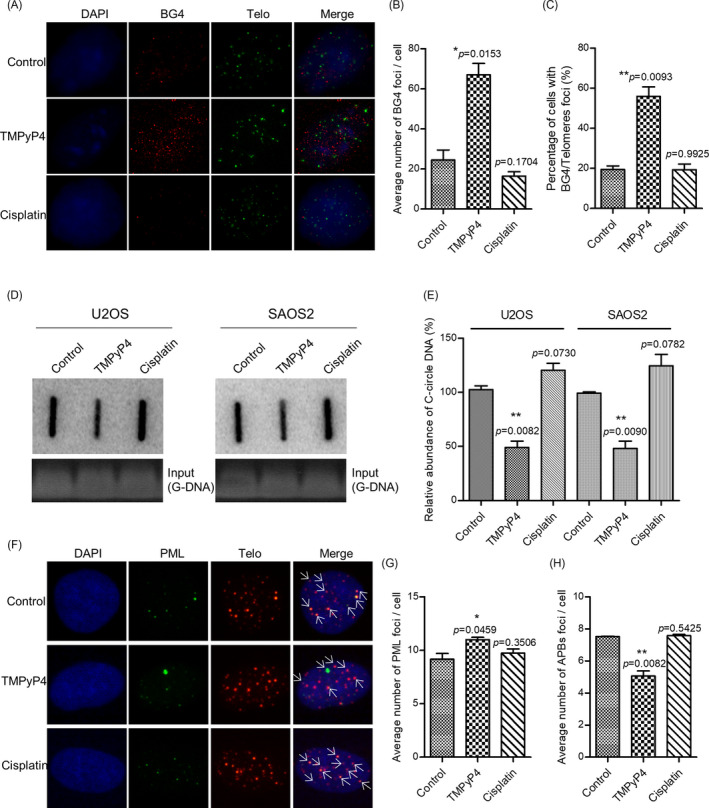
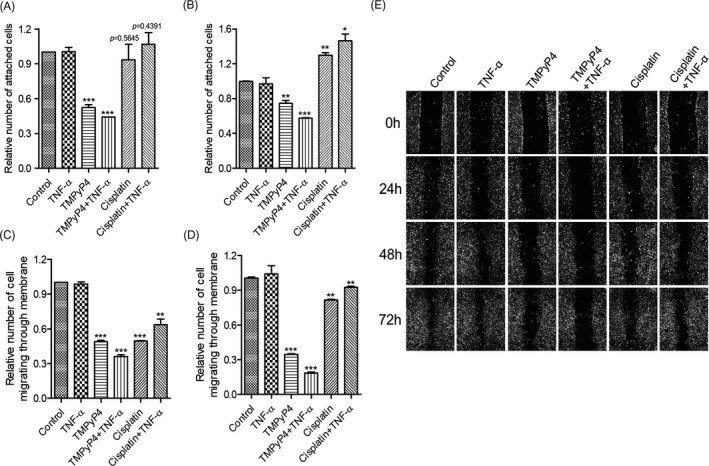
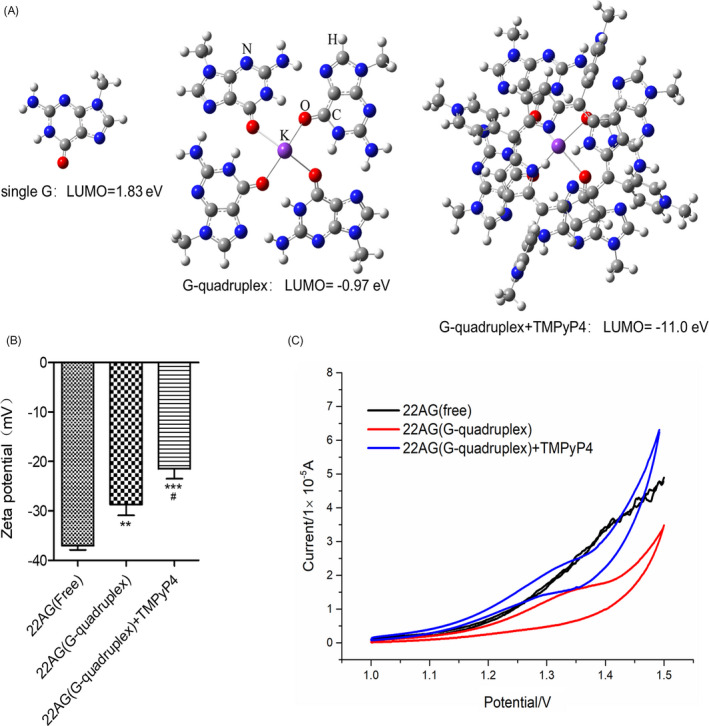
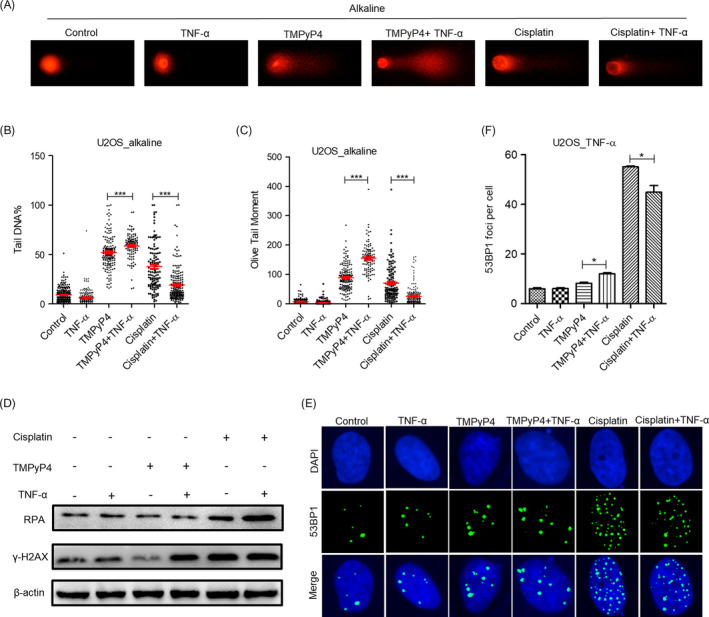
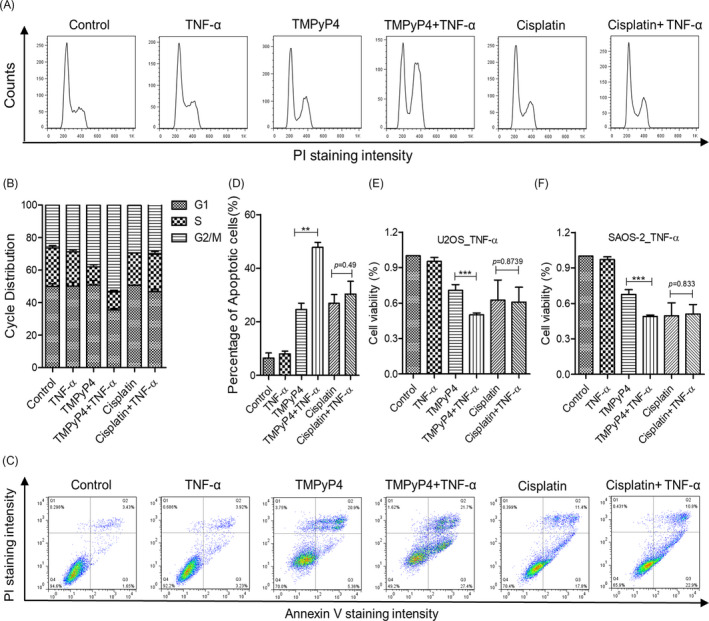
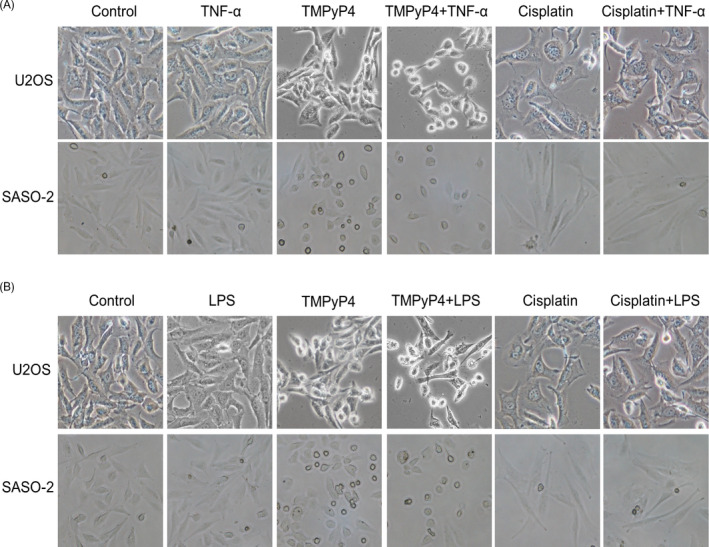
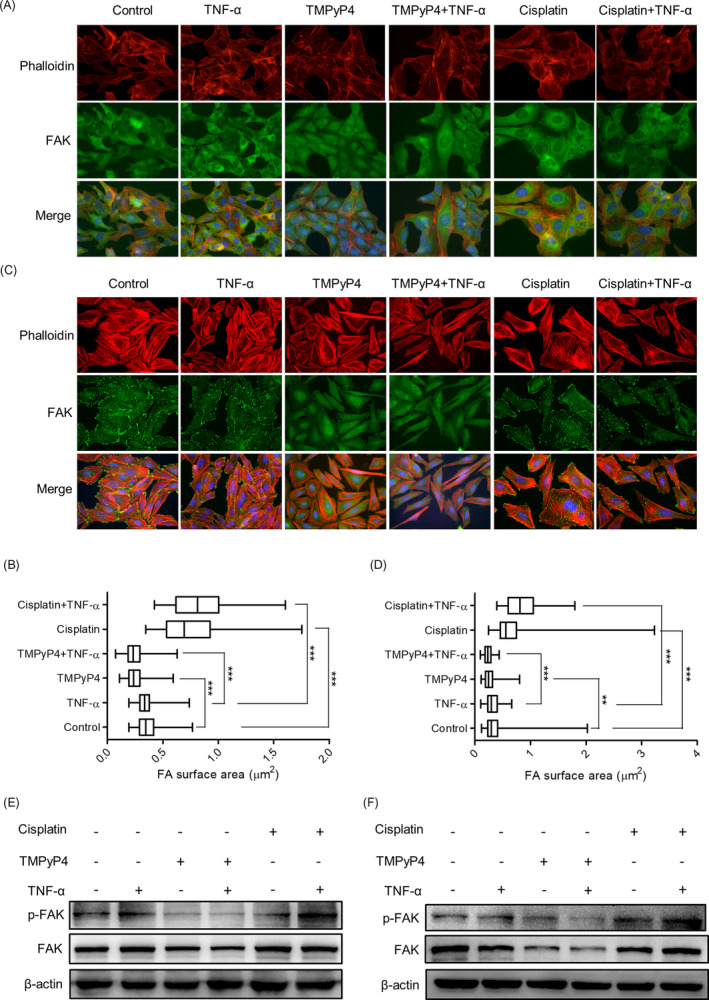
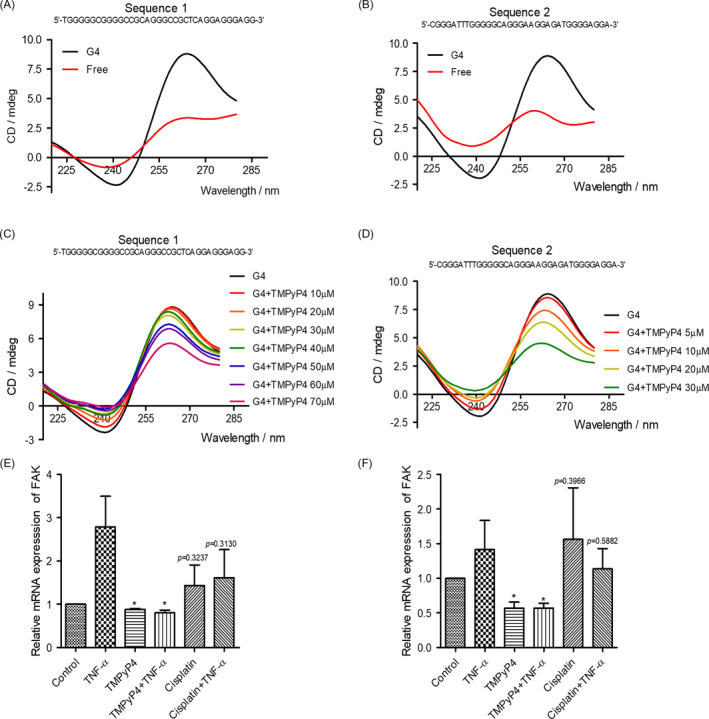
Immunofluorescence in situ hybridization (IF-FISH) and C-circle experiments were used to detect the G-quadruplex and ALT activity. The redox potential of single guanine, G-quadruplex and G-quadruplex/TMPyP4 was evaluated by the lowest unoccupied molecular orbital energy (LUMO), zeta potential and cyclic voltammetry. Cell viability, flow cytometry and apoptosis, Western blot, comet assay, adhesion, transwell and scratch experiments were performed to compare the anti-tumour proliferation and migration effects of TMPyP4 and cisplatin in the inflammatory microenvironment.
This study indicated that compared with cisplatin, TMPyP4 could induce the formation of human telomeres and FAK G-quadruplex in vitro and in vivo, and TMPyP4-treated OS cells showed fewer extrachromosomal C-circles and fewer ALT-associated promyelocytic leukaemia bodies. Consequently, the ALT activity and FAK-related cell migration were suppressed by TMPyP4. Mechanistically, the formation of G-quadruplex resulted in both lower redox potential than G within the genome and FAK transcription inhibition, and TMPyP4 could enhance this phenomenon, especially in the inflammatory microenvironment.
Our results reveal that TMPyP4 is more suitable for OS treatment than cisplatin.
骨肉瘤(OS)的特征是肿瘤相关炎症微环境水平较高。此外,在大约60%的骨肉瘤中,端粒长度通过端粒替代延长(ALT)途径维持。ALT途径是否可用于骨肉瘤的治疗以及骨肉瘤炎症微环境如何影响抗癌药物效果仍不清楚。在此,我们研究了TMPyP4和顺铂在骨肉瘤细胞炎症微环境中的生物学效应。
免疫荧光原位杂交(IF-FISH)和C环实验用于检测G-四链体和ALT活性。通过最低未占分子轨道能量(LUMO)、zeta电位和循环伏安法评估单个鸟嘌呤、G-四链体和G-四链体/TMPyP4的氧化还原电位。进行细胞活力、流式细胞术和凋亡、蛋白质免疫印迹、彗星试验、黏附、transwell和划痕实验,以比较TMPyP4和顺铂在炎症微环境中的抗肿瘤增殖和迁移作用。
本研究表明,与顺铂相比,TMPyP4在体外和体内均可诱导人端粒和FAK G-四链体的形成,且经TMPyP4处理的骨肉瘤细胞显示出较少的染色体外C环和较少的ALT相关早幼粒细胞白血病小体。因此,TMPyP4抑制了ALT活性和FAK相关的细胞迁移。机制上,G-四链体的形成导致基因组内的氧化还原电位低于G,并抑制FAK转录,而TMPyP4可增强这一现象,尤其是在炎症微环境中。
我们的结果表明,与顺铂相比,TMPyP4更适合用于骨肉瘤治疗。