Department of Biological Sciences, University of South Carolina, Columbia, SC 29208, USA.
Int J Mol Sci. 2021 Jul 14;22(14):7533. doi: 10.3390/ijms22147533.
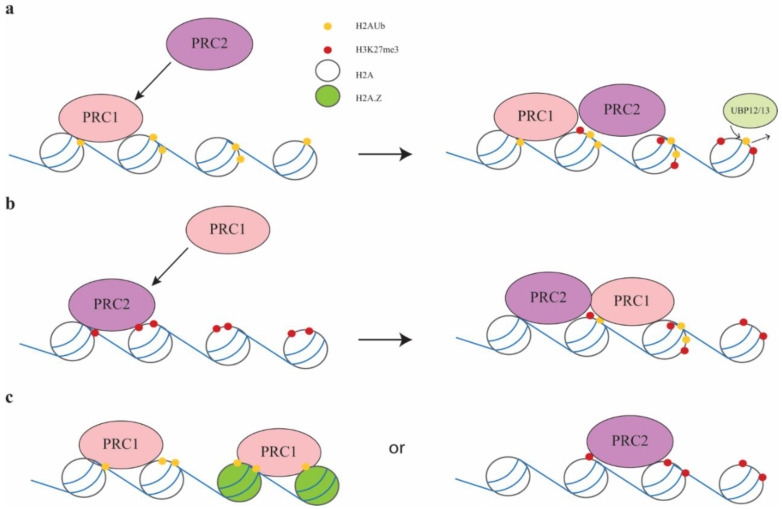
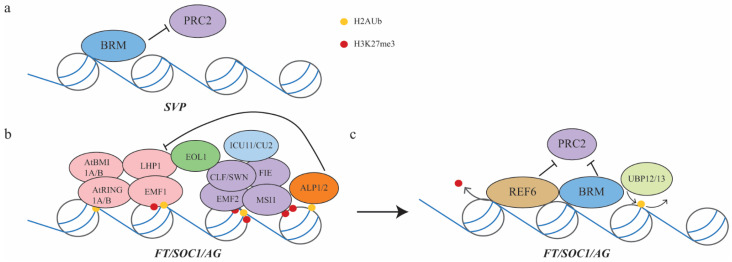
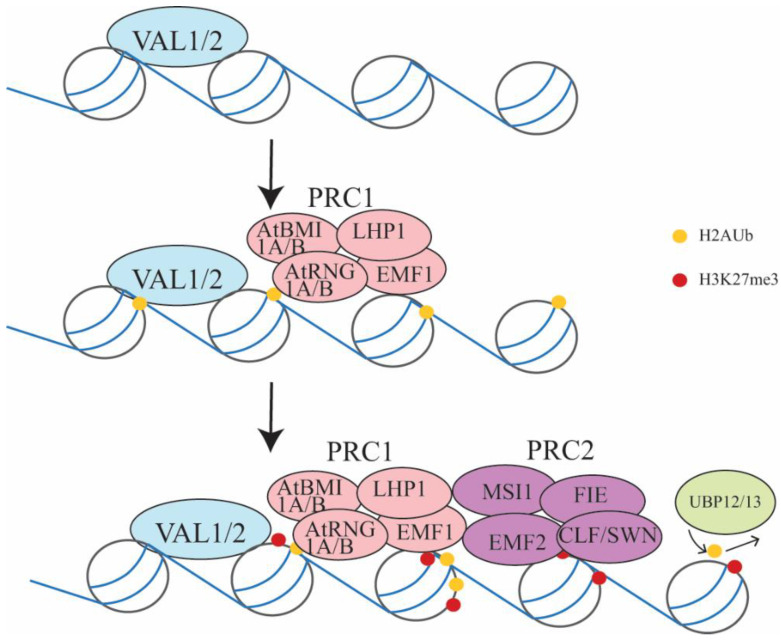
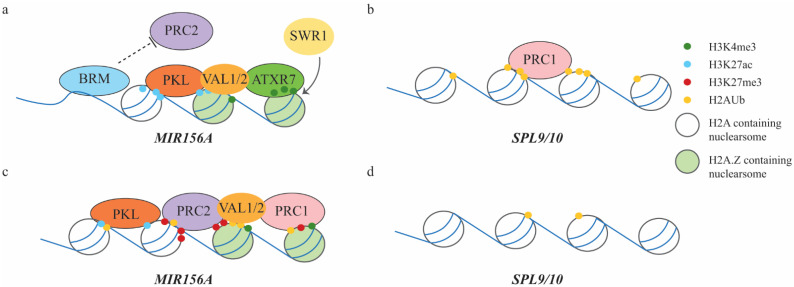
Correct timing of developmental phase transitions is critical for the survival and fitness of plants. Developmental phase transitions in plants are partially promoted by controlling relevant genes into active or repressive status. Polycomb Repressive Complex1 (PRC1) and PRC2, originally identified in Drosophila, are essential in initiating and/or maintaining genes in repressive status to mediate developmental phase transitions. Our review summarizes mechanisms in which the embryo-to-seedling transition, the juvenile-to-adult transition, and vegetative-to-reproductive transition in plants are mediated by PRC1 and PRC2, and suggests that PRC1 could act either before or after PRC2, or that they could function independently of each other. Details of the exact components of PRC1 and PRC2 in each developmental phase transitions and how they are recruited or removed will need to be addressed in the future.
发育阶段转变的正确时间对于植物的生存和适应至关重要。植物的发育阶段转变部分是通过将相关基因控制为激活或抑制状态来促进的。最初在果蝇中鉴定出的多梳抑制复合物 1(PRC1)和 PRC2 对于启动和/或维持基因的抑制状态以介导发育阶段转变至关重要。我们的综述总结了 PRC1 和 PRC2 介导植物从胚胎到种子、从幼年到成年以及从营养生长到生殖生长的转变的机制,并表明 PRC1 可以在 PRC2 之前或之后发挥作用,或者它们可以相互独立地发挥作用。未来需要解决 PRC1 和 PRC2 在每个发育阶段转变中的确切组成部分以及它们如何被招募或去除的细节。