Biology Department, University of Pennsylvania, Philadelphia, Pennsylvania, United States of America.
Department of Biochemistry, Albert Einstein College of Medicine, Bronx, New York, United States of America.
PLoS Genet. 2021 Jun 28;17(6):e1009626. doi: 10.1371/journal.pgen.1009626. eCollection 2021 Jun.
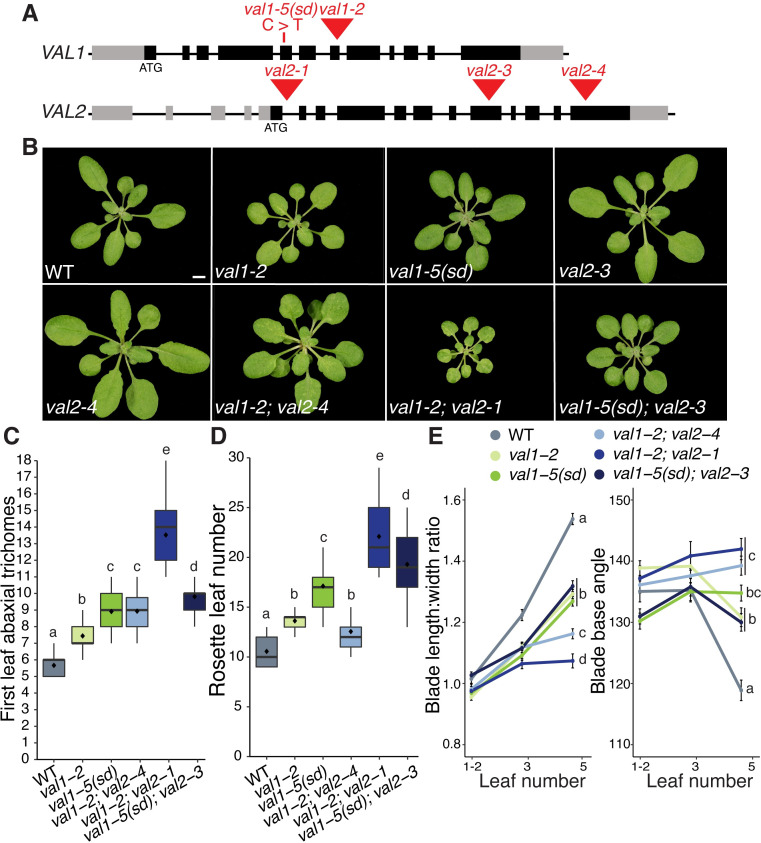
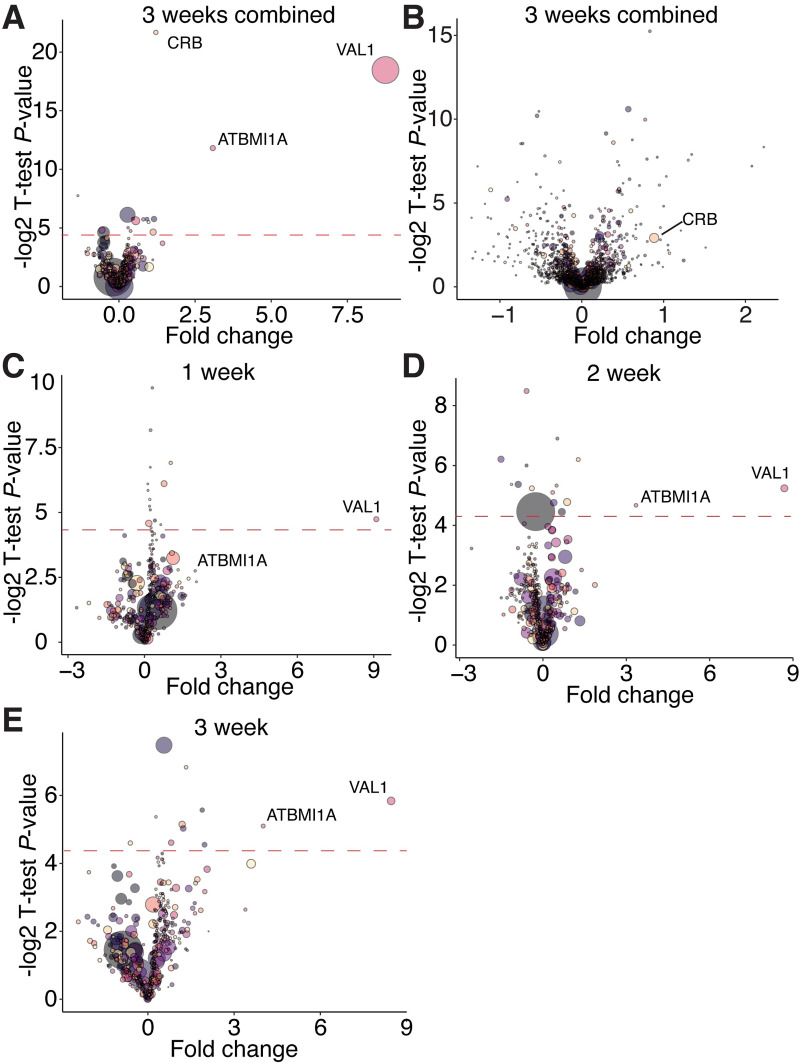
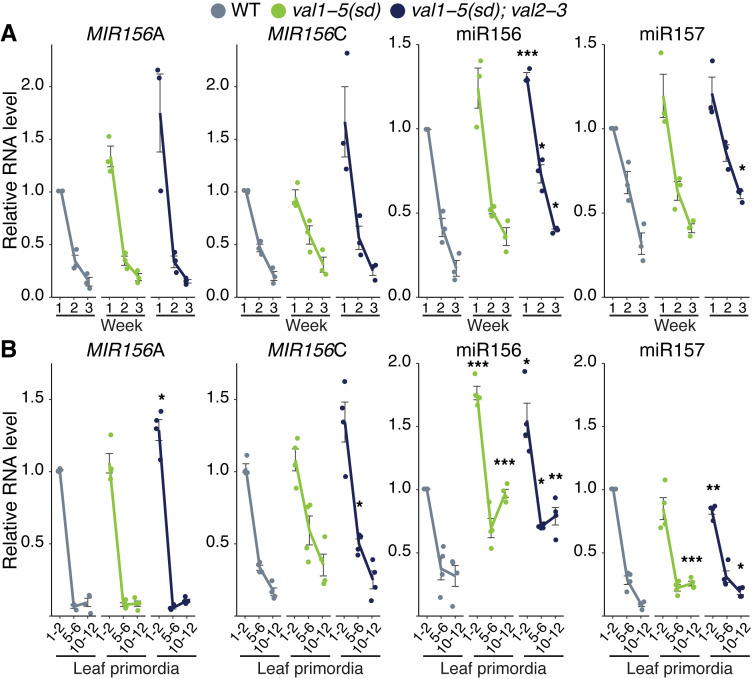
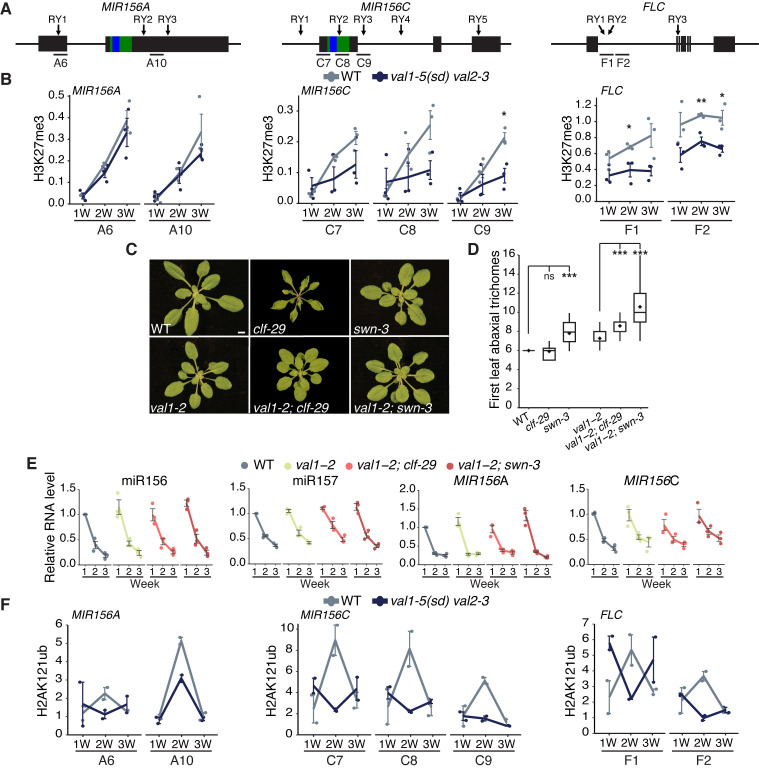
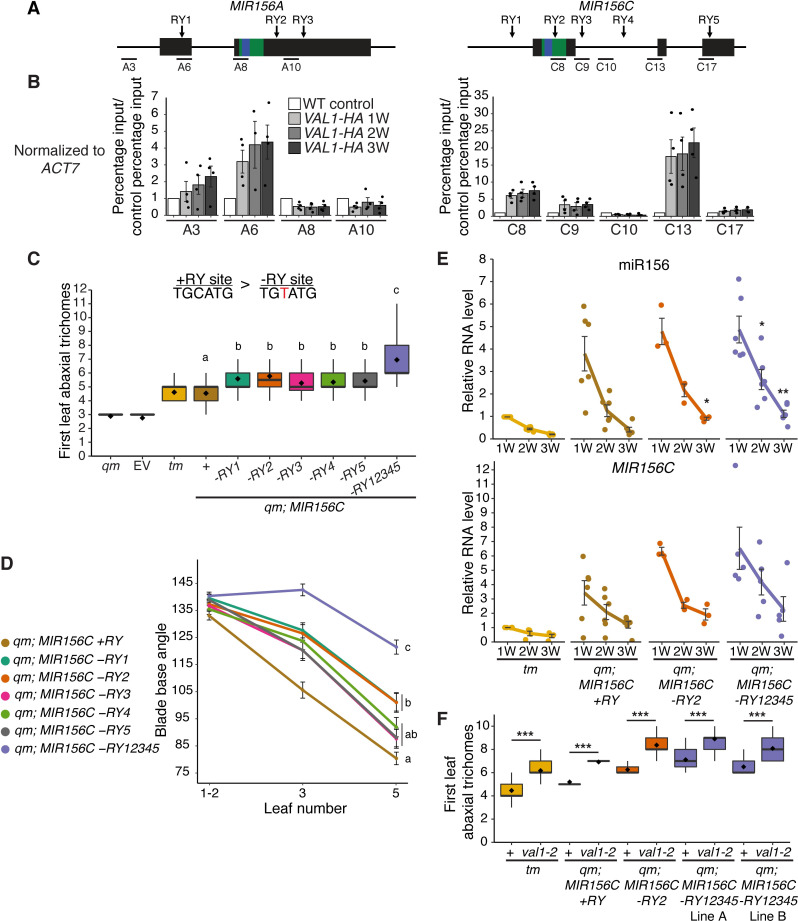
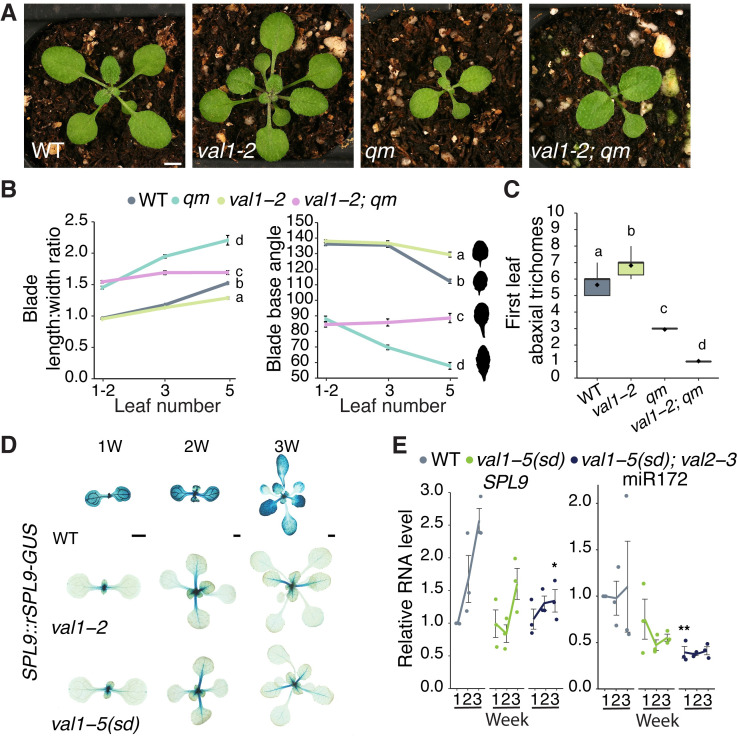
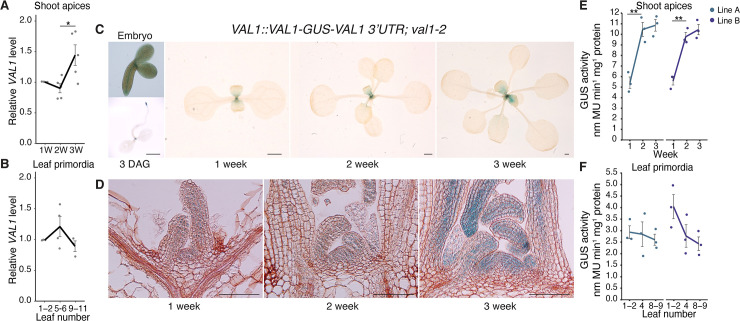
How organisms control when to transition between different stages of development is a key question in biology. In plants, epigenetic silencing by Polycomb repressive complex 1 (PRC1) and PRC2 plays a crucial role in promoting developmental transitions, including from juvenile-to-adult phases of vegetative growth. PRC1/2 are known to repress the master regulator of vegetative phase change, miR156, leading to the transition to adult growth, but how this process is regulated temporally is unknown. Here we investigate whether transcription factors in the VIVIPAROUS/ABI3-LIKE (VAL) gene family provide the temporal signal for the epigenetic repression of miR156. Exploiting a novel val1 allele, we found that VAL1 and VAL2 redundantly regulate vegetative phase change by controlling the overall level, rather than temporal dynamics, of miR156 expression. Furthermore, we discovered that VAL1 and VAL2 also act independently of miR156 to control this important developmental transition. In combination, our results highlight the complexity of temporal regulation in plants.
生物体如何控制何时从发育的不同阶段过渡是生物学中的一个关键问题。在植物中,多梳抑制复合物 1 (PRC1) 和 PRC2 的表观遗传沉默在促进发育转变中起着至关重要的作用,包括从营养生长的幼年到成年阶段。已知 PRC1/2 抑制植物阶段变化的主调控因子 miR156,导致向成年生长的转变,但这个过程如何在时间上受到调节尚不清楚。在这里,我们研究了 VIVIPAROUS/ABI3-LIKE (VAL) 基因家族中的转录因子是否为 miR156 的表观遗传抑制提供了时间信号。利用一个新的 val1 等位基因,我们发现 VAL1 和 VAL2 通过控制 miR156 表达的整体水平而非时间动态,冗余地调节营养生长阶段变化。此外,我们发现 VAL1 和 VAL2 也独立于 miR156 控制这个重要的发育转变。总之,我们的研究结果强调了植物中时间调节的复杂性。