Department of Chemistry, University of Bari, via Orabona 4, 70126 Bari, Italy.
Institute for Physical Processes, Italian National Research Council, c/o Department of Chemistry, University of Bari, via Orabona 4, 70126 Bari, Italy.
Molecules. 2021 Jul 13;26(14):4247. doi: 10.3390/molecules26144247.
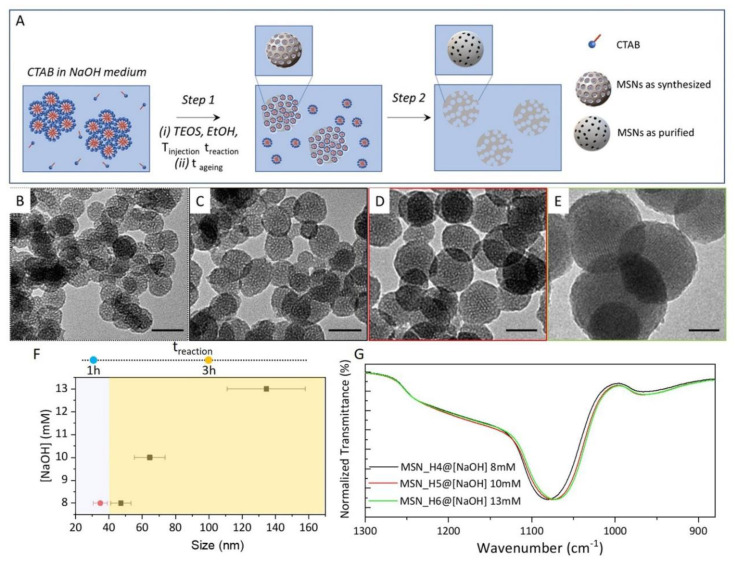
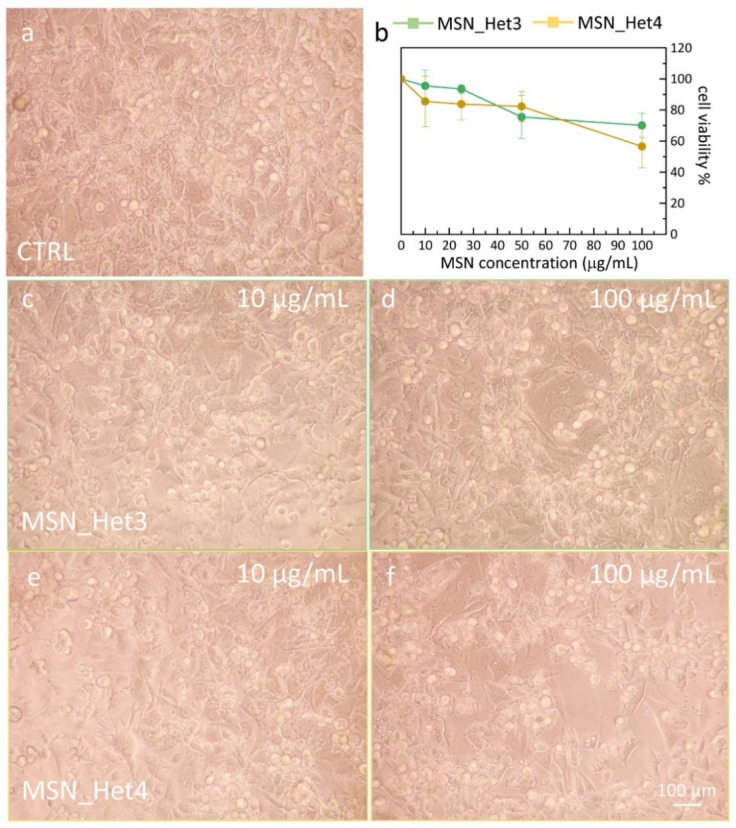
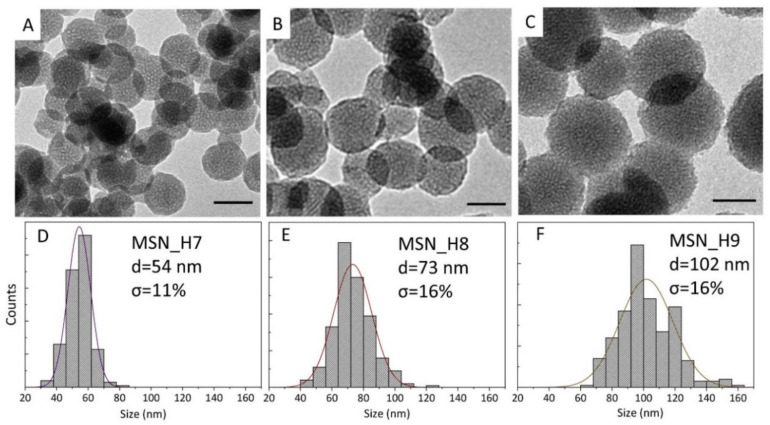
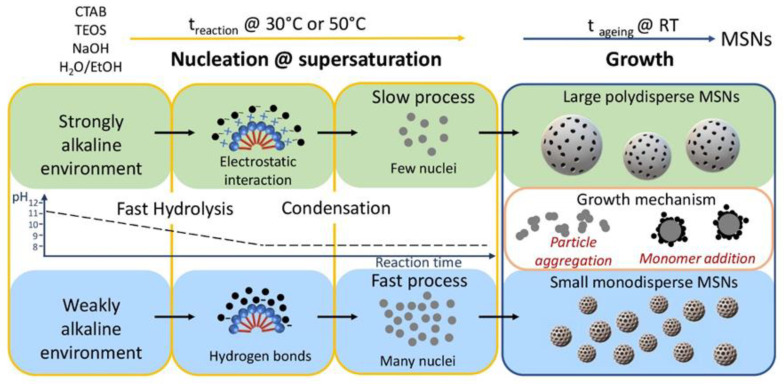
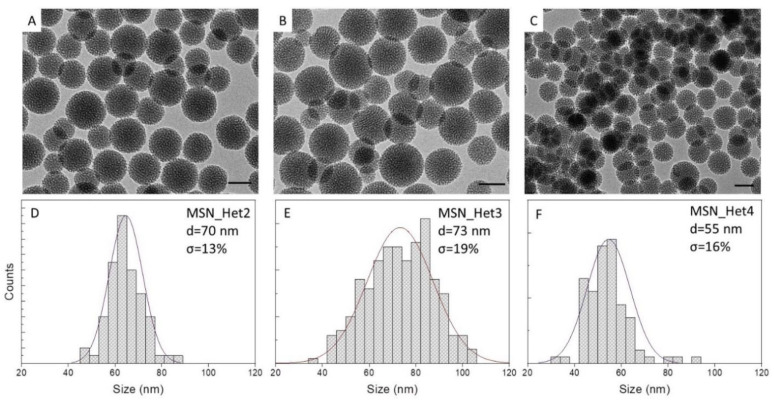
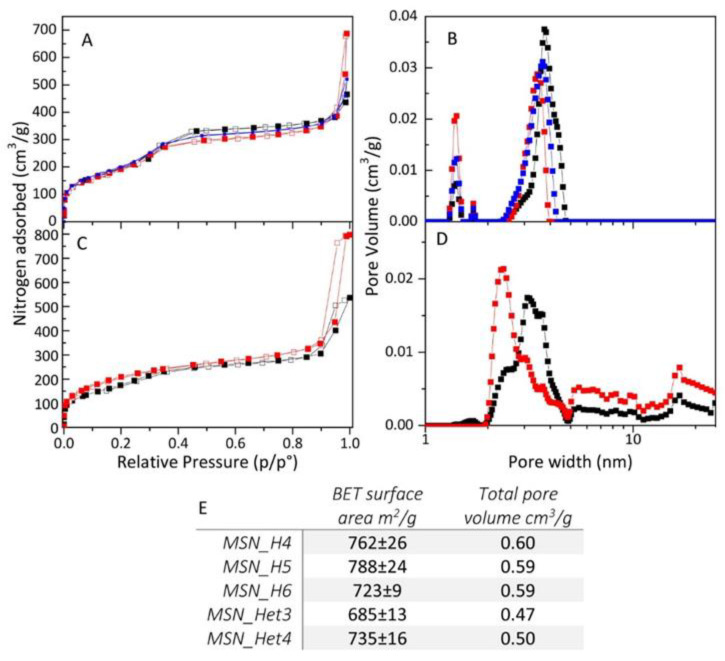
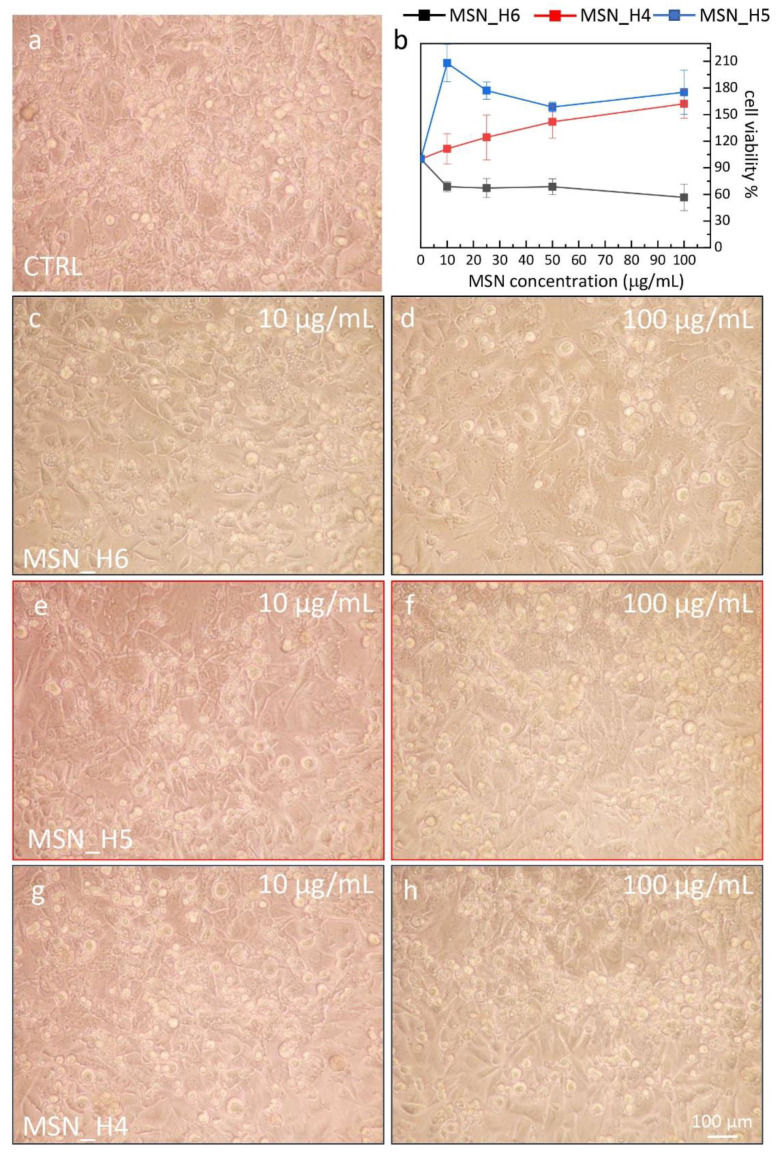
Mesoporous silica nanostructures (MSNs) attract high interest due to their unique and tunable physical chemical features, including high specific surface area and large pore volume, that hold a great potential in a variety of fields, i.e., adsorption, catalysis, and biomedicine. An essential feature for biomedical application of MSNs is limiting MSN size in the sub-micrometer regime to control uptake and cell viability. However, careful size tuning in such a regime remains still challenging. We aim to tackling this issue by developing two synthetic procedures for MSN size modulation, performed in homogenous aqueous/ethanol solution or two-phase aqueous/ethyl acetate system. Both approaches make use of tetraethyl orthosilicate as precursor, in the presence of cetyltrimethylammonium bromide, as structure-directing agent, and NaOH, as base-catalyst. NaOH catalyzed syntheses usually require high temperature (>80 °C) and large reaction medium volume to trigger MSN formation and limit aggregation. Here, a successful modulation of MSNs size from 40 up to 150 nm is demonstrated to be achieved by purposely balancing synthesis conditions, being able, in addition, to keep reaction temperature not higher than 50 °C (30 °C and 50 °C, respectively) and reaction mixture volume low. Through a comprehensive and in-depth systematic morphological and structural investigation, the mechanism and kinetics that sustain the control of MSNs size in such low dimensional regime are defined, highlighting that modulation of size and pores of the structures are mainly mediated by base concentration, reaction time and temperature and ageing, for the homogenous phase approach, and by temperature for the two-phase synthesis. Finally, an in vitro study is performed on bEnd.3 cells to investigate on the cytotoxicity of the MNSs.
介孔硅纳米结构(MSNs)因其独特且可调的物理化学特性而备受关注,包括高比表面积和大孔体积,在吸附、催化和生物医学等多种领域具有巨大的应用潜力。MSNs 用于生物医学的一个重要特性是将 MSN 尺寸限制在亚微米范围内,以控制细胞摄取和细胞活力。然而,在这种范围内进行精细的尺寸调谐仍然具有挑战性。我们旨在通过开发两种用于 MSN 尺寸调节的合成方法来解决这个问题,这两种方法都是在均相水/乙醇溶液或水/乙酸乙酯两相体系中进行的。这两种方法都使用正硅酸乙酯作为前驱体,十六烷基三甲基溴化铵作为结构导向剂,氢氧化钠作为碱性催化剂。氢氧化钠催化合成通常需要高温(>80°C)和大的反应介质体积来引发 MSN 形成并限制聚集。在这里,通过有目的地平衡合成条件,成功地将 MSN 的尺寸从 40nm 调至 150nm,此外,还能够将反应温度保持在 50°C 以下(分别为 30°C 和 50°C),并保持反应混合物的体积较低。通过全面深入的形态和结构研究,定义了在这种低维尺度下控制 MSN 尺寸的机制和动力学,突出了通过碱浓度、反应时间和温度以及老化(对于均相相方法)和温度(对于两相合成)来调节结构的尺寸和孔的机制和动力学。最后,在 bEnd.3 细胞上进行了体外研究,以研究 MSNs 的细胞毒性。