• 文献检索
  • 文档翻译
  • 深度研究
  • 学术资讯
  • Suppr Zotero 插件Zotero 插件
  • 邀请有礼
  • 套餐&价格
  • 历史记录
应用&插件
Suppr Zotero 插件Zotero 插件浏览器插件Mac 客户端Windows 客户端微信小程序
定价
高级版会员购买积分包购买API积分包
服务
文献检索文档翻译深度研究API 文档MCP 服务
关于我们
关于 Suppr公司介绍联系我们用户协议隐私条款
关注我们

Suppr 超能文献

核心技术专利:CN118964589B侵权必究
粤ICP备2023148730 号-1Suppr @ 2026

文献检索

告别复杂PubMed语法,用中文像聊天一样搜索,搜遍4000万医学文献。AI智能推荐,让科研检索更轻松。

立即免费搜索

文件翻译

保留排版,准确专业,支持PDF/Word/PPT等文件格式,支持 12+语言互译。

免费翻译文档

深度研究

AI帮你快速写综述,25分钟生成高质量综述,智能提取关键信息,辅助科研写作。

立即免费体验

使用技术接受与使用统一理论模型的改编版预测患者使用个人健康记录的意愿:二次数据分析

Predicting Patients' Intention to Use a Personal Health Record Using an Adapted Unified Theory of Acceptance and Use of Technology Model: Secondary Data Analysis.

作者信息

Yousef Consuela Cheriece, Salgado Teresa M, Farooq Ali, Burnett Keisha, McClelland Laura E, Thomas Abin, Alenazi Ahmed O, Abu Esba Laila Carolina, AlAzmi Aeshah, Alhameed Abrar Fahad, Hattan Ahmed, Elgadi Sumaya, Almekhloof Saleh, AlShammary Mohammed A, Alanezi Nazzal Abdullah, Alhamdan Hani Solaiman, Khoshhal Sahal, DeShazo Jonathan P

机构信息

Pharmaceutical Care Department, Ministry of National Guard-Health Affairs, Dammam, Saudi Arabia.

King Abdullah International Medical Research Center, Riyadh, Saudi Arabia.

出版信息

JMIR Med Inform. 2021 Aug 17;9(8):e30214. doi: 10.2196/30214.

DOI:10.2196/30214
PMID:34304150
原文链接:https://pmc.ncbi.nlm.nih.gov/articles/PMC8408759/
Abstract

BACKGROUND

With the rise in the use of information and communication technologies in health care, patients have been encouraged to use eHealth tools such as personal health records (PHRs) for better health and well-being services. PHRs support patient-centered care and patient engagement. To support the achievement of the Kingdom of Saudi Arabia's Vision 2030 ambitions, the National Transformation program provides a framework to use PHRs in meeting the 3-fold aim for health care-increased access, reduced cost, and improved quality of care-and to provide patient- and person-centered care. However, there has been limited research on PHR uptake within the country.

OBJECTIVE

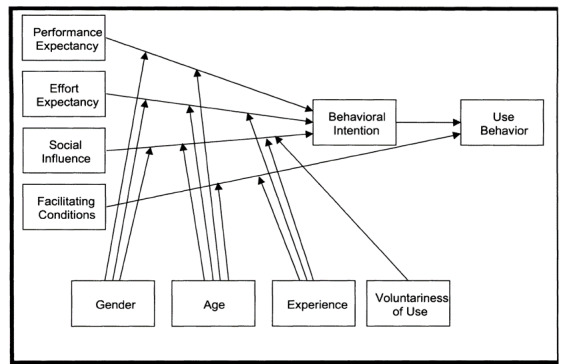
Using the Unified Theory of Acceptance and Use of Technology (UTAUT) as the theoretical framework, this study aims at identifying predictors of patient intention to utilize the Ministry of National Guard-Health Affairs PHR (MNGHA Care) app.

METHODS

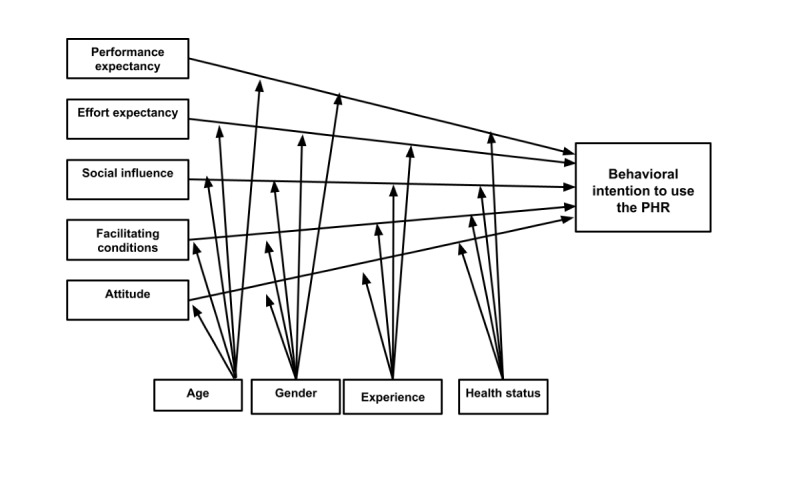
Using secondary data from a cross-sectional survey, data measuring the intention to use the MNGHA Care app, along with its predictors, were collected from among adults (n=324) visiting Ministry of National Guard-Health Affairs facilities in Riyadh, Jeddah, Dammam, Madinah, Al Ahsa, and Qassim. The relationship of predictors (main theory constructs) and moderators (age, gender, and experience with health apps) with the dependent variable (intention to use MNGHA Care) was tested using hierarchical multiple regression.

RESULTS

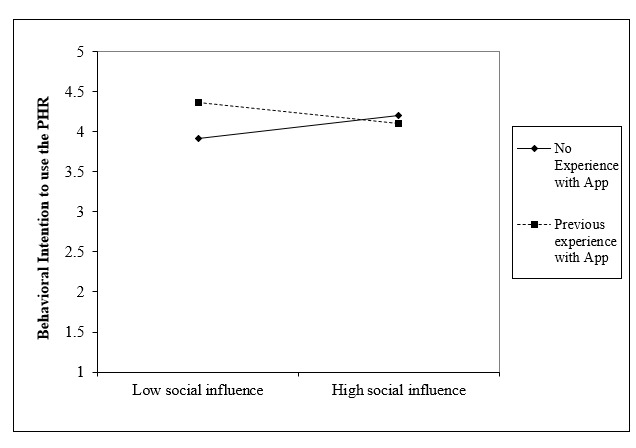
Of the eligible population, a total of 261 adult patients were included in the analysis. They had a mean age of 35.07 (SD 9.61) years, 50.6 % were male (n=132), 45.2% had university-level education (n=118), and 53.3% had at least 1 chronic medical condition (n=139). The model explained 48.9% of the variance in behavioral intention to use the PHR (P=.38). Performance expectancy, effort expectancy, and positive attitude were significantly associated with behavioral intention to use the PHR (P<.05). Prior experience with health apps moderated the relationship between social influence and behavioral intention to use the PHR (P=.04).

CONCLUSIONS

This study contributes to the existing literature on PHR adoption broadly as well as in the context of the Kingdom of Saudi Arabia. Understanding which factors are associated with patient adoption of PHRs can guide future development and support the country's aim of transforming the health care system. Similar to previous studies on PHR adoption, performance expectancy, effort expectancy, and positive attitude are important factors, and practical consideration should be given to support these areas.

摘要

背景

随着信息通信技术在医疗保健领域的应用日益广泛,患者被鼓励使用诸如个人健康记录(PHR)等电子健康工具,以获得更好的健康和幸福服务。个人健康记录支持以患者为中心的护理和患者参与。为支持沙特阿拉伯王国实现2030年愿景目标,国家转型计划提供了一个框架,用于利用个人健康记录实现医疗保健的三重目标——增加可及性、降低成本和提高护理质量,并提供以患者和个人为中心的护理。然而,该国对个人健康记录使用情况的研究有限。

目的

本研究以技术接受与使用统一理论(UTAUT)为理论框架,旨在确定患者使用国民卫队卫生事务部个人健康记录(MNGHA Care)应用程序意愿的预测因素。

方法

利用横断面调查的二手数据,从利雅得、吉达、达曼、麦地那、艾哈萨和卡西姆等地访问国民卫队卫生事务部设施的成年人(n = 324)中收集衡量使用MNGHA Care应用程序意愿及其预测因素的数据。使用分层多元回归检验预测因素(主要理论结构)和调节因素(年龄、性别以及健康应用程序使用经验)与因变量(使用MNGHA Care的意愿)之间的关系。

结果

在符合条件的人群中,共有261名成年患者纳入分析。他们的平均年龄为35.07(标准差9.61)岁,50.6%为男性(n = 132),45.2%拥有大学学历(n = 118),53.3%至少患有一种慢性疾病(n = 139)。该模型解释了使用个人健康记录行为意愿中48.9%的方差(P =.38)。绩效期望、努力期望和积极态度与使用个人健康记录的行为意愿显著相关(P <.05)。健康应用程序的既往使用经验调节了社会影响与使用个人健康记录行为意愿之间的关系(P =.04)。

结论

本研究对关于个人健康记录采用的现有文献做出了贡献,无论是在广义上还是在沙特阿拉伯王国背景下。了解哪些因素与患者采用个人健康记录相关,可以为未来的发展提供指导,并支持该国医疗保健系统转型的目标。与先前关于个人健康记录采用的研究类似,绩效期望、努力期望和积极态度是重要因素,应给予实际考虑以支持这些方面。
https://cdn.ncbi.nlm.nih.gov/pmc/blobs/5590/8408759/1df5cf3b4f29/medinform_v9i8e30214_fig3.jpg
https://cdn.ncbi.nlm.nih.gov/pmc/blobs/5590/8408759/b422ca684d64/medinform_v9i8e30214_fig1.jpg
https://cdn.ncbi.nlm.nih.gov/pmc/blobs/5590/8408759/518a782b8c6f/medinform_v9i8e30214_fig2.jpg
https://cdn.ncbi.nlm.nih.gov/pmc/blobs/5590/8408759/1df5cf3b4f29/medinform_v9i8e30214_fig3.jpg
https://cdn.ncbi.nlm.nih.gov/pmc/blobs/5590/8408759/b422ca684d64/medinform_v9i8e30214_fig1.jpg
https://cdn.ncbi.nlm.nih.gov/pmc/blobs/5590/8408759/518a782b8c6f/medinform_v9i8e30214_fig2.jpg
https://cdn.ncbi.nlm.nih.gov/pmc/blobs/5590/8408759/1df5cf3b4f29/medinform_v9i8e30214_fig3.jpg

相似文献

1
Predicting Patients' Intention to Use a Personal Health Record Using an Adapted Unified Theory of Acceptance and Use of Technology Model: Secondary Data Analysis.使用技术接受与使用统一理论模型的改编版预测患者使用个人健康记录的意愿:二次数据分析
JMIR Med Inform. 2021 Aug 17;9(8):e30214. doi: 10.2196/30214.
2
Health Care Providers' Acceptance of a Personal Health Record: Cross-sectional Study.医疗保健提供者对个人健康记录的接受度:横断面研究。
J Med Internet Res. 2021 Oct 21;23(10):e31582. doi: 10.2196/31582.
3
Adoption of a Personal Health Record in the Digital Age: Cross-Sectional Study.个人健康记录在数字时代的采用:横断面研究。
J Med Internet Res. 2020 Oct 28;22(10):e22913. doi: 10.2196/22913.
4
The Use of a Technology Acceptance Model (TAM) to Predict Patients' Usage of a Personal Health Record System: The Role of Security, Privacy, and Usability.使用技术接受模型(TAM)预测患者对个人健康记录系统的使用:安全性、隐私性和可用性的作用。
Int J Environ Res Public Health. 2023 Jan 11;20(2):1347. doi: 10.3390/ijerph20021347.
5
Predicting Health Care Providers' Acceptance of a Personal Health Record Secure Messaging Feature.预测医疗保健提供者对个人健康记录安全消息功能的接受程度。
Appl Clin Inform. 2022 Jan;13(1):148-160. doi: 10.1055/s-0041-1742217. Epub 2022 Feb 9.
6
If we offer it, will they accept? Factors affecting patient use intentions of personal health records and secure messaging.如果我们提供它,他们会接受吗?影响患者对个人健康记录和安全消息传递使用意愿的因素。
J Med Internet Res. 2013 Feb 26;15(2):e43. doi: 10.2196/jmir.2243.
7
Perceived challenges for adopting the Personal Health Record (PHR) at Ministry of National Guard Health Affairs (MNGHA)- Riyadh.沙特国民卫队卫生事务部(利雅得)采用个人健康记录(PHR)所面临的感知挑战。
Online J Public Health Inform. 2016 Dec 28;8(3):e205. doi: 10.5210/ojphi.v8i3.6845. eCollection 2016.
8
Factors Influencing Patients' Intentions to Use Diabetes Management Apps Based on an Extended Unified Theory of Acceptance and Use of Technology Model: Web-Based Survey.基于扩展的技术接受与使用统一理论模型探讨影响患者使用糖尿病管理应用程序意愿的因素:网络调查
J Med Internet Res. 2019 Aug 13;21(8):e15023. doi: 10.2196/15023.
9
Modeling the adoption of personal health record (PHR) among individual: the effect of health-care technology self-efficacy and gender concern.个体层面个人健康记录(PHR)采用情况的建模:医疗保健技术自我效能感和性别因素的影响。
Libyan J Med. 2018 Dec;13(1):1500349. doi: 10.1080/19932820.2018.1500349.
10
The Mediating Influence of the Unified Theory of Acceptance and Use of Technology on the Relationship Between Internal Health Locus of Control and Mobile Health Adoption: Cross-sectional Study.统一科技接受与使用理论在内部控制健康源与移动医疗采纳关系中的中介作用:横断面研究。
J Med Internet Res. 2021 Dec 29;23(12):e28086. doi: 10.2196/28086.

引用本文的文献

1
Factors influencing patients' willingness to share their digital health data for primary and secondary use: A theory- and evidence-based overview of reviews.影响患者分享其数字健康数据用于一级和二级用途意愿的因素:基于理论和证据的综述概述
Digit Health. 2025 Jun 30;11:20552076251340254. doi: 10.1177/20552076251340254. eCollection 2025 Jan-Dec.
2
Intention to use personal health records and associated factors among healthcare providers in southwest Oromia region referral hospitals, Ethiopia: using the modified unified theory of acceptance and use technology 2 model.埃塞俄比亚奥罗米亚地区西南部转诊医院医护人员使用个人健康记录的意愿及相关因素:采用改进的技术接受与使用统一理论2模型
Front Digit Health. 2025 Feb 25;7:1368588. doi: 10.3389/fdgth.2025.1368588. eCollection 2025.
3

本文引用的文献

1
Factors affecting the acceptance of integrated electronic personal health records in Saudi Arabia: The impact of e-health literacy.影响沙特阿拉伯民众接受整合型电子个人健康记录的因素:电子健康素养的影响。
Health Inf Manag. 2022 May;51(2):98-109. doi: 10.1177/1833358320964899. Epub 2020 Nov 28.
2
Patients' Adoption of Electronic Personal Health Records in England: Secondary Data Analysis.英格兰电子个人健康记录在患者中的采用情况:二次数据分析。
J Med Internet Res. 2020 Oct 7;22(10):e17499. doi: 10.2196/17499.
3
Adoption of a Personal Health Record in the Digital Age: Cross-Sectional Study.
Understanding Psychosocial Barriers to Healthcare Technology Adoption: A Review of TAM Technology Acceptance Model and Unified Theory of Acceptance and Use of Technology and UTAUT Frameworks.理解医疗技术采用中的社会心理障碍:技术接受模型(TAM)、技术接受与使用统一理论(UTAUT)框架综述
Healthcare (Basel). 2025 Jan 27;13(3):250. doi: 10.3390/healthcare13030250.
4
Intention to use personal health record system and its predictors among chronic patients enrolled at public hospitals in Bahir Dar city, northwest Ethiopia: using modified UTAUT2 model.埃塞俄比亚西北部巴赫达尔市公立医院登记的慢性病患者使用个人健康记录系统的意向及其预测因素:采用改进的UTAUT2模型
Front Med (Lausanne). 2024 Sep 4;11:1421559. doi: 10.3389/fmed.2024.1421559. eCollection 2024.
5
Understanding the use intention and influencing factors of telerehabilitation in people with rehabilitation needs: a cross-sectional survey.了解康复需求人群对远程康复的使用意愿及其影响因素:一项横断面调查。
Front Public Health. 2023 Oct 31;11:1274080. doi: 10.3389/fpubh.2023.1274080. eCollection 2023.
6
Acceptance and Usability of an Innovative mDentistry eHygiene Model Amid the COVID-19 Pandemic Within the US National Dental Practice-Based Research Network: Mixed Methods Study.美国国家基于牙科实践的研究网络中,创新型移动牙科电子卫生模型在新冠疫情期间的接受度与可用性:混合方法研究
JMIR Hum Factors. 2023 Aug 18;10:e45418. doi: 10.2196/45418.
7
Exploring factors that influence the behavioural intention of medical students to use 3D gastroscopic model to learn how to operate gastroscope using UTAUT Model.探讨影响医学生使用 3D 胃镜模型学习胃镜操作行为意向的因素,使用 UTAUT 模型。
BMC Med Educ. 2023 Aug 7;23(1):554. doi: 10.1186/s12909-023-04532-6.
8
The Use of a Technology Acceptance Model (TAM) to Predict Patients' Usage of a Personal Health Record System: The Role of Security, Privacy, and Usability.使用技术接受模型(TAM)预测患者对个人健康记录系统的使用:安全性、隐私性和可用性的作用。
Int J Environ Res Public Health. 2023 Jan 11;20(2):1347. doi: 10.3390/ijerph20021347.
9
Canadian Older Adults' Intention to Use an Electronic Decision Aid for Housing Decisions: Cross-sectional Web-Based Survey.加拿大老年人使用电子决策辅助工具进行住房决策的意向:基于网络的横断面调查。
JMIR Aging. 2023 Jan 18;6:e43106. doi: 10.2196/43106.
10
Predicting Health Care Providers' Acceptance of a Personal Health Record Secure Messaging Feature.预测医疗保健提供者对个人健康记录安全消息功能的接受程度。
Appl Clin Inform. 2022 Jan;13(1):148-160. doi: 10.1055/s-0041-1742217. Epub 2022 Feb 9.
个人健康记录在数字时代的采用:横断面研究。
J Med Internet Res. 2020 Oct 28;22(10):e22913. doi: 10.2196/22913.
4
Barriers to patient, provider, and caregiver adoption and use of electronic personal health records in chronic care: a systematic review.慢性病患者、医护人员和照护者采用和使用电子个人健康记录的障碍:系统综述。
BMC Med Inform Decis Mak. 2020 Jul 8;20(1):153. doi: 10.1186/s12911-020-01159-1.
5
The Determinants of M-Health Adoption in Developing Countries: An Empirical Investigation.发展中国家移动医疗采纳的决定因素:实证研究。
Appl Clin Inform. 2019 Oct;10(5):820-840. doi: 10.1055/s-0039-1697906. Epub 2019 Oct 30.
6
Patient and Health Care Provider Experiences With a Recently Introduced Patient Portal in an Academic Hospital in the Netherlands: Mixed Methods Study.荷兰一家学术医院中患者和医疗服务提供者对最近引入的患者门户网站的体验:混合方法研究。
J Med Internet Res. 2019 Aug 20;21(8):13743. doi: 10.2196/13743.
7
A systematic review of the adoption and acceptance of eHealth in Saudi Arabia: Views of multiple stakeholders.沙特阿拉伯电子健康采纳和接受的系统评价:多方利益相关者的观点。
Int J Med Inform. 2019 Aug;128:7-17. doi: 10.1016/j.ijmedinf.2019.05.007. Epub 2019 May 13.
8
Factors that affect the use of electronic personal health records among patients: A systematic review.影响患者使用电子个人健康记录的因素:系统评价。
Int J Med Inform. 2019 Jun;126:164-175. doi: 10.1016/j.ijmedinf.2019.03.014. Epub 2019 Apr 5.
9
The Challenges in Personal Health Record Adoption.个人健康记录采用面临的挑战。
J Healthc Manag. 2019 Mar-Apr;64(2):104-109. doi: 10.1097/JHM-D-17-00191.
10
Is the single self-rated health item reliable in India? A construct validity study.在印度,单一的自我评定健康项目可靠吗?一项结构效度研究。
BMJ Glob Health. 2018 Nov 9;3(6):e000856. doi: 10.1136/bmjgh-2018-000856. eCollection 2018.