
临床药理学家在精准医学中的贡献:改善医疗保健的契机。
The Contribution of Clinical Pharmacologists in Precision Medicine: An Opportunity for Health Care Improvement.
作者信息
Grisafi Davide, Ceschi Alessandro, Avalos Clerici Veronica, Scaglione Francesco
机构信息
Department of Biotechnology and Translational Medicine, University of Milano, Via Vanvitelli, 32 20129 MILANO (MI), Milan, Italy.
Division of Clinical Pharmacology and Toxicology, Institute of Pharmacological Sciences of Southern Switzerland, Ente Ospedaliero Cantonale, Lugano, Switzerland.
出版信息
Curr Ther Res Clin Exp. 2021 Apr 1;94:100628. doi: 10.1016/j.curtheres.2021.100628. eCollection 2021.
BACKGROUND
Clinical pharmacologists play an important role and have professional value in the field, especially regarding their role within precision medicine (PM) and personalized therapies.
OBJECTIVE
In this work, we sought to stimulate debate on the role of clinical pharmacologists.
METHODS
A literature review was conducted according to the Preferred Reporting Items for Systematic Reviews and Meta-Analyses statement, through electronic consultation of 2 databases, PubMed/Medline and Embase, and Google Scholar with manual research taking into account the peer-reviewed literature such as observational studies, reviews, original research articles, comments, mini-reviews, and opinion papers published in English between 2010 and February 2020. Titles and abstracts were screened by 1 author, and studies identified for full-text analysis and selected according to inclusion criteria were agreed on by 2 reviewers.
RESULTS
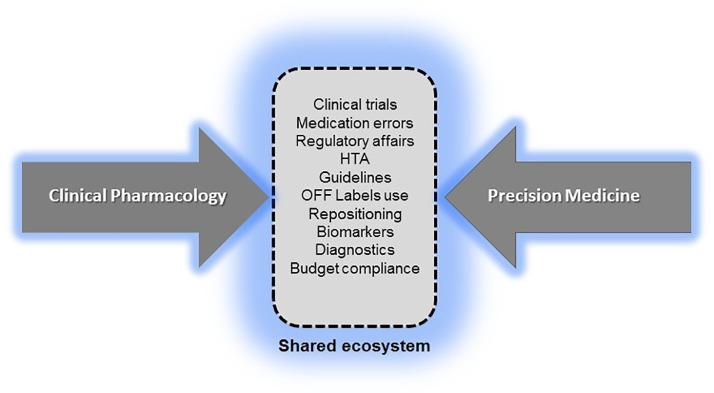
We identified a total of 535 peer-reviewed articles and the number of full texts eligible for the project was 43. Several publications highlight the clinical value of pharmacologists in highly complex hospitals, where the strategies of PM are implemented. Although there are still no studies measuring the clinical efficiency and the efficacy of clinical pharmacology services, and the applicability of PM protocols, this review shows the considerable debate around the future mission of clinical pharmacology services as a bridging discipline capable of combining the complex knowledge and different professional skills needed to fully implement PM.
CONCLUSIONS
Various strategies have been conceived and planned to facilitate the transition from mainstream medicine to PM, which will enable patients to be treated more accurately, with significant advantages in terms of safety and effectiveness of treatments. Therefore, in the future, to ensure that the evolutionary process of medicine can involve as many patients and caregivers as possible, infrastructures capable of bringing together different multidisciplinary skills among health professionals will have to be implemented. Clinical pharmacologists could be the main drivers of this strategy because they already, with their multidisciplinary training, operate in a series of services in high-level hospitals, facilitating the clinical governance of the most challenging patients. The implementation of these strategies will lastly allow national health organizations to adequately address the management and therapeutic challenges related to the advent of new drugs and cell and gene therapies by facilitating the removal of economic and organizational barriers to ensure equitable access to PM. ( 2021; 82:XXX-XXX).
背景
临床药理学家在该领域发挥着重要作用且具有专业价值,尤其是在精准医学(PM)和个性化治疗方面。
目的
在本研究中,我们试图引发关于临床药理学家作用的讨论。
方法
根据系统评价和Meta分析的首选报告项目声明进行文献综述,通过电子检索两个数据库(PubMed/Medline和Embase)以及谷歌学术,并进行人工检索,纳入2010年至2020年2月期间发表的英文同行评议文献,如观察性研究、综述、原创研究文章、评论、小型综述和观点论文。由1名作者筛选标题和摘要,经2名评审员商定,确定进行全文分析并根据纳入标准选择的研究。
结果
我们共识别出535篇同行评议文章,符合该项目要求的全文有43篇。一些出版物强调了药理学家在实施PM策略的高度复杂医院中的临床价值。尽管目前仍没有研究衡量临床药理学服务的临床效率和疗效以及PM方案的适用性,但本综述表明,围绕临床药理学服务作为一门能够整合全面实施PM所需的复杂知识和不同专业技能的桥梁学科的未来使命,存在着相当多的讨论。
结论
已经构思并规划了各种策略以促进从主流医学向PM的转变,这将使患者得到更精准的治疗,在治疗安全性和有效性方面具有显著优势。因此,未来为确保医学的进化过程能够惠及尽可能多的患者和护理人员,必须建立能够整合卫生专业人员不同多学科技能的基础设施。临床药理学家可能是这一策略的主要推动者,因为凭借其多学科培训,他们已经在高水平医院的一系列服务中发挥作用,为最具挑战性的患者提供临床管理便利。这些策略的实施最终将使国家卫生组织能够通过消除经济和组织障碍,确保公平获得PM,从而充分应对与新药以及细胞和基因疗法出现相关的管理和治疗挑战。(2021;82:XXX - XXX)

 Zotero 插件