School of Biological Sciences and the Institute of Agriculture, Faculty of Science, The University of Western Australia, Crawley, WA, Australia.
Plant Molecular Biology and Biotechnology Laboratory, Faculty of Veterinary and Agricultural Sciences, University of Melbourne, Parkville, VIC, Australia.
Plant Biotechnol J. 2021 Dec;19(12):2488-2500. doi: 10.1111/pbi.13674. Epub 2021 Aug 24.
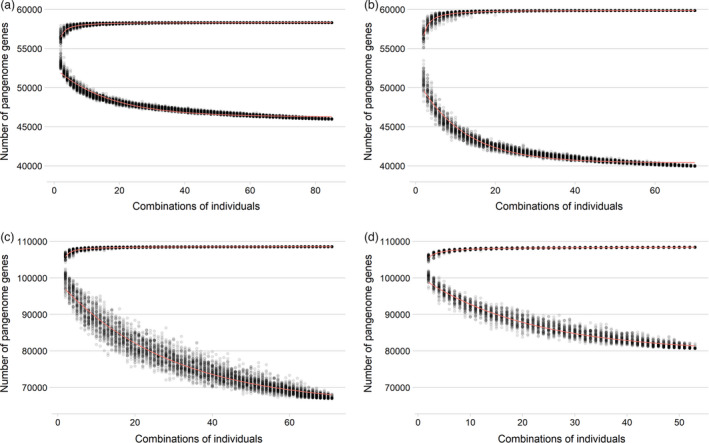
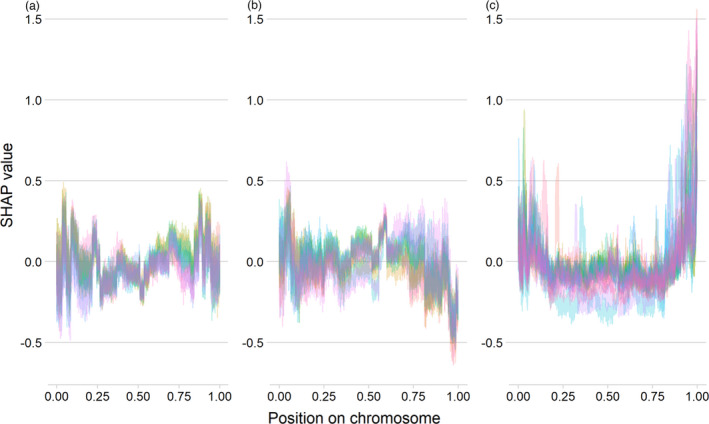
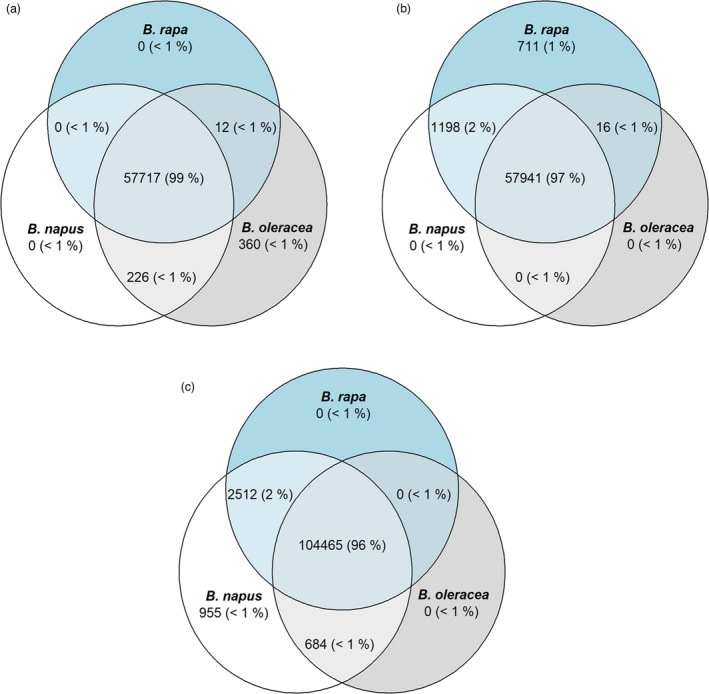
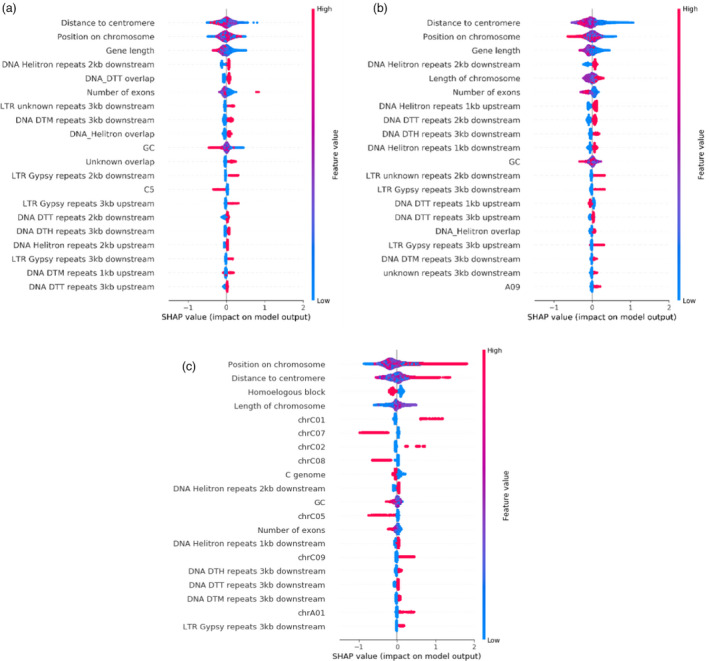
Plant genomes demonstrate significant presence/absence variation (PAV) within a species; however, the factors that lead to this variation have not been studied systematically in Brassica across diploids and polyploids. Here, we developed pangenomes of polyploid Brassica napus and its two diploid progenitor genomes B. rapa and B. oleracea to infer how PAV may differ between diploids and polyploids. Modelling of gene loss suggests that loss propensity is primarily associated with transposable elements in the diploids while in B. napus, gene loss propensity is associated with homoeologous recombination. We use these results to gain insights into the different causes of gene loss, both in diploids and following polyploidization, and pave the way for the application of machine learning methods to understanding the underlying biological and physical causes of gene presence/absence.
植物基因组在同一物种内表现出显著的存在/缺失变异(PAV);然而,导致这种变异的因素在 Brassica 属的二倍体和多倍体中尚未得到系统研究。在这里,我们构建了多倍体油菜及其两个二倍体祖先基因组甘蓝和白菜的泛基因组,以推断 PAV 在二倍体和多倍体之间可能存在的差异。基因丢失模型表明,在二倍体中,基因丢失倾向主要与转座元件有关,而在油菜中,基因丢失倾向与同源重组有关。我们利用这些结果深入了解基因丢失的不同原因,包括在二倍体中和多倍体化后,并为应用机器学习方法理解基因存在/缺失的潜在生物学和物理原因铺平了道路。