Fujian Provincial Key Laboratory of Haixia Applied Plant Systems Biology, Key Laboratory of Ministry of Education for Genetics & Breeding and Multiple Utilization of Crops, College of Agriculture, Fujian Agriculture and Forestry University, Fuzhou, China.
The Key Laboratory of Biology and Genetic Improvement of Oil Crops, The Ministry of Agriculture and Rural Affairs of PRC, Oil Crops Research Institute, Chinese Academy of Agricultural Sciences, Wuhan, China.
Plant Biotechnol J. 2021 Mar;19(3):615-630. doi: 10.1111/pbi.13493. Epub 2020 Nov 20.
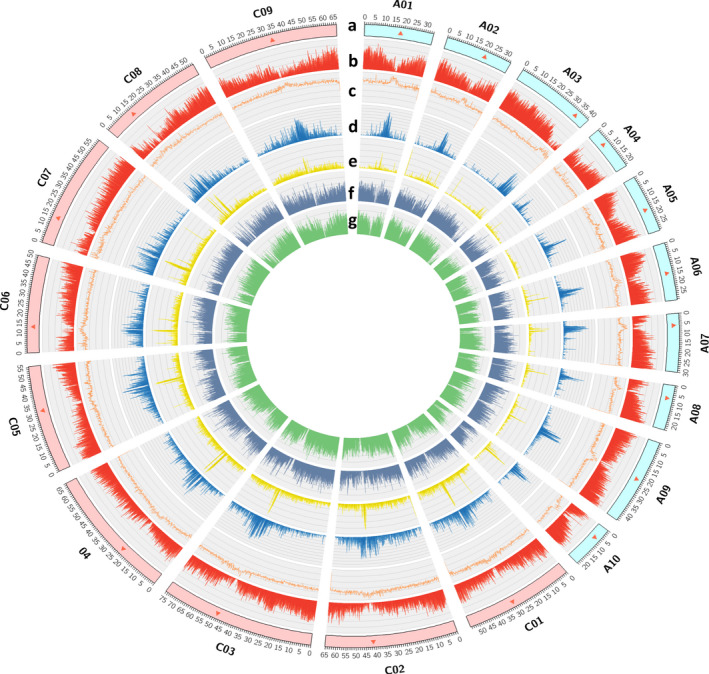
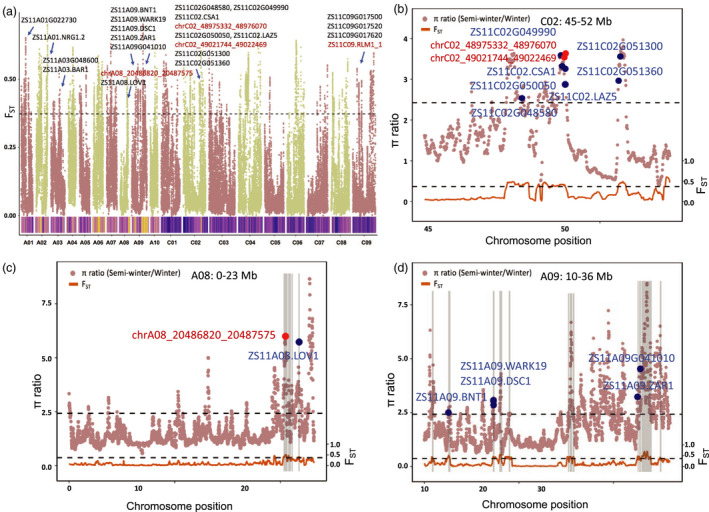
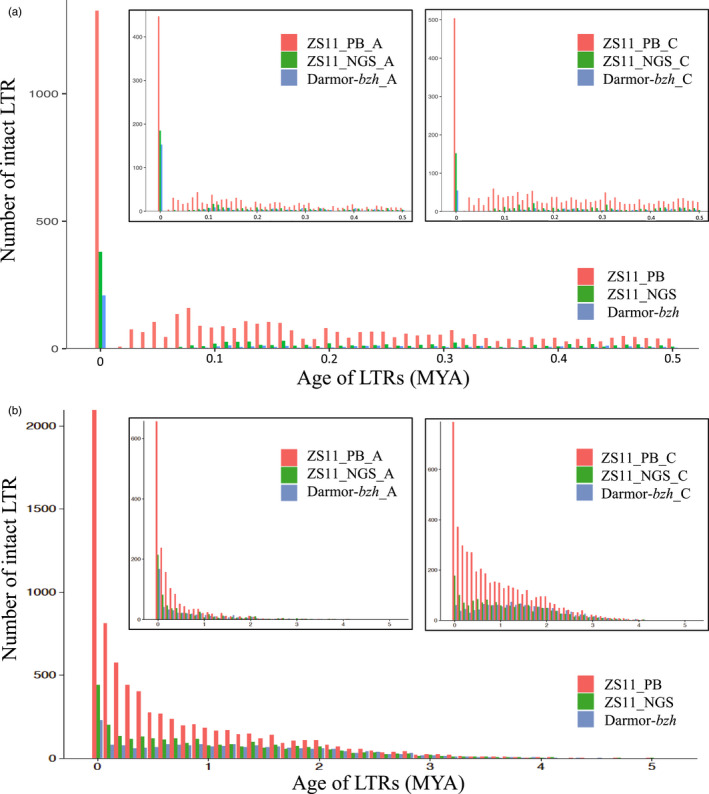
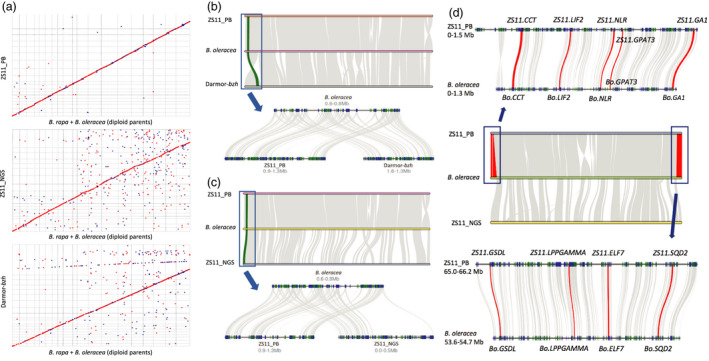
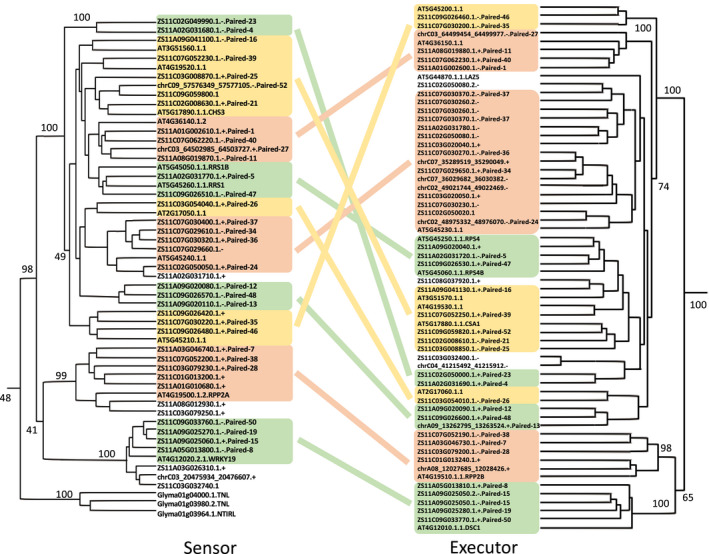
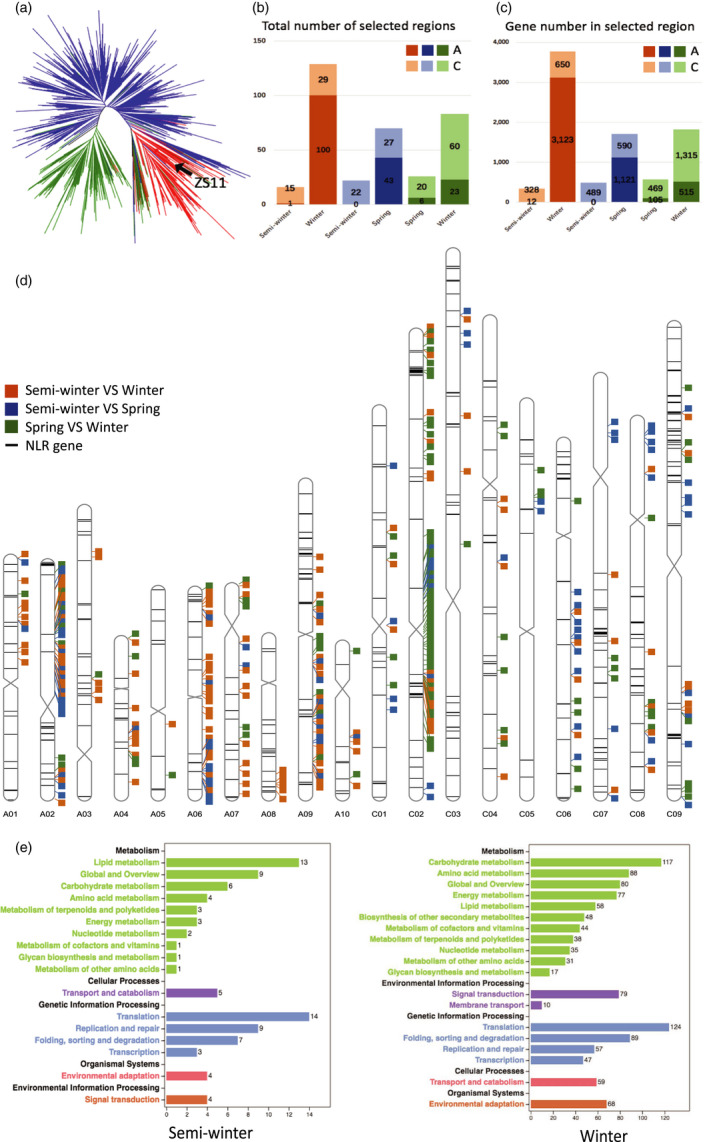
Rapeseed (Brassica napus L.) is a recent allotetraploid crop, which is well known for its high oil production. Here, we report a high-quality genome assembly of a typical semi-winter rapeseed cultivar, 'Zhongshuang11' (hereafter 'ZS11'), using a combination of single-molecule sequencing and chromosome conformation capture (Hi-C) techniques. Most of the high-confidence sequences (93.1%) were anchored to the individual chromosomes with a total of 19 centromeres identified, matching the exact chromosome count of B. napus. The repeat sequences in the A and C subgenomes in B. napus expanded significantly from 500 000 years ago, especially over the last 100 000 years. These young and recently amplified LTR-RTs showed dispersed chromosomal distribution but significantly preferentially clustered into centromeric regions. We exhaustively annotated the nucleotide-binding leucine-rich repeat (NLR) gene repertoire, yielding a total of 597 NLR genes in B. napus genome and 17.4% of which are paired (head-to-head arrangement). Based on the resequencing data of 991 B. napus accessions, we have identified 18 759 245 single nucleotide polymorphisms (SNPs) and detected a large number of genomic regions under selective sweep among the three major ecotype groups (winter, semi-winter and spring) in B. napus. We found 49 NLR genes and five NLR gene pairs colocated in selective sweep regions with different ecotypes, suggesting a rapid diversification of NLR genes during the domestication of B. napus. The high quality of our B. napus 'ZS11' genome assembly could serve as an important resource for the study of rapeseed genomics and reveal the genetic variations associated with important agronomic traits.
油菜(甘蓝型油菜)是一种最近的异源四倍体作物,以其高油产量而闻名。在这里,我们报告了一种典型的半冬油菜品种“中双 11”(以下简称“ZS11”)的高质量基因组组装,该组装结合了单分子测序和染色体构象捕获(Hi-C)技术。大多数高可信度序列(93.1%)被锚定到单个染色体上,总共鉴定出 19 个着丝粒,与油菜的准确染色体数相匹配。油菜 A 和 C 亚基因组中的重复序列从 50 万年前开始显著扩张,尤其是在过去 10 万年。这些年轻且最近扩增的 LTR-RTs 呈分散的染色体分布,但明显优先聚集在着丝粒区域。我们详尽地注释了核苷酸结合亮氨酸重复(NLR)基因库,共鉴定出油菜基因组中的 597 个 NLR 基因,其中 17.4%是成对的(头对头排列)。基于 991 个油菜品种的重测序数据,我们鉴定出了 18759245 个单核苷酸多态性(SNP),并在油菜的三个主要生态型组(冬、半冬和春)中检测到大量基因组区域受到选择压力的影响。我们发现 49 个 NLR 基因和 5 个 NLR 基因对位于不同生态型的选择压力区域,表明在油菜的驯化过程中 NLR 基因的快速多样化。我们油菜“ZS11”基因组组装的高质量可以作为油菜基因组学研究的重要资源,并揭示与重要农艺性状相关的遗传变异。