Department of Translational Neuroscience, State Key Laboratory of Medical Neurobiology, MOE Frontiers Center for Brain Science, Jing' an District Centre Hospital of Shanghai Institutes of Brain Science, Fudan University, Shanghai, China.
Shanghai Engineering Research Center for Model Organisms, Shanghai Model Organisms Center, INC, Shanghai, China.
Cell Prolif. 2021 Aug;54(8):e13094. doi: 10.1111/cpr.13094. Epub 2021 Jul 26.
Parkinson's disease (PD) is a common neurodegenerative disorder characterized by the progressive and selective degeneration of dopaminergic neurons. Microglial activation and neuroinflammation are associated with the pathogenesis of PD. However, the relationship between microglial activation and PD pathology remains to be explored.
An acute regimen of MPTP was administered to adult C57BL/6J mice with normal, much reduced or repopulated microglial population. Damages of the dopaminergic system were comprehensively assessed. Inflammation-related factors were assessed by quantitative PCR and Multiplex immunoassay. Behavioural tests were carried out to evaluate the motor deficits in MPTP-challenged mice.
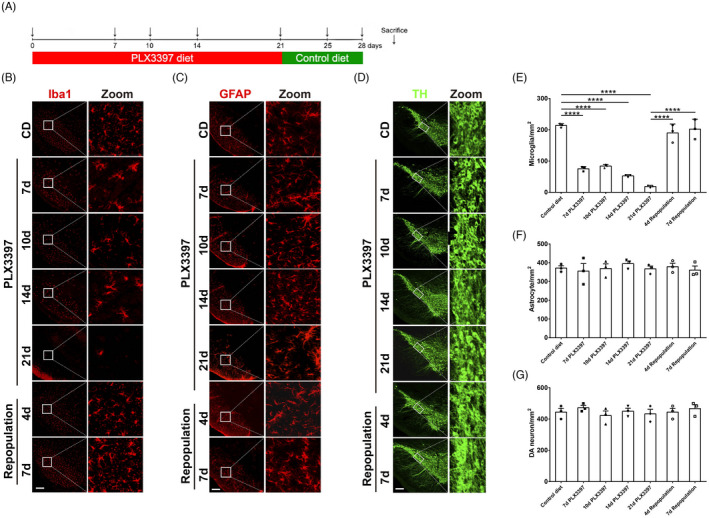
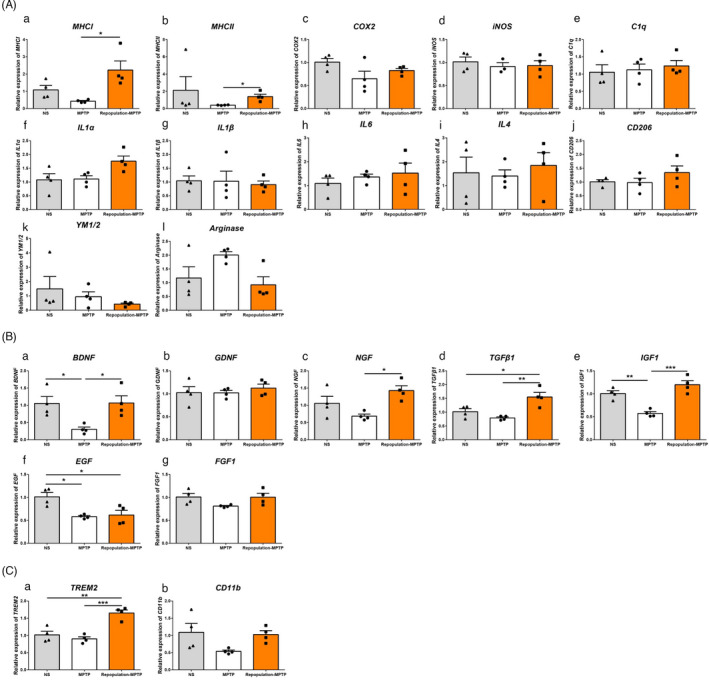
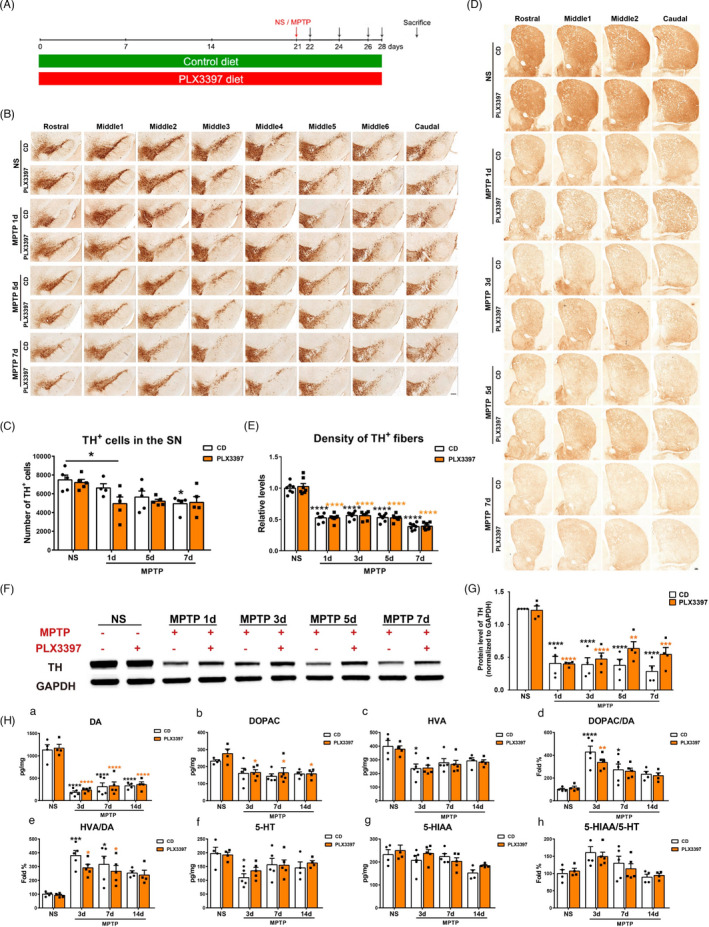
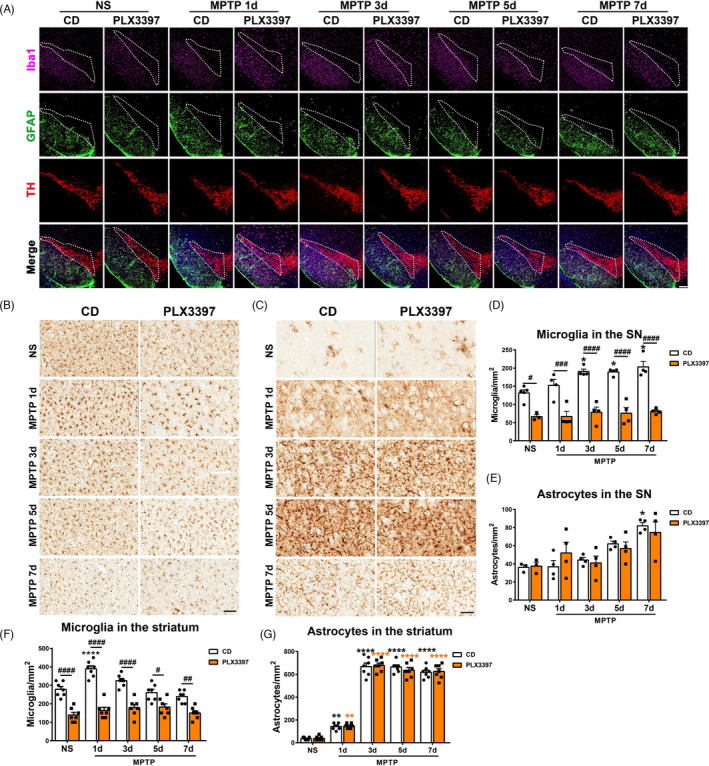
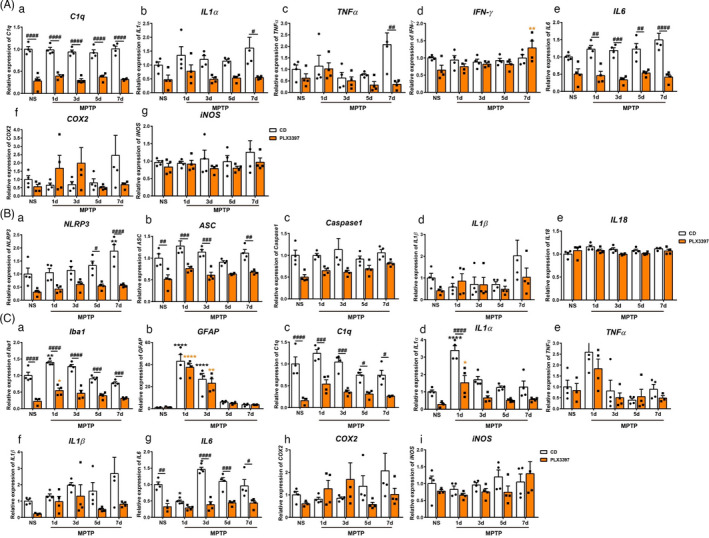
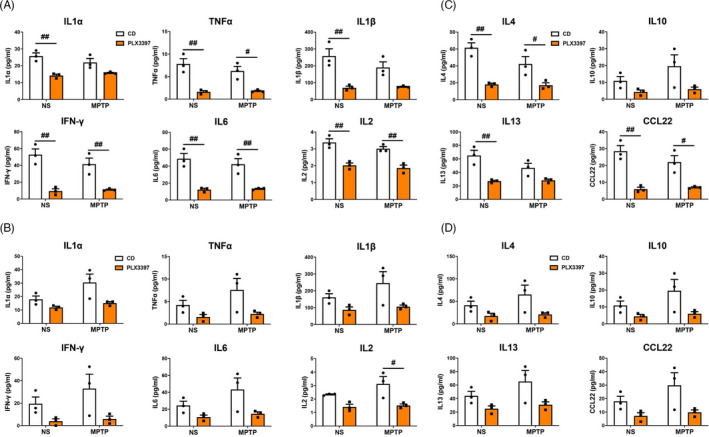
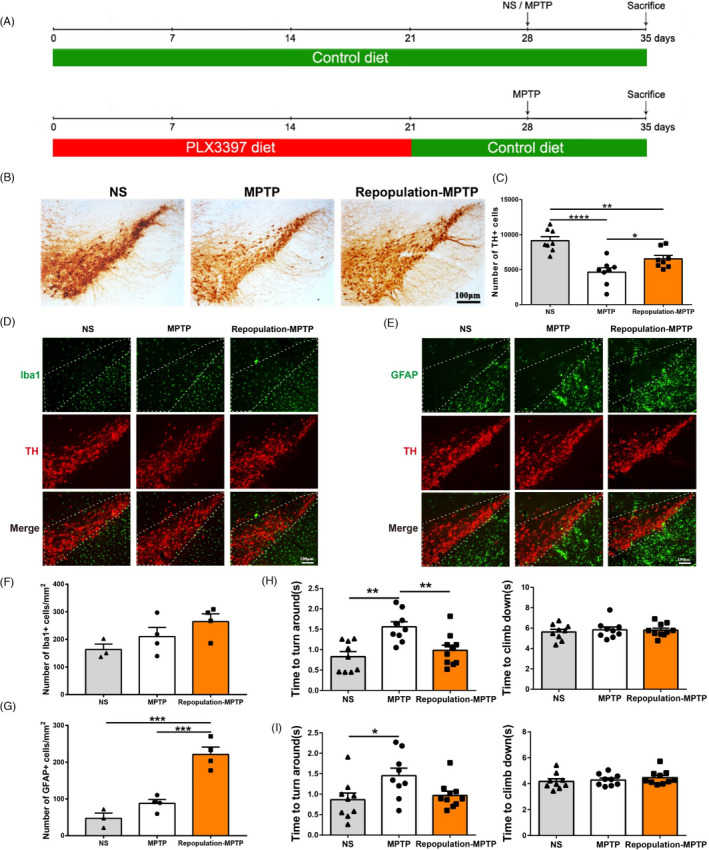
The receptor for colony-stimulating factor 1 inhibitor PLX3397 could effectively deplete microglia in the nigrostriatal pathway of mice via feeding a PLX3397-formulated diet for 21 days. Microglial depletion downregulated both pro-inflammatory and anti-inflammatory molecule expression at baseline and after MPTP administration. At 1d post-MPTP injection, dopaminergic neurons showed a significant reduction in PLX3397-fed mice, but not in control diet (CD)-fed mice. However, partial microglial depletion in mice exerted little effect on MPTP-induced dopaminergic injuries compared with CD mice at later time points. Interestingly, microglial repopulation brought about apparent resistance to MPTP intoxication.
Microglia can inhibit PD development at a very early stage; partial microglial depletion has little effect in terms of the whole process of the disease; and microglial replenishment elicits neuroprotection in PD mice.
帕金森病(PD)是一种常见的神经退行性疾病,其特征是多巴胺能神经元进行性和选择性退化。小胶质细胞激活和神经炎症与 PD 的发病机制有关。然而,小胶质细胞激活与 PD 病理学之间的关系仍有待探索。
用正常、大量减少或重新填充小胶质细胞群体的成年 C57BL/6J 小鼠给予急性 MPTP 方案。全面评估多巴胺能系统的损伤。通过定量 PCR 和多重免疫测定评估炎症相关因子。进行行为测试以评估 MPTP 挑战小鼠的运动缺陷。
集落刺激因子 1 抑制剂 PLX3397 的受体可通过用 PLX3397 配方饮食喂养 21 天有效地耗尽小鼠黑质纹状体通路中的小胶质细胞。小胶质细胞耗竭在基线和 MPTP 给药后下调了促炎和抗炎分子的表达。在 MPTP 注射后 1d,PLX3397 喂养的小鼠中多巴胺能神经元明显减少,但在对照饮食(CD)喂养的小鼠中则没有。然而,与 CD 小鼠相比,在后期时间点,小胶质细胞的部分耗竭对 MPTP 诱导的多巴胺能损伤几乎没有影响。有趣的是,小胶质细胞再填充导致 MPTP 中毒的明显抵抗。
小胶质细胞可以在非常早期阶段抑制 PD 的发展;部分小胶质细胞耗竭在疾病的整个过程中影响不大;小胶质细胞补充可在 PD 小鼠中产生神经保护作用。