Yanamandra Uday, Vardhan Vasu, Saxena Puneet, Singh Priyanka, Gupta Amul, Mulajkar Deepak, Grewal Rajan, Nair Velu
Department of Hematology & Stem Cell Transplant, Army Hospital (R&R), New Delhi, India.
Department of Pulmonology, Base Hospital, New Delhi, India.
Indian J Crit Care Med. 2021 Jun;25(6):668-674. doi: 10.5005/jp-journals-10071-23827.
High-altitude pulmonary edema (HAPE) is a common cause of hospitalization in high altitude areas with significant morbidity. The clinical presentation of HAPE can overlap with a broad spectrum of cardiopulmonary diseases. Also, it is associated with varied radiological manifestations mimicking other conditions and often leading to unnecessary and inappropriate treatment.
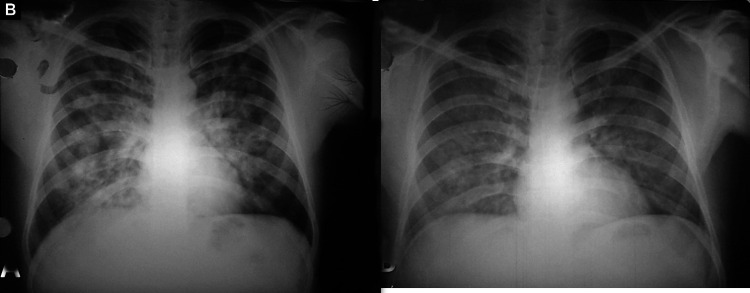
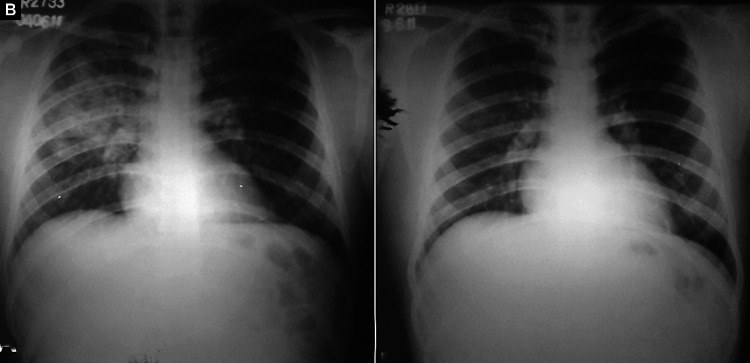
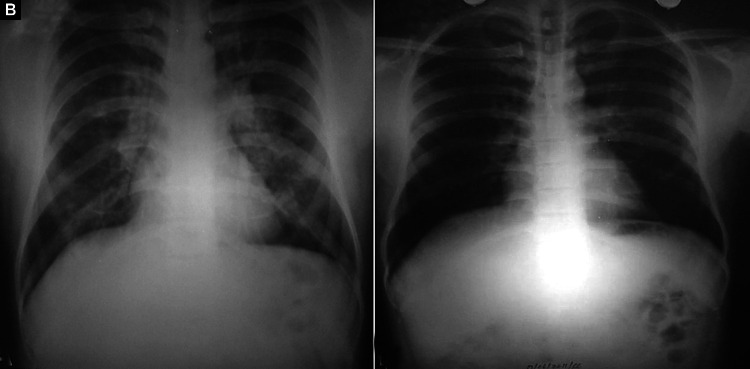
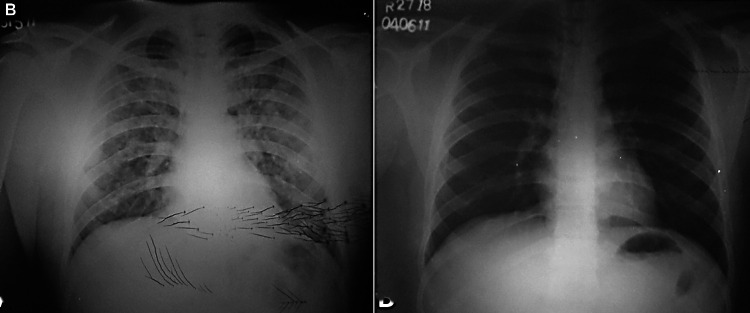
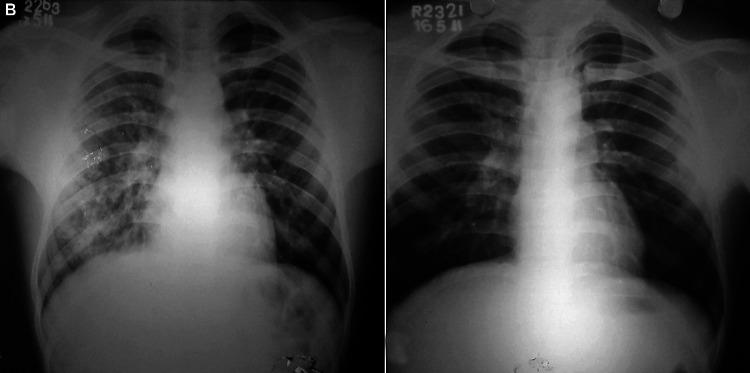
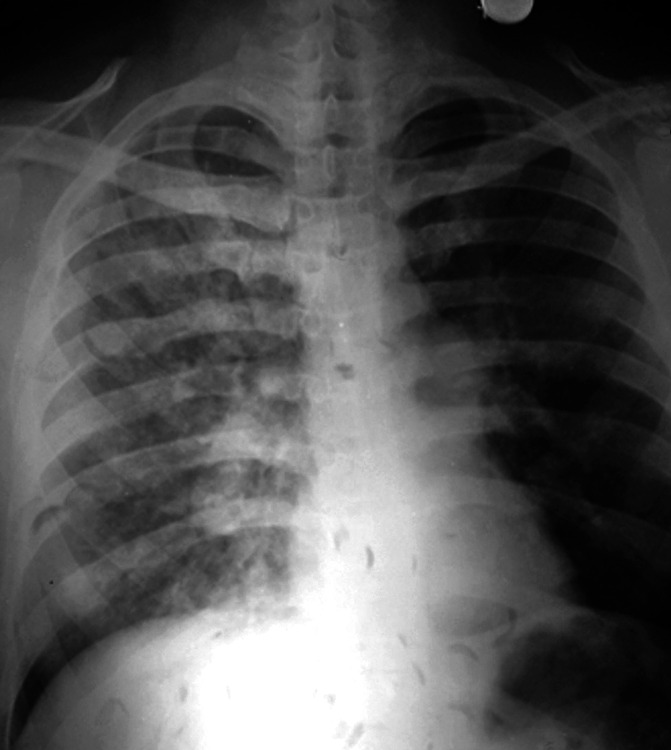
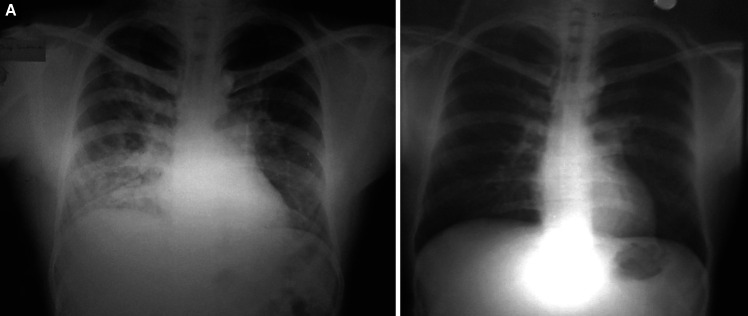
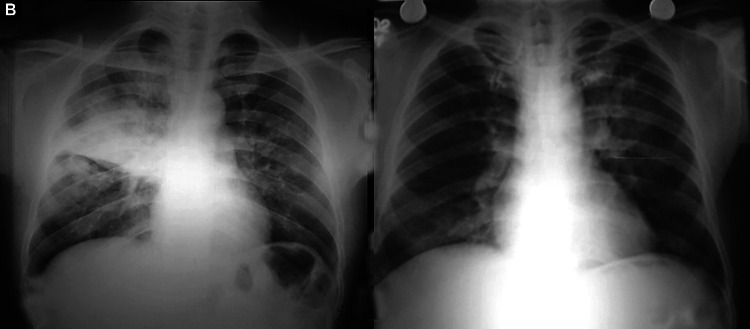
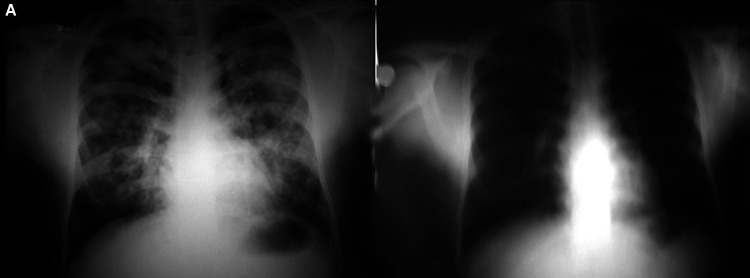
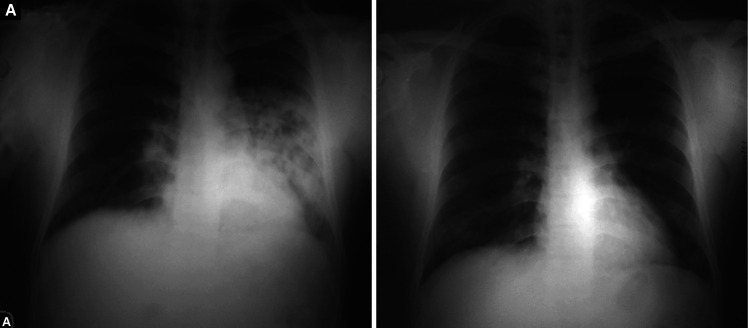
The primary aim of the study was to study the various radiological manifestations of HAPE through real-world chest radiographs. We present six different chest X-ray patterns of HAPE as a pictorial assay, at initial presentation, and after the resolution of symptoms with supplemental oxygen therapy and bed rest alone.
HAPE can present as bilateral symmetrical perihilar opacities, bilateral symmetrical diffuse opacities, unilateral diffuse opacities, bilateral asymmetrical focal opacities, and even lobar consolidation with lower zone or less commonly upper zonal predilection. These presentations can mimic many common conditions like heart failure, acute respiratory distress syndrome, pulmonary embolism, aspiration pneumonitis, pneumonia, malignancy, and tuberculosis.
A holistic clinical-radiological correlation coupled with analysis of the temporal course can help high-altitude physicians in differentiating true HAPE from its mimics.
Yanamandra U, Vardhan V, Saxena P, Singh P, Gupta A, Mulajkar D, . Radiographical Spectrum of High-altitude Pulmonary Edema: A Pictorial Essay. Indian J Crit Care Med 2021;25(6):668-674.
高原肺水肿(HAPE)是高海拔地区常见的住院原因,发病率较高。HAPE的临床表现可能与多种心肺疾病重叠。此外,它还具有多种类似其他病症的放射学表现,常常导致不必要和不恰当的治疗。
本研究的主要目的是通过实际的胸部X线片研究HAPE的各种放射学表现。我们展示了HAPE在初次就诊时以及仅通过补充氧气疗法和卧床休息症状缓解后的六种不同的胸部X线表现模式,作为一种图像分析。
HAPE可表现为双侧对称性肺门周围模糊影、双侧对称性弥漫性模糊影、单侧弥漫性模糊影、双侧不对称性局灶性模糊影,甚至出现肺叶实变,以下叶为主,较少以上叶为主。这些表现可模仿许多常见病症,如心力衰竭、急性呼吸窘迫综合征、肺栓塞、吸入性肺炎、肺炎、恶性肿瘤和肺结核。
全面的临床 - 放射学相关性以及对病程的分析有助于高原地区的医生将真正的HAPE与其模仿病症区分开来。
亚纳曼德拉·U、瓦尔丹·V、萨克塞纳·P、辛格·P、古普塔·A、穆拉杰卡尔·D,《高原肺水肿的放射学谱:图像论文》。《印度重症监护医学杂志》2021年;25(6):668 - 674。