Department of Physical Therapy University of Pittsburgh PA.
UPMC Rehabilitation Services Pittsburgh PA.
J Am Heart Assoc. 2021 Aug 3;10(15):e020425. doi: 10.1161/JAHA.120.020425. Epub 2021 Jul 29.
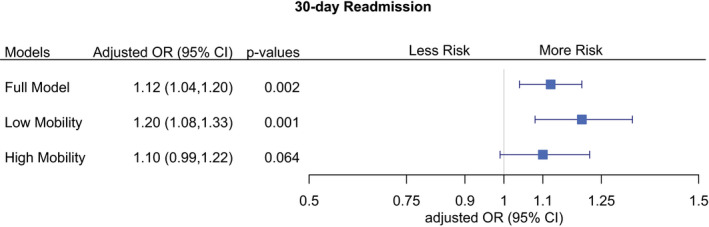
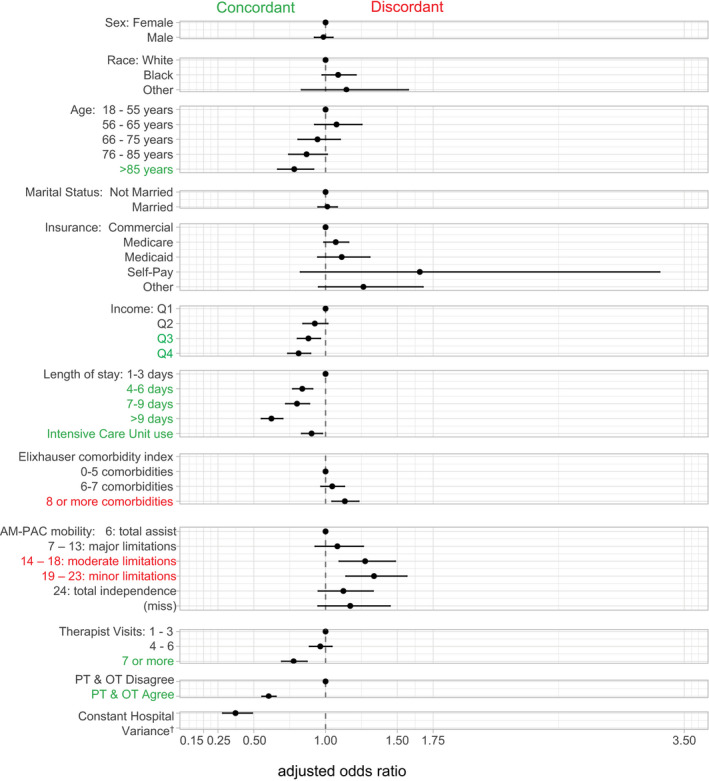
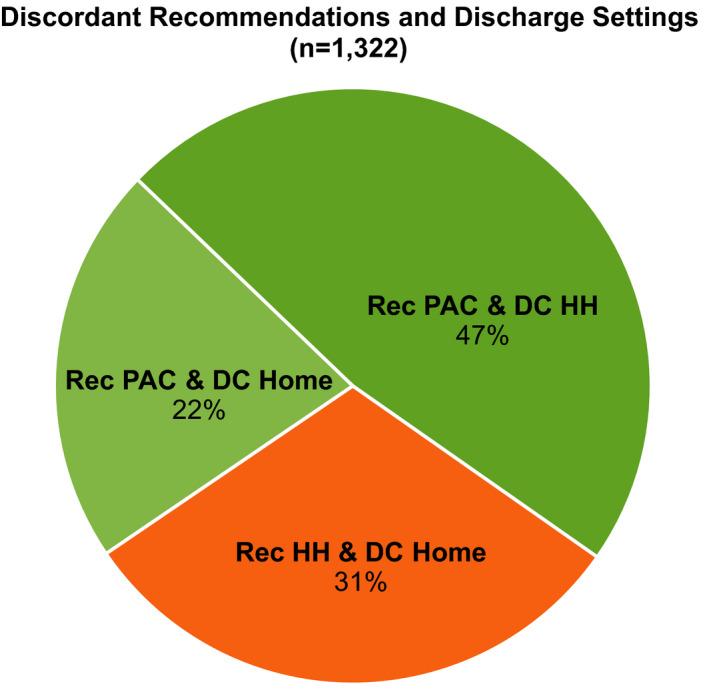
Background Readmissions in patients with congestive heart failure are common and often preventable. Limited data suggest that patients discharged to a less intensive postacute care setting than recommended are likely to readmit. We examined whether postacute setting discordance (discharge to a less intensive postacute setting than recommended by a physical and occupational therapist) was associated with hospital readmission in patients with congestive heart failure. We also assessed sociodemographic and clinical predictors of setting discordance. Methods and Results Retrospective analysis of administrative claims and electronic health record data was conducted on 25 500 adults with a discharge diagnosis of congestive heart failure from 12 acute care hospitals in Western Pennsylvania. Generalized linear mixed models were estimated to examine the association between postacute setting discordance and 30-day hospital readmission and to identify predictors of setting discordance. The 30-day readmission and postacute setting discordance rates were high (23.7%, 20.6%). While controlling for demographic and clinical covariates, patients in discordant postacute settings were more likely to be readmitted within 30 days (adjusted odds ratio [OR], 1.12; 95% CI, 1.04-1.20). The effect was also seen in the subgroup of patients with low mobility scores (adjusted OR, 1.20; 95% CI, 1.08-1.33). Factors associated with setting discordance were lower-income, higher comorbidity burden, therapist recommendation disagreement, and midrange mobility limitations. Conclusions Postacute setting discordance was associated with an increased readmission risk in patients hospitalized with congestive heart failure. Maximizing concordance between therapist recommended and actual postacute discharge setting may decrease readmissions. Understanding factors associated with post-acute setting discordance can inform strategies to improve the quality of the discharge process.
背景 充血性心力衰竭患者的再入院很常见,而且通常是可以预防的。有限的数据表明,出院后到推荐的急性后护理环境较弱的患者可能会再次入院。我们研究了急性后护理环境的不匹配(与物理治疗师和职业治疗师推荐的环境相比,出院到更不密集的急性后护理环境)是否与充血性心力衰竭患者的医院再入院有关。我们还评估了社会人口统计学和临床预测因素与环境不匹配的关系。
方法和结果 对宾夕法尼亚州西部 12 家急性护理医院的 25500 名充血性心力衰竭出院诊断患者的行政索赔和电子健康记录数据进行了回顾性分析。使用广义线性混合模型来检验急性后护理环境不匹配与 30 天内医院再入院之间的关系,并确定环境不匹配的预测因素。30 天的再入院率和急性后护理环境不匹配率都很高(分别为 23.7%和 20.6%)。在控制人口统计学和临床协变量后,处于不匹配急性后护理环境的患者在 30 天内再次入院的可能性更高(调整后的优势比 [OR],1.12;95%CI,1.04-1.20)。在移动能力评分较低的患者亚组中也观察到了这种效果(调整后的 OR,1.20;95%CI,1.08-1.33)。与环境不匹配相关的因素是低收入、更高的合并症负担、治疗师推荐意见不一致以及中等程度的移动能力限制。
结论 急性后护理环境不匹配与充血性心力衰竭住院患者的再入院风险增加有关。最大程度地使治疗师推荐的急性后出院环境与实际环境相匹配,可能会降低再入院率。了解急性后护理环境不匹配的相关因素,可以为改善出院流程质量提供信息。