Plant Biochemistry Laboratory, Department of Plant and Environmental Sciences, University of Copenhagen, Frederiksberg C, DK-1871, Denmark.
School of BioSciences, The University of Melbourne, Parkville, Vic., 3010, Australia.
Plant J. 2021 Oct;108(2):555-578. doi: 10.1111/tpj.15448. Epub 2021 Sep 16.
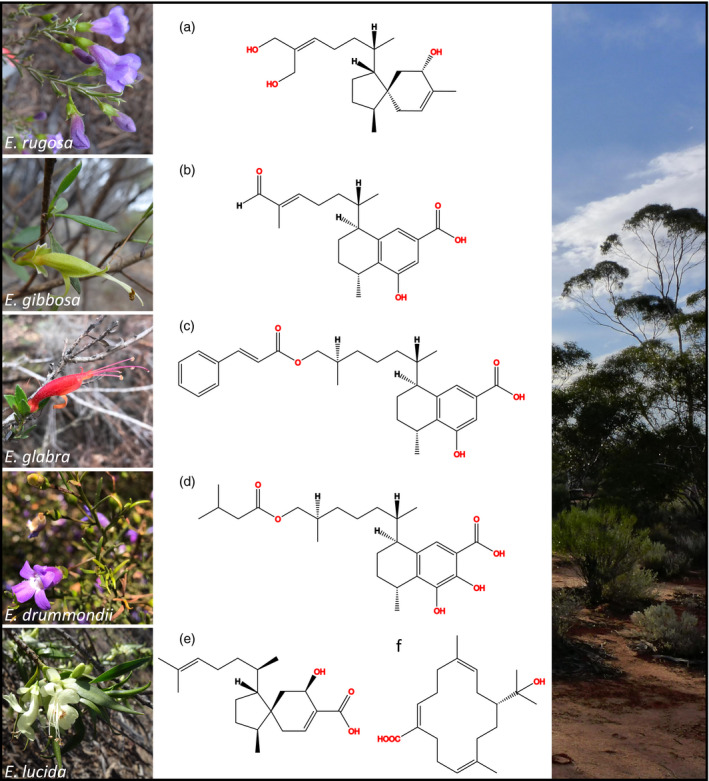
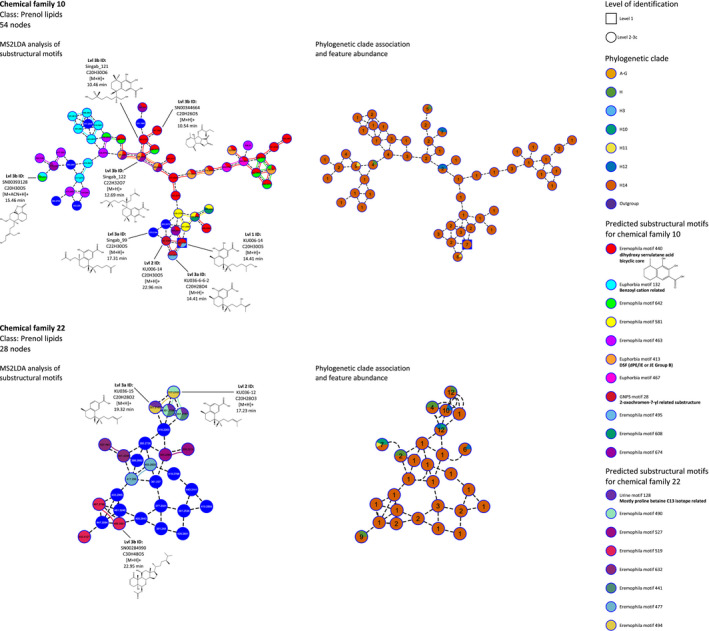
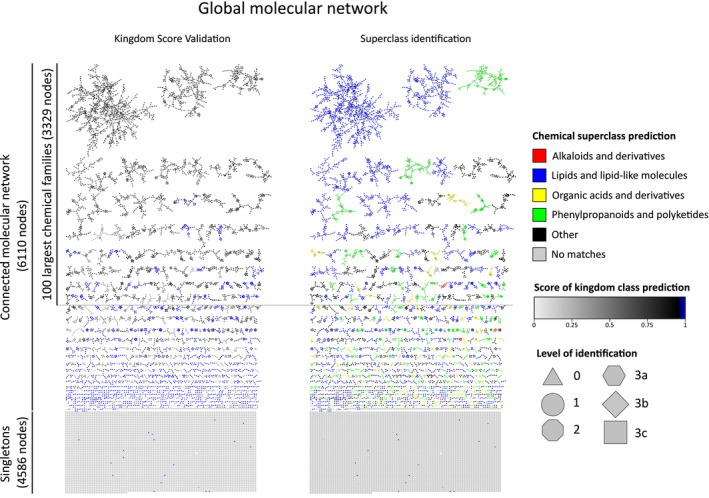
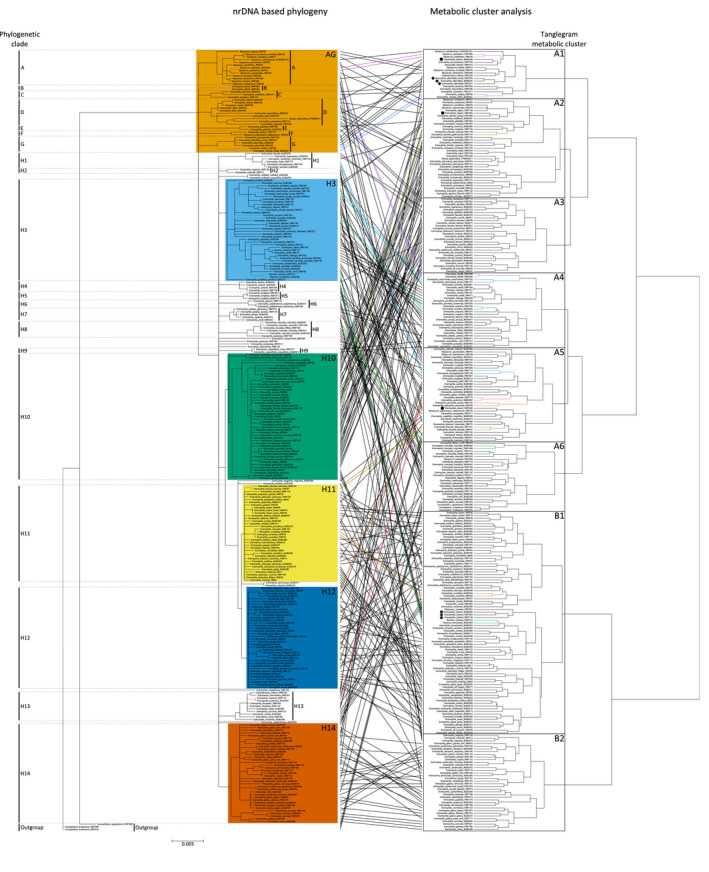
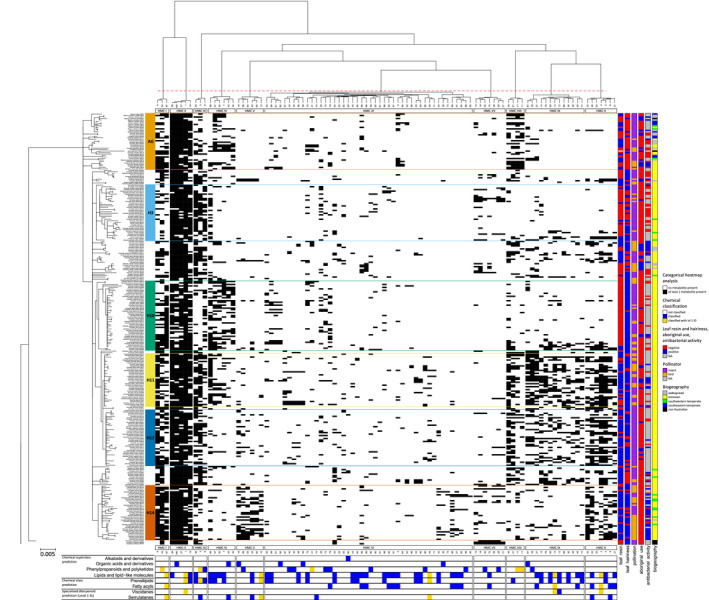
Eremophila is the largest genus in the plant tribe Myoporeae (Scrophulariaceae) and exhibits incredible morphological diversity across the Australian continent. The Australian Aboriginal Peoples recognize many Eremophila species as important sources of traditional medicine, the most frequently used plant parts being the leaves. Recent phylogenetic studies have revealed complex evolutionary relationships between Eremophila and related genera in the tribe. Unique and structurally diverse metabolites, particularly diterpenoids, are also a feature of plants in this group. To assess the full dimension of the chemical space of the tribe Myoporeae, we investigated the metabolite diversity in a chemo-evolutionary framework applying a combination of molecular phylogenetic and state-of-the-art computational metabolomics tools to build a dataset involving leaf samples from a total of 291 specimens of Eremophila and allied genera. The chemo-evolutionary relationships are expounded into a systematic context by integration of information about leaf morphology (resin and hairiness), environmental factors (pollination and geographical distribution), and medicinal properties (traditional medicinal uses and antibacterial studies), augmenting our understanding of complex interactions in biological systems.
熊虫属是玄参科美花草族中最大的属,在整个澳大利亚大陆表现出令人难以置信的形态多样性。澳大利亚原住民将许多熊虫属物种视为传统医学的重要来源,最常使用的植物部位是叶子。最近的系统发育研究揭示了熊虫属与该族中相关属之间复杂的进化关系。独特且结构多样的代谢物,特别是二萜类化合物,也是该类植物的特征。为了评估美花草族的化学空间的全部维度,我们在化学进化框架中研究了代谢多样性,应用分子系统发育和最先进的计算代谢组学工具的组合,构建了一个数据集,其中包括来自 291 个熊虫属和相关属的叶样本。通过整合叶子形态(树脂和毛茸)、环境因素(授粉和地理分布)和药用特性(传统药用用途和抗菌研究)的信息,将化学进化关系纳入系统背景中,从而增强我们对生物系统中复杂相互作用的理解。